How should early sweet cherries be planted to achieve a high yield?
How do you plant early sweet cherries to get a high yield? Advice needed. Sweet cherry fruit ripens early and enjoys the reputation of being "the first branch of fresh fruit to herald spring." With its brilliant color, excellent quality, rich nutrition and high value, it is deeply favored by consumers. Because of its high economic return from cultivation, short fruit growth period and easy management, it is also greatly loved by growers....
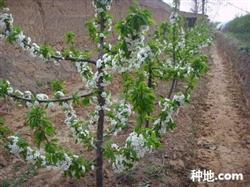
How do you plant early sweet cherries to get a high yield? Advice needed
Sweet cherry fruit ripens early and enjoys the reputation of being "the first branch of fresh fruit to herald spring." With its brilliant color, excellent quality, rich nutrition and high value, it is deeply favored by consumers. Because of its high economic return from cultivation, short fruit growth period and easy management, it is also greatly loved by growers. However, in production, the late formation of economic yield and slow returns restrict the development of sweet cherries. Therefore, exploring early high-yield techniques for sweet cherries is the key to promoting their development.
Sweet cherries have strict requirements for soil and climate conditions, and there must be an orchard site with deep soil and good fertilizer and water conditions; this is the foundation for normal fruiting and high yield. The soil should be kept loose regularly. Plow and turn the soil once each in spring, summer and autumn every year, to a depth of about 25 cm, to facilitate root expansion. In fertilizer management, sufficient base fertilizer should be applied, and topdressing should be mainly nitrogen fertilizer in the early stage and mainly phosphorus and potassium fertilizer in the later stage. Base fertilizer is applied from mid-September to October each year to benefit fruit tree growth the following spring. Apply 30-50 kg of organic fertilizer, 0.5 kg of urea and 1.5 kg of superphosphate per tree. In the early growth stage (before May), apply 0.75 kg of urea per tree to promote new shoot growth. After June, apply 1.5 kg of superphosphate and 1.2 kg of potassium sulfate per tree. In water management, it is necessary to adapt to the characteristics of sweet cherries, which are neither tolerant of waterlogging nor drought-resistant, and the relative soil moisture should be controlled between 60%-80%. From germination to the initial flowering stage, water once according to soil moisture conditions so that the relative soil moisture is about 80%, and afterward control the relative soil moisture between 60%-70%.
II. Training and pruning
Building a tree structure conducive to early high yield is the key to early high-yield techniques.
1. Tree form training: Using the spindle shape for sweet cherries is conducive to early high and stable yield. This tree form requires planting strong large seedlings over 1.5 m tall, with the trunk heading height at 80-90 cm. In the current year, no main branches are trained; by winter pruning, the shoots sprouting on the trunk are heavily short-cut, and main branches begin to be trained in the second year. This can increase the grade difference between the central leader and the main branches and is conducive to developing subordinate relationships. This tree form generally requires a trunk height of 60-70 cm and a tree height of 3.5-4 m. On the central leader, 12-15 main branches are trained at intervals of 20-25 cm in a well-arranged pattern, with main branch angles between 70-80 degrees. No lateral branches are trained, and large, medium and small branch groups are trained on the main branches.
2. Summer pruning: During the training process, summer pruning should be combined with it. Open the angle of the main branches to about 70 degrees, and pinch the extending shoots when they reach about 50 cm, pinching off about 10 cm of the tip. In winter, when short-cutting the extending shoots, leave about 40-50 cm, so as to keep the branch axis compact and prevent bareness at the rear.
Summer pruning is mainly aimed at moderating tree vigor and promoting flower bud formation. The main measures are:
(1) Branch bending: Before the summer solstice or in August-September, bend the main branches to open their angles, avoiding canopy closure and death of lower branches. Branch bending can increase the germination rate, increase the number of short branches, promote flower formation and earlier fruiting, and can also improve ventilation and light transmission inside the canopy, improve branch quality, prevent internal bareness, moderate the outward movement of fruiting sites, increase effective fruiting volume, and improve yield and quality. Bending vigorous branches can moderate branch growth and balance tree vigor. The opening angle of auxiliary nutrient branches should be about 80-90 degrees.
(2) Notching: Before bud break, make a horizontal cut above the bud or leaf cluster shoot deep to the xylem to promote new shoot sprouting. Notching can improve the sprouting quality of lateral buds or leaf cluster shoots, increase the proportion of medium and long branches and the total branch count, and is conducive to training and filling gaps in the canopy.
(3) Pinching: For vigorous branches in the tree, continuous pinching can be carried out. For long and medium shoots sprouted by notching, pinch when they grow to 15-20 cm to train small and medium branch groups, so as to increase effective fruiting sites and promote early fruiting and increased yield. Pinching vigorous branches can promote branching, increase the number of short branches, moderate whole-tree vigor, and achieve the goal of earlier fruiting. For vigorously growing branches, pinching can be done 2-3 times within one year. If the purpose is to increase fruit set rate, the pinching time must be limited to within 10-15 days after flowering. This significantly reduces nutrient consumption, reduces physiological fruit drop, and results in large fruit that ripens early. The secondary shoots sprouted after pinching have a high flower formation rate.
(4) Girdling: Girdling is an effective measure to control vegetative growth and promote early fruiting. The timing of girdling sweet cherries is very important, generally from the flowering stage to 10 days after late flowering, and it is done on the trunk or large branches. The width of the girdling cut can be slightly larger than the standard for apples, because the bark regrown from the parenchyma cells of its xylem heals faster than in apples.
(5) Branch thinning: Removing perennial large branches that are too dense, too vigorous, bare, or disrupt the canopy is extremely beneficial for adjusting tree structure, improving light, balancing tree vigor and promoting flower bud differentiation. Branch thinning in early June makes wounds easy to heal, and vigorous large branches that seriously affect ventilation and light transmission in the canopy and have no retention value can be removed from the base.
Young sweet cherry tree stage: The main task is to establish a firm tree framework. On the basis of training, the pruning degree for all types of branches should be light. In addition to properly thinning out some overly dense and crossing disordered branches, retain as many medium and small branches as possible, lightly short-cut 1-year-old branches to promote more branching, and thus facilitate the growth of scaffold branches. For 3-4-year-old young trees, the short-cutting degree of the extending shoots of main branches should be determined according to branch growth vigor and bearing position. Extending shoots should generally be cut back to leave 40-50 cm. Extending shoots generally retain an outer bud; for varieties with strong upright branch growth, an inner bud can also be retained, and in the next winter pruning the inner bud can be cut off and the outer bud used as the extending shoot. This can open the angle and inhibit excessively vigorous growth. Small branches on branches at all levels within the canopy are basically left untouched. Let them form fruiting branches as early as possible, so as to facilitate early fruiting and early high yield.
Click to get more cherry planting techniques
Click to get more fruit planting techniques