Can soil testing and formulated fertilization be used for cherry trees?
How should fertilization be done for cherries to achieve high yield? Please advise. Cherry trees have a short fruit growth period and are characterized by rapid, concentrated nutrient demand. Fertilization should be based on tree age, tree vigor, soil fertility and the nutrient requirements of the variety, supplying the various nutrient elements needed for cherry growth and development in a timely and appropriate manner, so as to achieve the goals of strong trees, high quality and high yield....
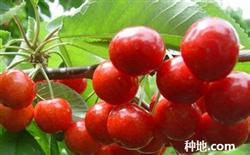 Is there soil testing and formulated fertilization for cherry trees? Please advise.
Fertilization for cherry trees can refer to the following:
1. Nutrient requirement characteristics
For young trees under 3 years old, nitrogen fertilizer should be the main type, supplemented with an appropriate amount of phosphate fertilizer. For trees 3-6 years old and young trees in the initial fruiting stage, attention should be paid to controlling nitrogen, increasing phosphorus and supplementing potassium in fertilization. Trees over 7 years old enter the full fruiting stage and need increased application of nitrogen, phosphorus and potassium; supplementing potassium fertilizer during the fruit growth stage can improve fruit yield and quality. During the growth and development process, because cherry trees have a short fruit growth period, they are characterized by rapid and concentrated nutrient demand. From leaf expansion, flowering and fruit development to maturity, all are concentrated in April to June, and flower bud differentiation is also concentrated in a relatively short period after harvest. Therefore, attention should be paid to the two key periods of autumn fertilization and spring topdressing.
2. Fertilization techniques
Under medium fertility levels, the annual fertilization amount per mu during the growth cycle is 2500-3000 kg of organic fertilizer (or 350-400 kg of commercial organic fertilizer), 13-15 kg of nitrogen fertilizer, 5-7 kg of phosphate fertilizer and 7-9 kg of potassium fertilizer. Organic fertilizer is used as base fertilizer; nitrogen and potassium are divided into base fertilizer and two topdressings; phosphate fertilizer is all applied as base fertilizer; chemical fertilizer and farmyard manure (or commercial organic fertilizer) are applied mixed. Base fertilizer: base fertilizer is mainly organic fertilizer, combined with an appropriate amount of chemical fertilizer. Generally, apply 2500-3000 kg of farmyard manure or 350-400 kg of commercial organic fertilizer, 5 kg of urea, 11-15 kg of diammonium phosphate and 4-5 kg of potassium sulfate per mu. Topdressing: topdressing at flowering stage: apply 11-12 kg of urea and 6-8 kg of potassium sulfate per mu. Topdressing at berry enlargement stage: apply 8-9 kg of urea and 4-5 kg of potassium sulfate per mu. Foliar topdressing: 4-5 times throughout the year, generally 2 times in the early growth stage, mainly with nitrogen fertilizer, and 2-3 times in the later stage, mainly with phosphate and potassium fertilizers; foliar spraying can be done with 0.3%-0.5% urea, 0.2%-0.3% monopotassium phosphate and 0.1%-0.3% borax.
Click to get more cherry cultivation techniques
Click to get more fruit cultivation techniques