What should be noted when cultivating blueberries?
What should be noted when cultivating blueberries? The blueberry is a small berry with blue fruit, delicate flesh and very small seeds; it is 100% edible and tastes good. Besides the usual sugars, acids and Vc, the fruit is also rich in VE, VA, VB, SOD, arbutin, protein, anthocyanins, dietary fiber and abundant mineral elements such as K, Fe, ...
What should be noted when cultivating blueberries?
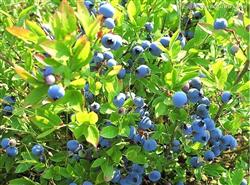
The blueberry is a small berry with blue fruit, delicate flesh and very small seeds; it is 100% edible and tastes good. Besides the usual sugars, acids and Vc, the fruit is also rich in VE, VA, VB, SOD, arbutin, protein, anthocyanins, dietary fiber and abundant mineral elements such as K, Fe, Zn, Ca, making it a highly nutritious health fruit. It not only has good nutritional and health benefits, but also helps prevent cerebral nerve aging, strengthen the heart, fight cancer, soften blood vessels and enhance the body's immunity. Demand on domestic and international markets is rising rapidly, the blueberry industry is flourishing in various countries, and blueberry planting in our city is already on the rise. The following issues should be noted when planting blueberries:
1. Blueberry investment carries high risks
The blueberry industry is a high-investment sector, and growers must have a certain guarantee of funding. Large-scale planting is the prerequisite for obtaining relatively high returns; a minimum planting area of 2 hm2 is what makes economies of scale possible. Blueberry production costs include land lease fees, seedling fees, land preparation fees, soil improvement fees, labor costs and other expenses. Among these, land lease fees and seedling fees account for a considerable proportion, about 70%-85%. Land lease fees and seedling fees require substantial funds to sustain, so enterprises or large growers need to position themselves correctly and see their own conditions clearly when entering the blueberry planting industry; they must not blindly seek to be big and take on too much, lest the enterprise's funds cannot be sustained and a vicious cycle forms.
2. Choose suitable soil
The blueberry is a shallow-rooted plant, with roots concentrated in the top 15 cm of the cultivated layer; its roots are slender and poorly developed, without root hairs. Therefore, it has rather strict requirements for soil pH, soil moisture, aeration, drainage, climatic conditions and management methods. Unsuitable soil conditions, climatic conditions and management methods will all lead to failure of blueberry cultivation, and growers must pay attention to this point. Soil suitable for blueberry growth needs good water permeability, aeration and drainage, a soil organic matter content of 4%-8%, and a soil pH of 4.5-5.5, with the most suitable soil pH being 4.5-4.8. Therefore, before planting blueberries, the soil must be improved, including soil pH, organic matter content and soil permeability. Soil improvement increases costs by about 30-50%; too high a pH often causes iron deficiency chlorosis in blueberries, poor growth, reduced yield and even plant death. In Yuxi City, red soil in mountainous and semi-mountainous areas is preferable.
3. Do not introduce varieties blindly
All blueberry varieties cultivated in China are introduced varieties. Since 1983, China has introduced more than 100 blueberry varieties, of which no more than 20 are used in production. Most of these varieties are processing varieties, with few fresh-eating varieties. Blueberries have fairly complex series and varieties, and in cultivation, different series of blueberries should be matched to different climatic environments. In Yuxi, rabbiteye blueberry and southern highbush blueberry are the main types; introducing northern types to the south or southern types to the north will cause devastating damage.
4. Blueberry management techniques must be adequate
Although the blueberry, as a shrub fruit tree, has the characteristics of wide adaptability, drought tolerance, waterlogging tolerance, poor-soil tolerance, few pests and diseases, and simple cultivation management, suitable soil, climate, environment, cultivated varieties and the matching efficient cultivation and management techniques are all indispensable conditions for successful blueberry planting. Growers must master techniques from the introduction of planting material to planting and fresh-keeping processing. Supporting techniques for blueberry planting, such as keeping soil pH within 5.0, large-seedling raising techniques, rational fertilization and seedling pruning, all have certain standards; otherwise blueberry growth will be affected. Without technical guidance and services from professional technicians, even if the corresponding objective conditions are all in place, failure may still result from lacking techniques for soil, fertilizer and water management or for controlling diseases, pests, weeds and birds in the orchard.
In addition, blueberries are best fertilized with acidic ammonium nitrogen such as ammonium sulfate, and are very sensitive to ammonium chloride, potassium chloride and the like. Blueberries can be planted in either spring or autumn, but the survival rate is higher with autumn cultivation, while spring cultivation should be done early.
Click to get more blueberry planting techniques
Click to get more fruit planting techniques