What causes rotten fruit in Red Fuji apples
Why do Red Fuji apples rot? Please read on for details. Red Fuji fruit rot is caused by multiple factors, and only by identifying the causes and applying integrated control can results be achieved. I. Causes of fruit rot. 1. Excessive and too severe girdling. Most fruit growers mistakenly believe that Red Fuji apples cannot set flower buds without girdling and cannot achieve a high yield the following year, so they girdle (score) the tree repeatedly year after year. Some, after girdling the base of the trunk, also girdle the main branches and auxiliary nurturing branches; combined with not applying more organic fertilizer, not focusing on balanced formula fertilization, over-applying nitrogen fertilizer, and carrying too much fruit, the tree becomes excessively weakened, giving pathogens an opportunity. According to surveys, weak trees can have as much as 40%-60% rotten fruit, while well-managed vigorous orchards have only 5%-10%.
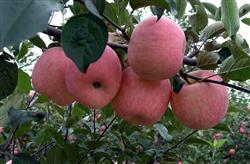
Why do Red Fuji apples rot? Please read on for details
Red Fuji fruit rot is caused by multiple factors, and only by identifying the causes and applying integrated control can results be achieved.
I. Causes of fruit rot
1. Excessive and too severe girdling. Most fruit growers mistakenly believe that Red Fuji apples cannot set flower buds without girdling and cannot achieve a high yield the following year, so they girdle (score) the tree repeatedly year after year. Some, after girdling the base of the trunk, also girdle the main branches and auxiliary nurturing branches; combined with not applying more organic fertilizer, not focusing on balanced formula fertilization, over-applying nitrogen fertilizer, and carrying too much fruit, the tree becomes excessively weakened, giving pathogens an opportunity. According to surveys, weak trees can have as much as 40%-60% rotten fruit, while well-managed vigorous orchards have only 5%-10%.
2. Emphasis on treatment over prevention. The main problem is failing to grasp the key periods for control, because fruit rot pathogens infect the fruit in the early stage of fruit growth, that is, before the wheat harvest, and the disease only becomes severe near maturity, with a relatively long latent period. Many fruit growers mistakenly focus control on the later stage and neglect early prevention.
3. Incomplete removal of disease sources after apple harvest. Some fruit growers do not promptly and thoroughly remove diseased branches, cankers, diseased fruit, mummified fruit and other sources of inoculum; diseased fruit and branches are thrown and left around at random, not buried deep or taken out of the orchard for centralized disposal, and diseased branches are even used as branch-spreading supports.
4. Poor spray quality. The pathogens that cause fruit rot mainly enter through lenticels and wounds. If the fruit surface cannot be evenly covered with the spray solution, opportunities for pathogen infection are left. At present, most orchards have too many branches and are crowded between rows and plants, making it difficult to ensure spray quality.
II. Integrated control measures
1. Thoroughly clean the orchard. After fruit harvest, thoroughly remove fallen leaves, weeds, rotten fruit and so on from the orchard, and burn them in a centralized manner, or bury them in the fertilization trench when applying base fertilizer. Prune off diseased and insect-damaged branches, broken branches and dead branches, and take them out of the orchard for centralized burning. Firmly do not use branches from diseased trees as branch-spreading supports. Do not use dead branches, dead stumps, black locust and the like as protective fences, so as to reduce sources of inoculum.
2. Control of canker disease. For fruit trees with canker disease, during the dormant period scrape off the loose bark and rough bark on the branches and trunk, and immediately after scraping apply 100-fold liquid ferrous arsenate + 2% pingpingjia, or thiophanate oil (1 part 70% thiophanate methyl + 15 parts soybean oil or other vegetable oil). When the disease is mild, promptly scrape off the lesions, then disinfect with 5 degrees Baume lime-sulfur mixture, which can prevent the lesions from expanding and spreading. In heavily diseased orchards or on heavily diseased trees, after scraping off the lesions, before bud break apply to the trunk and large branches 100-fold liquid ferrous arsenate or 3-5 degrees Baume lime-sulfur mixture mixed with 200-fold liquid sodium pentachlorophenate. During the growing season, carry out heavy bark scraping to scrape off diseased tissue and reduce sources of inoculum.
3. Spray to prevent diseases and pests. After bark scraping and orchard cleaning and before bud break, promptly spray once with 50-80 fold liquid barium polysulfide or 3-5 degrees Baume lime-sulfur mixture plus 200-fold liquid sodium pentachlorophenate, which has a certain control effect on scale insects, red spiders, apple powdery mildew and early defoliation disease, especially ring rot and anthracnose. In orchards with severe canker disease, after leaf fall and before bud break, spray once with 100-fold liquid 40% ferrous arsenate or 50-fold liquid Fubiqing. During the growing season, if diseased fruit is found, remove it promptly and clean it up, take it out of the orchard and bury it deep; never throw it around at random.
From about 10 days after apple petal fall until the fruit is near maturity, pathogens can continuously infect the fruit, causing the fruit to carry pathogens. This period is roughly from early to mid-May to early to mid-August, with an infection period of as long as 3 months. During this time, spraying must be maintained once every 10-15 days to protect the fruit and prevent infection, so as to reduce pathogen carriage on the fruit and lower the disease incidence. The arrangement of spraying periods must be closely linked to rainfall conditions, adhering to the principle of "spray after rain": spray more when there is more rain, spray less when there is less rain, spray regularly when there is no rain, and spray whenever it rains after the effective period of the pesticide has passed.
4. Strengthen cultivation management to improve the tree's disease resistance. When establishing a new orchard, virus-free seedlings should be selected for planting, and diseased plants should be removed promptly when found. For fruiting trees, fertilizer and water should be applied reasonably, with strengthened combined application of nitrogen, phosphorus and potassium, and no over-application of nitrogen fertilizer. Generally, to produce 100 kg of high-quality fruit, 0.7 kg of pure nitrogen, 0.3 kg of pure phosphorus and 0.7 kg of pure potassium are required. Organic fertilizer should be applied at a ratio of 1.5-2 kg of fertilizer for every 1 kg of high-quality fruit produced.
Click to get more apple tree planting techniques
Click to get more fruit planting techniques