How to fertilize Red Fuji apples for the best results?
How should Red Fuji apples be fertilized? Here is a detailed introduction. In recent years, many orchards have had problems such as blind fertilization and improper fertilization methods, which have caused extremely adverse effects on the high quality and high yield of fruit. Especially for orchards growing premium fruits such as Red Fuji, fertilization should follow a "formulated, efficient, low-consumption, high-yield, green" approach...
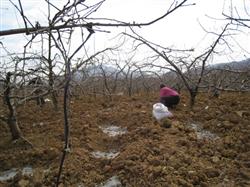
How should Red Fuji apples be fertilized? Here is a detailed introduction
In recent years, many orchards have had problems such as blind fertilization and improper fertilization methods, which have caused extremely adverse effects on the high quality and high yield of fruit. Especially for orchards growing premium fruits such as Red Fuji, fertilization should follow a "formulated, efficient, low-consumption, high-yield, green" approach.
Current fertilization status and existing problems
① Insufficient organic fertilizer. The organic matter content in most orchards is 0.8%-1.20%, and in a few plots it can reach 1.2%-1.6%. To achieve the requirements of a robust tree, stable yield and high quality, the organic matter content should be above 1.6%. ② Improper fertilization ratio. In production, attention is often paid to the application of nitrogen, phosphorus and potassium (compound fertilizer), while the application of secondary and trace elements, especially trace elements, is neglected, leading to an imbalance between vegetative growth and reproductive growth of the fruit tree. ③ Improper fertilization amount. Fertilization is mostly blind, based on experience and habit, with some amounts too small and some too large. ④ Unreasonable fertilization timing. Base fertilizer is applied too late, resulting in insufficient spring shoot growth, excessive autumn shoot growth, and a falsely vigorous, non-robust tree condition. ⑤ Improper fertilization methods. Fertilization is too deep, with base fertilizer placed below the layer where roots are concentrated, and quick-acting fertilizer is easily lost with water; fertilization is too close to the trunk or outside the outer edge of the tree canopy, so it cannot be absorbed by the roots; fertilization is scattered, resulting in low fertilizer use efficiency and serious waste.
Optimized fertilization plan
1. Determination of fertilization amount. For high-quality Red Fuji apples, a yield of 2500 kg of fruit per 667 sq m is appropriate. ① Uptake: to produce 2500 kg of fruit per 667 sq m, 7.875 kg of nitrogen, 2.15 kg of phosphorus and 8 kg of potassium need to be absorbed. ② Soil fertility (natural supply): medium-fertility soil can provide the proportions of nutrient uptake by fruit trees as 1/3 nitrogen, 1/2 phosphorus and 1/2 potassium, and can provide 2.625 kg of nitrogen, 1.075 kg of phosphorus and 4 kg of potassium per 667 sq m. ③ Fertilizer use efficiency: after fertilizer is applied to the soil, part is absorbed, part is fixed, and part is lost. The use efficiency of nitrogen is 30%, that of phosphorus is 30%, and that of potassium is 40%. ④ Fertilization amount: to produce 2500 kg of fruit per 667 sq m, 17 kg of pure nitrogen, 3.5 kg of pure phosphorus and 10 kg of pure potassium need to be applied. Due to reasons such as unstable fertilizer quality and improper application methods, the actual fertilization amount can be increased by 20%. ⑤ Organic matter: soil organic matter needs to be supplemented by more than 120 kg per 667 sq m each year.
2. Fertilization plan. Soil testing and formulated fertilization is the core technology of the scientific fertilization system at the present stage. Combining the problems existing in fertilization with the relationship between vegetative growth and reproductive growth of apple trees and their fertilizer requirements, nitrogen fertilizer should be "stable with some control" in fertilization, and the suitable fertilization period is before the year and in the middle and late stages of growth. Phosphorus should be applied in the early growth stage, and potassium in the middle and late growth stages. Attention should be paid to increasing the application of calcium fertilizer and trace elements to achieve balanced fertilization. ① Base fertilizer: the earlier it is applied after harvest, the better, and at the latest it should be applied after thawing. The fertilizer type should be mainly organic fertilizer, supplemented with quick-acting nitrogen and phosphorus fertilizers. The fertilization amount should be more than 2500 kg of high-quality barnyard manure such as fermented fresh chicken manure, or 320 kg of Kangzhuang organic fertilizer (organic matter content 50%, nitrogen-phosphorus-potassium 7%-10%), and -50 kg of autumn-type BB fertilizer (nitrogen-phosphorus-potassium ratio 30:10:5). Fertilization method: dig a circular trench or strip trench 30 cm deep and 40-50 cm wide and apply the fertilizer into it; for sandy land, apply in holes, digging 4-8 holes per tree 30-40 cm deep and 40-50 cm in diameter, lining the bottom of the holes with clay, and applying both base fertilizer and quick-acting fertilizer in the holes to form concentrated nutrient holes: 250 g of high-quality boron fertilizer (Chili boron), 7-10 kg of high-quality zinc sulfate, and 10-15 kg of ferrous sulfate can be added. ② Topdressing: apply before the end of June after bagging, with the fertilizer type mainly quick-acting potassium fertilizer supplemented with nitrogen fertilizer. Apply 50 kg of summer-type BB fertilizer (nitrogen-potassium ratio 15:20) per 667 sq m in a strip trench or circular trench 18-20 cm deep, or broadcast it and then shallowly hoe it in; for sandy land, it can simply be applied in the nutrient holes. ③ Foliar fertilizer: before germination, spray Hefeng zinc at 1500 times dilution; before and after flowering, spray Sule boron at 1000 times dilution 2 times. During the growth period, spray "Ruilv" chelated iron at 1500 times dilution to supplement iron, chelated calcium at 1500 times dilution to supplement calcium, and chelated zinc at 1500 times dilution to supplement zinc. Spray 0.3%-0.5% urea solution as needed. Before harvest, spray 0.3%-0.5% potassium dihydrogen phosphate 2-3 times, and after harvest spray 1% urea solution.
Click to get more apple tree planting techniques
Click to get more fruit planting techniques