What Does "Chuanhua" Mean on Apple Trees? A Detailed Explanation
What Methods Are There for Coloring Red Fuji Apples? An Introduction. Red Fuji apple is a premium fruit with red color, delicious taste and high commercial value. To bring out its inherent characteristics and meet the needs of the market and export, it is very necessary to strengthen management during the coloring period. The fruit coloring of Red Fuji starts earlier than that of Guoguang, and the speed is slow...
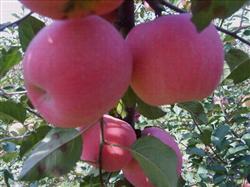 What Is "Chuanhua" on Apple Trees? An Introduction
A two-year-old or three-year-old branch bearing a string of flower buds may appear from the surface to be a vigorous branch, but this is not actually the case. If buds are notched on a one-year-old vigorous branch, under conditions of good light, good leaf protection and relatively scientific fertilization, it can also form a string-flower branch the next year. Likewise, if multiple ring cuts are made on a one-year-old falsely vigorous branch, if the top is suppressed to promote budding on a weak branch, or if top suppression to promote budding plus branch twisting is applied to a slender weak branch, they can all form string-flower branches the next year as well. Therefore, string-flower branches are essentially divided into strong and weak types.
A one-year-old vigorous branch, besides having solid tissues, is also much thicker than a weak branch, and the number of vessels in its xylem is therefore much greater than that of a weak branch, and it also transports more water and inorganic nutrients from the soil than a weak branch. Therefore, it is not advisable to perform renewal pruning (heading back) on vigorous string-flower branches. Heading back itself concentrates nutrients, and once nutrients are concentrated, the secondary shoots on the fruit spur grow long; as long as the shoots grow long, they consume more nutrients and accumulate less, and thus cannot form flower buds.
A one-year-old weak branch, such as a slender falsely vigorous branch, is thinner than a vigorous branch and, moreover, has unsolid tissues and a low degree of lignification. Therefore, the number of vessels in its xylem is much smaller than that of a vigorous branch. If it is not headed back during pruning and all buds are retained, the nutrients are dispersed, and the nutrients distributed to each bud are less, so the fruit produced is also small. Therefore, they should be headed back to reduce the "population" and concentrate nutrients, so that large fruit can be produced. Especially on somewhat weak trees in an "on" year, where the whole tree is covered with flowers, heading back weak string-flower branches is very necessary.
When it comes to heading back weak string-flower branches, to put it in finer detail, the amount of heading back differs according to the position of the branch on which the weak string-flower branch grows. Generally, those growing on the underside should be headed back more heavily, those on the side less heavily, and those on the upper side even less heavily or not at all.
Click to get more apple tree cultivation techniques
Click to get more fruit cultivation techniques