What are the precautions for bagging crisp pears (Suli pears)?
What should be noted when bagging crisp pears? Please explain. Bagging pears is one of the effective measures for producing pollution-free pear fruit and increasing the rate of premium fruit. When bagging crisp pears, note the following: 1. Orchard management before bagging. 1. Hand pollination. Hand pollination allows pear fruit to be well fertilized, forming more seeds and therefore more auxin, which promotes young fruit to grow into...
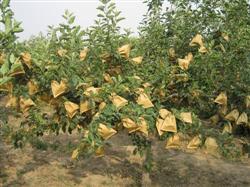
What should be noted when bagging crisp pears? Please explain.
Bagging pears is one of the effective measures for producing pollution-free pear fruit and increasing the rate of premium fruit. When bagging crisp pears, note the following:
I. Orchard management before bagging
1. Hand pollination Hand pollination allows pear fruit to be well fertilized, forming more seeds and therefore more auxin, which promotes young fruit to grow into premium large fruit. For pollination, choose 1-2 flowers at the edge of the inflorescence; the fruit they produce readily forms well-shaped large fruit, making it easier to select when thinning fruit and bagging.
2. Flower and fruit thinning To ensure that bagged fruit develops into premium fruit, a reasonable crop load must be determined before bagging according to tree age, tree vigor and fertilizer and water levels, and flower and fruit thinning must be done carefully. When thinning fruit, keep more fruit outside the canopy and fewer fruit on the inner side; keep more fruit on the underside and on lateral branches and fewer on upward-growing fruiting branches; leave 1 fruit at intervals of about 20 cm on each fruiting branch; remove the central fruit in the inflorescence and keep 1-2 better-quality edge fruits. If the plan is to produce 2500-3000 kg of bagged fruit per mu, leave 10,000-12,000 fruit per mu.
3. Pest and disease prevention On the basis of paying attention to spring pest and disease control, spraying is still needed 1-2 times before bagging, with the focus on spraying the fruit surface to kill fungi and insects on it, mainly to control pear scab, ring rot fruit disease, pear psylla, pear sucker (Huangfenchong), mealybugs, aphids, etc. Insecticides may include imidacloprid, abamectin, Anbaobao, Saidan, etc.; fungicides may include Fuxing, polyoxin, Nongkang 120, Score (Shigao), Junlimie, thiophanate-methyl, etc.; protectants may include Daconil M-45, Pencozeb, etc. When spraying, do not increase the concentration of the solution at will; each spraying can include foliar fertilizers such as amino acid chelated compound fertilizer, calcium fertilizer, urea, etc., to enhance tree nutrition.
4. Watering Watering before bagging can effectively reduce the fruit-burning caused by high temperatures after bagging.
II. Bagging operation techniques
1. Selecting the orchard for bagging Choose an orchard with careful management, good ventilation and light penetration and a neat, uniform appearance for bagging; within the orchard, also select trees with vigorous growth, good fruiting and uniform fruit size as the trees to be bagged.
2. Bagging time The suitable time is 20 days after petal fall, once the fruit has been set; start then and aim to finish within about 10 days. If bagged too early, the fruit surface and fruit stalk are still tender and easily injured by rubbing; if too late, the fruit dots become suberized and the effect is poorer. The best times of day for bagging are 9-12 a.m. and 3-7 p.m.; never do it when morning dew has not dried and the temperature is low, or at midday when sunlight is strong and the temperature is high.
3. Choosing the paper bag It is best to choose high-quality double-layer paper bags with good air permeability, soft texture and resistance to wind, sun and rain.
4. Bagging method The bagging operation should be done gently and can be broken down into five steps: opening the bag, putting the fruit in, pressing the opening, tightening and sealing. First open the paper bag, put the fruit in and place the fruit stalk at the bag opening; be careful not to put leaves inside the bag, fold the bag opening horizontally so it fits closely against the fruit stalk, then secure the folded opening with a wire clip (do not clip it onto the fruit stalk). Note that the paper bag should stay puffed out, and the young fruit should hang freely inside the bag, not touching the bag wall, to prevent rubbing.
5. Bagging order On the same pear tree, bag the fruit in the upper canopy first and the lower fruit afterward; bag the fruit on the inner part of the canopy first and the outer fruit afterward.
Click to get more pear tree cultivation techniques
Click to get more fruit cultivation techniques