How can fertilization be done effectively during jujube tree cultivation?
How should jujube trees be fertilized during cultivation? Please explain the methods. In the management of jujube trees, fertilization is an important step, just like people need to eat: not only must they eat enough, but nutrition must also be comprehensive for the body to be healthy and resist disease. The same applies to jujube trees. However, because in recent years farming has been abandoned, farmyard manure has greatly...
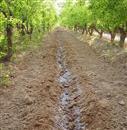
How should jujube trees be fertilized during cultivation? Please explain the methods
In the management of jujube trees, fertilization is an important step, just like people need to eat: not only must they eat enough, but nutrition must also be comprehensive for the body to be healthy and resist disease. The same applies to jujube trees. However, because in recent years farming has been abandoned, farmyard manure has greatly decreased, and most jujube growers have not applied organic fertilizer to jujube trees for many years, applying only inorganic fertilizers such as nitrogen fertilizer and phosphate fertilizer. This has led to a decrease in soil organic matter, imbalanced soil nutrients, changes in soil aggregate structure, changes in soil acidity and alkalinity, soil compaction, reduced aeration and water permeability, and reduced soil capacity to retain fertilizer and water. The jujube tree roots cannot fully absorb nutrients and water, and during the growth period cannot meet normal growth needs. The jujube trees are strong outside but weak inside, and their own disease resistance is reduced, ultimately leading to decreased jujube fruit quality and reduced benefits. At the same time, due to changes in soil structure, the applied nitrogen, phosphorus and other elements are also adsorbed and fixed by the soil, cannot be absorbed and used by the jujube trees, and cause a large amount of waste.
Therefore, jujube growers are reminded to change their understanding, fertilize scientifically, give priority to organic fertilizer, supplement with inorganic fertilizer, and fertilize in a balanced way. It is best to use soil testing and formula fertilization, which both saves costs and increases economic benefits. Attention should be paid to the application of organic fertilizer. If farmyard manure is not available, biological organic fertilizer can be chosen. In addition to containing organic matter and various other nutrient elements, biological organic fertilizer also contains microbial bacteria. Beneficial bacteria can activate the soil, make the soil loose and permeable, and can also release elements such as nitrogen and phosphorus fixed by the soil, improving the utilization rate of chemical fertilizers.
Farmyard manure or biological organic fertilizer used as base fertilizer must be applied deeply. Farmyard manure should be used together with a certain proportion of nitrogen, phosphorus and potassium fertilizer for better results. Later, according to the growth of the jujube trees and the fruit load, targeted topdressing should be selected. Topdressing should mainly be phosphorus and potassium fertilizer and should be applied near the root system to facilitate absorption. After jujube fruits enter the expansion period, spraying potassium fertilizer and calcium fertilizer on the leaves has a certain effect on jujube fruit expansion and improving quality.
Through reasonable fertilization, the soil structure is thoroughly changed, the tree vigor of jujube trees is enhanced, and the jujube trees' own ability to resist pests and diseases is improved. At the same time, other agricultural management should be strengthened, pesticide prevention and control should be reduced, prevention and control costs should be lowered, and jujube fruit quality should be improved.
Click to get more jujube tree cultivation techniques
Click to get more fruit cultivation techniques