What are the key points of summer management techniques for chestnut?
How to manage chestnut in summer? Please give an introduction. From July to August, the chestnut fruit development is in the swelling stage. Timely completion of work such as topdressing fruit-strengthening fertilizer, intertillage and weeding, pest and disease control, and summer pruning is very important for obtaining high-quality and high-yield chestnuts. Fertilization and weeding: Applying fruit-strengthening fertilizer is the second topdressing for chestnut trees. In early July...
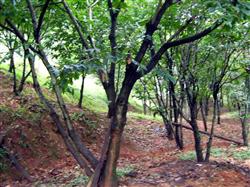
How to manage chestnut in summer? Please give an introduction
From July to August, the chestnut fruit development is in the swelling stage. Timely completion of work such as topdressing fruit-strengthening fertilizer, intertillage and weeding, pest and disease control, and summer pruning is very important for obtaining high-quality and high-yield chestnuts.
Fertilization and weeding: Applying fruit-strengthening fertilizer is the second topdressing for chestnut trees. In early July, apply 15 kg of standard nitrogen fertilizer, 15-20 kg of phosphate fertilizer, 10 kg of potassium sulfate, or 40-50 kg of special fruit tree fertilizer per mu. In addition, phosphorus and potassium fertilizers have an obvious effect on chestnut fruit development. Combined with summer digging and intertillage, 100 kg of plant ash can be applied, and weeds must be removed at the same time.
Disease prevention and pest control: In early July, spray 1.8% abamectin biological preparation at 1500 times dilution to control chestnut giant aphid and chestnut red spider; 50% phoxim at 1000 times dilution to control large bagworm moth; 2.5% deltamethrin at 2500 times dilution to control chestnut gall wasp. For chestnut orchards with severe powdery mildew and branch blight, 50% thiophanate-methyl at 1000 times dilution can be mixed in for spraying. In late August, 50% phoxim at 1000-1500 times dilution, Bacillus thuringiensis wettable powder at 500-1000 times dilution, or 5% chlorfluazuron emulsifiable concentrate at 1000-2000 times dilution can be sprayed on the canopy to control peach fruit borer.
Pinching and branch thinning: For trees bearing fruit for the first time, pinch the tips 1-2 times according to the growth vigor of the branches, so as to delay the outward movement of the canopy. Branches treated by pinching can generally form 2-3 fruiting mother branches. When pinching, promptly thin out overly dense and slender water sprouts at the semi-lignified or lignified part, which is conducive to forming more female flowers the following year.
Click to get more chestnut tree planting techniques
Click to get more fruit planting techniques