How to grow sweet persimmons for high yields? Key techniques explained
How can sweet persimmons be grown for high yields? Please provide guidance. The sweet persimmon growing method can refer to the following: 1. Environmental requirements. Sweet persimmons can be grown in areas with an annual average temperature of 13-18°C; an average temperature of 18-19°C during the fruit ripening period from June to August (in Shilin County they are distributed at an altitude of 1600-1900 m); sunshine hours of more than 1400 hours from February to August...
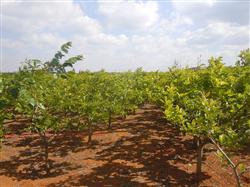
How can sweet persimmons be grown for high yields? Please provide guidance.
The sweet persimmon growing method can refer to the following:
1. Environmental requirements
Sweet persimmons can be cultivated in areas with an annual average temperature of 13-18°C; an average temperature of 18-19°C during the fruit ripening period from June to August (in Shilin County they are distributed at an altitude of 1600-1900 m); sunshine hours of more than 1400 hours from February to August; annual rainfall of 700-1200 mm; and 800-1000 hours at a low temperature of 7.2°C. The requirements for soil are not strict; mountains, hills and riverbanks with a soil pH of 5-7 can all be used for cultivation.
2. Variety selection
Starting in 1988, Shilin County successively introduced 21 varieties from the Shaanxi Fruit Tree Research Institute and the Nagano Prefecture Fruit Tree Experiment Station in Japan. After trials and demonstrations, Jiro and Maekawa Jiro were selected as the preferred varieties for promotion.
3. High-standard orchard establishment
(1) Reasonable close planting. Adopt medium-density planting, with 111 plants per mu (spacing 2 x 3 m). This is more economical than 42 plants per mu (4 x 4 m), 33 plants (4 x 5 m), 222 plants (1.5 x 3 m), or 333 plants (1 x 2 m).
(2) Nursery stock quality
1. Grafted seedlings: root crown diameter more than 0.8 cm, height more than 80 cm, with 4-5 plump buds within the training zone, and a relatively well-developed root system with more than 3 lateral roots.
2. Seedling rootstock (Date Plum, Diospyros lotus): ground diameter more than 0.8 cm, height more than 80 cm, and a relatively well-developed root system with more than 3 lateral roots.
(3) Planting method and time. Dig planting holes 1 m in diameter and 0.8 m deep, or planting trenches 1 m wide and 0.8 m deep, or mechanically deep-plow the whole orchard to 0.8 m for planting. Apply 50-100 kg of decomposed organic fertilizer per plant, plus 2 kg of superphosphate or calcium magnesium phosphate. If the soil is acidic, add 2 kg of quicklime per plant, mix thoroughly with the soil and backfill, and make a tree disk or planting strip 30 cm above the ground. Place the seedling in and fill with soil, lifting the seedling while filling so that the fill soil is slightly above the graft union, ensuring full contact between the roots and soil. After firming, water thoroughly and cover with plastic film or organic matter. To improve the survival rate of sweet persimmons, before planting first soak the roots in a 100 PPM dilution of No. 1 rooting powder for 30 minutes, or spray the roots with a sprayer. After planting is completed, promptly head the plant back at 0.8 m. In order to avoid winter and spring drought, promote root recovery, and reduce the time needed to overcome transplant shock in early spring, change winter and spring planting to autumn planting in October-November.
4. Soil, fertilizer and water management
(1) Soil management. In the spring and summer of the year following planting, carry out two rounds of intertillage and weeding together with topdressing. In late May, spray each mu with 0.4-0.8 kg of 10% glyphosate aqueous solution at 60 times dilution, or 200 g of Nongminle 747 at 400-600 times dilution, to control annual weeds. In late June, broadcast sow smooth vetch, and in October-November turn it into the orchard to improve the soil, use it as ground cover, or use it as feed (fresh grass yield can reach 3000 kg per mu). From mid-July to late August, when perennial weeds translocate assimilates downward, spray each mu with 1.5-1.8 kg of 10% glyphosate aqueous solution at 40 times dilution. In October-November, together with applying base fertilizer, after shallow plowing cover with 5-8 cm of organic matter, and spray each mu with 200 g of Mianshengeng at 400-500 times dilution onto the moist organic matter after rain. This can preserve water, maintain temperature, increase soil organic matter, avoid the white pollution caused by plastic film mulching, and reduce the labor cost of soil cultivation.
(2) Scientific fertilization. The transplant recovery period of sweet persimmons is longer than that of peaches and pears, and growth in the first year after planting is somewhat slow. In addition to applying sufficient base fertilizer at planting, fertilizer should be applied frequently, with light applications and frequent feeding. After bud break, topdress once about every 10 days for 5-6 consecutive times, preferably with dilute human manure and urine, or by watering with 50 kg of water plus 0.2-0.3 kg of urea. From September to November, apply 30-50 kg of decomposed organic fertilizer per plant, plus 1-2 kg of superphosphate. After physiological fruit drop and 1 month before harvest, dissolve and topdress with 1-2 kg of quick-acting compound fertilizer to promote fruit enlargement and flower bud differentiation. In the early stage of bud break, depending on tree vigor, topdress each plant with 0.2-0.5 kg of ammonium bicarbonate or urea; vigorous trees may be given less or none. If organic fertilizer is sufficient, root-zone topdressing may be omitted and supplemented by foliar feeding, which can save large amounts of chemical fertilizer.
(3) Timely watering. Yunnan is dry in winter and spring. Before bud break, after flowering, and during fruit enlargement, water thoroughly once each time together with topdressing, and after watering cover with fine dry soil or organic matter to prevent water evaporation. Alternatively, together with irrigation, apply 150-200 g of Handilong per mu with the water, which can play a role in drought resistance and water saving.
Click to get more persimmon tree growing techniques
Click to get more fruit growing techniques