How to effectively prevent and control anthracnose in persimmon trees
How to prevent and control anthracnose in persimmon trees? Please give a detailed introduction. Persimmon anthracnose is one of the main diseases harming persimmon trees. It is necessary to scientifically distinguish the symptomatic characteristics of the disease and understand its occurrence patterns, and adopt comprehensive measures for timely prevention and control to achieve good results. 1. Symptomatic characteristics: This disease mainly harms fruits and new shoots, and rarely affects leaves...
How to prevent and control anthracnose in persimmon trees? Please give a detailed introduction
Persimmon anthracnose is one of the main diseases harming persimmon trees. It is necessary to scientifically distinguish the symptomatic characteristics of the disease and understand its occurrence patterns, and adopt comprehensive measures for timely prevention and control to achieve good results.
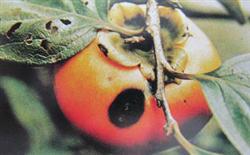
1. Symptomatic characteristics: This disease mainly harms fruits and new shoots, and leaves are rarely affected. In the early stage of fruit infection, needle-head-sized dark brown spots appear, after which the lesions expand and become nearly circular and sunken, with a lesion diameter of 5-10 mm, and gray to black small granules (acervuli) densely grow in the center of the lesion. When the air is humid, pink sticky material (conidial masses) oozes from the diseased part; generally there are one to several lesions on a single infected fruit, and affected fruits tend to soften and drop. In the early stage of new shoot infection, small black round spots appear, which later expand into elliptical, brown lesions with sunken centers and longitudinal cracking, and black small granules are produced. The lesions are 10-20 mm long and 7-12 mm wide. New shoots tend to break at the diseased part, and in severe cases the parts above the lesion die. When persimmon leaves are affected, the veins and petioles first turn yellow, then black, and the leaf lesions are irregular in shape.
2. Occurrence patterns: The pathogen mainly overwinters as mycelium in lesions on branches and shoots, and can also overwinter as conidia on diseased dried fruits, leaf scars and winter buds. In early summer of the second year, conidia are produced for primary infection. Conidia spread by wind and rain and infect new shoots and young fruits. During the growing season, conidia can cause multiple infections. The pathogen can enter directly through wounds or the epidermis, and it is more likely to invade and cause damage when wounds are present. The incubation period is 3-10 days. In northern fruit-growing regions, in ordinary years, branch and shoot infection begins in early June, the rainy season is the peak period of infection, and autumn shoots can continue to be affected. Fruit infection generally begins in late June to early July and continues until the harvest period, and when the disease is severe, fruits begin to drop in late July. The anthracnose pathogen prefers high temperature and high humidity. After rain, when the temperature rises, a peak period of infection readily occurs. In years with abundant summer rain, the disease is severe, while in dry years it is mild. The optimum temperature for pathogen development is about 25°C, and below 9°C or above 35°C is unfavorable for the occurrence and spread of this disease. Extensive management and weak tree vigor make infection more likely.
3. Prevention and control measures:
(1) Clean the orchard and thoroughly eliminate the source of inoculum. In winter, in conjunction with pruning, thoroughly clean the orchard, prune off diseased branches and shoots, and remove diseased mummified fruits. During the growing season, promptly prune off diseased shoots and remove diseased fruits. Burn or deeply bury the removed diseased branches, shoots, fruits and leaves in a centralized manner to reduce sources of reinfection. Before bud break, spray with 5 degrees Baumé lime sulfur mixture.
(2) Improve water conservancy infrastructure and ensure smooth drainage and irrigation. Excessive rain and poor drainage worsen disease occurrence. Therefore, before the rainy season arrives, supporting water conservancy facilities should be improved to ensure that fields are dry after rain stops, so as to reduce humidity in a timely manner.
(3) Improve aeration and prevent the orchard from becoming too dense. Through summer pruning, remove crowded branches, weak branches, and diseased and pest-infested branches to improve ventilation and light conditions in the orchard and reduce field humidity.
(4) Balance fertilization to promote robust tree growth. Apply more organic fertilizer, supplement with phosphorus and potassium fertilizers, and apply less nitrogen fertilizer, so as to avoid excessive vegetative growth of branches that is not fully hardened and reduces disease resistance.
(5) From mid-June to mid-July, spray Bordeaux mixture at 1:5:400-500 times twice. To avoid affecting the glossy appearance of the fruit later, from late July begin using agents such as 70% thiophanate-methyl at 800-1000 times for prevention and control (mix with 0.2%-0.5% urea to avoid phytotoxicity).
Click to get more persimmon tree cultivation techniques
Click to get more fruit cultivation techniques