Detailed Explanation of Common Banana Diseases and Control Methods
What diseases affect bananas and how are they controlled? Please give an introduction. For what diseases affect bananas and how are they controlled, you can refer to the following: Bunchy top disease: Banana bunchy top disease, commonly known as "jiaogong", "xiacao" or "congcao", is a serious worldwide banana viral disease. The typical symptom is that on the underside of diseased leaves, along the lateral veins and the base of the petiole or midrib, some...
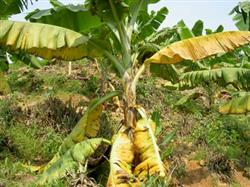
What diseases affect bananas and how are they controlled? Please give an introduction.
For what diseases affect bananas and how are they controlled, you can refer to the following:
Bunchy top disease: Banana bunchy top disease, commonly known as "jiaogong", "xiacao" or "congcao", is a serious worldwide banana viral disease. The typical symptom is that on the underside of diseased leaves, along the lateral veins and the base of the petiole or midrib, some dark green stripes appear, commonly called "green veins". The leaves are relatively upright and narrow, hard and brittle and easy to break, and the leaf margins show obvious chlorosis, later becoming scorched. New leaves emerge progressively smaller and form a bunch, and the plant becomes stunted. Diseased plants generally grow slowly and are dwarfed, and do not produce a flower stalk or set fruit. If the disease occurs at the time of flowering, the bud produced by the affected plant and the fruit it sets are deformed and small, with a bland taste and no economic value.
Control methods: 1) Choose a well-ventilated plantation site, adopt a reasonable planting method and density, strengthen fertilizer and water management, create an environment unfavorable for aphid breeding, and improve the disease resistance of banana plants. 2) Use disease-free tissue-culture plantlets or suckers from disease-free banana plantations for planting. For tissue-culture propagation material, use plants grown in insect-proof net houses or take suckers from mother plants in disease-free banana plantations, preferably the red bamboo-shoot suckers that grow from April to June. 3) Eliminate the banana aphid (Pentalonia nigronervosa), the transmission vector. 4) When diseased plants are found, spray pesticide in time to kill the banana aphids and then dig them out, or inject 8-10 ml of 10% glyphosate solution plus 1-2 ml of a systemic insecticide (which also kills aphids on the plant) into the center of the pseudostem 20-30 cm above the ground. If replanting is needed, scrape open the soil of the diseased hole and fill it with nearby new soil, add 50-100 g of 3% carbofuran and mix well before planting. In severely affected banana plantations, bananas can only be replanted after one crop rotation with crops such as rice.
Mosaic heart rot and streak disease, Panama disease, leaf spot diseases, black sigatoka, nematode disease, nematode disease, etc.
Control methods: 1) Fallowing the land or rotating with crops such as sugarcane and rice (more than 1 year) can greatly reduce the number of soil nematodes. 2) After trimming the roots and cracked surface tissues of sucker plantlets and exposing them to sunlight, treat them with 53-55°C hot water for 20 minutes, which can kill almost all nematodes on the corm. 3) Apply nematicides, such as soil application of carbofuran or fenamiphos, at 2-3 g of active ingredient per plant, applied once every 2-3 months. 4) Explore biological control methods, such as an Australian experiment of deep-plowing rapeseed seedlings into the banana plantation to kill nematodes.
Click to get more banana cultivation techniques
Click to get more fruit cultivation techniques