What symptoms appear when bananas are deficient in nutrients?
What happens when bananas are deficient in nutrients? Please introduce. Banana nutrient deficiency can be identified by the following methods: (1) Nitrogen deficiency. When bananas are deficient in nitrogen, the leaves are pale green or yellow-green, small and thin, the leaf sheath, petiole and midrib are tinged with red, leaf emergence is slow, and the leaf spacing is short. (2) Potassium deficiency. When bananas are deficient in potassium, the leaves break easily and the fruit ripens early...
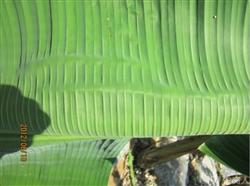
What happens when bananas are deficient in nutrients? Please introduce.
Banana nutrient deficiency can be identified by the following methods:
(1) Nitrogen deficiency. When bananas are deficient in nitrogen, the leaves are pale green or yellow-green, small and thin, the leaf sheath, petiole and midrib are tinged with red, leaf emergence is slow, and the leaf spacing is short.
(2) Potassium deficiency. When bananas are deficient in potassium, the leaves break easily and the fruit ripens early. The old leaves show orange-yellow chlorosis, then quickly die. The leaf midrib bends, the leaf blade curls backward toward the leaf base, and the leaf suddenly breaks at 2/3 from the tip rather than breaking at the petiole.
(3) Phosphorus deficiency. Phosphorus deficiency symptoms rarely appear in the field. The symptoms are slow emergence of new leaves, which are initially dark green, with chlorosis at the older margins, followed by purple spots that eventually merge into jagged necrotic patches, and the petiole breaks.
(4) Calcium deficiency. The first symptoms appear on young leaves, whose lateral veins thicken, especially the lateral veins near the midrib. Then the margins between the veins near the leaf tip become chlorotic, and as these leaf spots begin to age, they spread toward the midrib, forming jagged yellow-brown necrotic leaf spots. Calcium deficiency in the field also shows as the emergence of deformed leaves with only a midrib and notched blade, or spike-like leaves with almost no blade.
(5) Magnesium deficiency. When bananas are deficient in magnesium, the leaf margins gradually turn yellow toward the midrib, the leaf arrangement changes, purple spots appear on the petiole, and the leaf sheath edges become necrotic and the bunch loosens. The common symptom in the field is that the old leaf margins remain green while the area between the margins and the midrib becomes chlorotic.
(6) Sulfur deficiency. When bananas are deficient in sulfur, it first appears on young leaves, with leaf yellowing. Then patchy necrosis appears at the leaf margins, and the lateral veins thicken, similar to boron and calcium deficiency.
(7) Iron deficiency. The interveinal areas of young leaves become chlorotic.
(8) Manganese deficiency. The interveinal areas at the margins of young leaves become chlorotic.
(9) Zinc deficiency. The leaf edges narrow and growth is stunted.
(10) Copper deficiency. The leaves droop in an umbrella shape.
Click to get more banana cultivation techniques
Click to get more fruit cultivation techniques