How should grapes be fertilized in summer to make the fruit sweeter?
How should grapes be fertilized in summer to make them sweeter? Please give guidance. During the growth of grapes, applying fertilizer is very important, but fertilization must be done scientifically to avoid reduced grape yields and affected grape flavor caused by improper fertilization. If you want the grapes you grow to have a higher sweetness, you must pay special attention to the method when fertilizing: ...
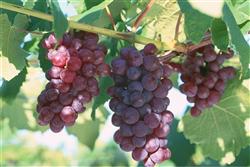
How should grapes be fertilized in summer to make them sweeter? Please give guidance
During the growth of grapes, applying fertilizer is very important, but fertilization must be done scientifically to avoid reduced grape yields and affected grape flavor caused by improper fertilization. If you want the grapes you grow to have a higher sweetness, you must pay special attention to the method when fertilizing:
I. Focus on base fertilizer
Around October, that is, the end of autumn, is the best period for applying base fertilizer to grapes. When applying base fertilizer, pay attention to the combined application of organic fertilizer and microbial bacterial fertilizer. Apply 4000 jin to 5000 jin of decomposed organic fertilizer per mu, and 2 to 3 kg of Jinbaobei microbial bacterial fertilizer; in addition, do not neglect the combination of chemical fertilizers (mainly nitrogen and phosphorus fertilizers). Apply 15 to 20 kg of urea or 30 to 40 kg of ammonium sulfate per mu. The base fertilizer should be buried into the ground together with deep soil plowing. This fertilization method of organic fertilizer plus microbial bacterial fertilizer plus chemical fertilizer not only provides quick-acting nutrients to the grapes, but also improves the soil micro-ecological environment and plays a role in improving the soil. Reason: the beneficial microorganisms in Jinbaobei microbial bacterial fertilizer, through the secondary metabolites produced by their own life activities, activate the soil, increase the number of soil aggregates, enrich the soil, increase the absorption rate of grape roots, and make full preparations for the flowering and fruiting of grapes.
II. Timely and reasonable topdressing
1. Topdressing before budding: carry it out in early spring when the buds begin to swell. At this time, quick-acting nitrogen fertilizer should be the main component, supplemented by microbial bacterial fertilizer, and root topdressing is preferable. The application amount accounts for about 10% to 15% of the annual fertilization amount. This topdressing will promote root absorption after the grapes enter the bleeding period. The application of Jinbaobei bacterial fertilizer can also increase the budding rate, enlarge the inflorescence, make the new shoots grow robustly, and thereby increase yield. If sufficient base fertilizer is applied in autumn, topdressing at this stage may be omitted.
2. Topdressing before flowering: spray fertilizer on the roots two weeks before flowering. This time, boron fertilizer is mainly used for spraying, and Jinbaobei microbial sweetening agent can also be used for spraying. This sweetening agent not only plays a role in protecting flowers and fruits, but also improves the conversion of photosynthetic substances, and has a good effect on grape flowering, pollination, fertilization, fruit setting, and flower bud differentiation in the same year. It has a very good effect on protecting flowers and fruits for fresh-eating varieties that easily shed flowers and fruits, such as Kyoho, Zuijinxiang, and Yuxuan No. 4.
3. Topdressing at the young fruit stage: after flower shedding, apply topdressing during the young fruit swelling stage, mainly nitrogen fertilizer, combined with phosphorus and potassium fertilizers. Combined with deep plowing of the land, bury the fertilizer 30 to 50 cm away from the plant, in shallow ditches or holes 15 to 20 cm deep. In addition, spray Jinbaobei sweetening agent once. This topdressing can not only promote the swelling of young fruits, but is also extremely important for the flower bud differentiation of new shoots and secondary shoots. Spraying the sweetening agent can promote earlier coloring of grapes and sugar accumulation.
4. Topdressing at the berry ripening stage: spray microbial sweetening agent. When the fruit begins to color, apply a large amount of Jinbaobei sweetening agent mainly containing potassium and calcium. At this stage, do not apply nitrogen fertilizer in orchards with sufficient fertilizer. The fertilization method can be root application or foliar spraying. Among these, Jinbaobei microbial sweetening agent plays an important role in increasing berry sugar content, improving fruit quality, and promoting the maturation of new shoots; it can increase sugar content by 0.8 to 1.5 degrees, and can promote earlier coloring and extend the storage period.
III. Issues to note in field operations In addition to reasonable base fertilizer and timely topdressing, some links in field operations cannot be ignored.
1. Base fertilizer must be applied after it is fully decomposed, especially chicken manure. It is best to use Jinbaobei fertilizer fermentation agent for decomposition and fermentation, and then apply it into the ground. Base fertilizer cannot always be applied in one place, as this easily causes root growth obstruction and rot and death.
2. When topdressing, try to avoid damaging thick roots, and be sure to water thoroughly once after fertilization. According to the fertilizer content of the soil in the orchard, appropriately add deficient elements, especially some medium and trace elements.
In addition, it must be combined with reasonable pruning and clearing of field weeds. Reasonable fertilization is the key to increasing grape yield and sweetness. Among these, the application of organic fertilizer and Jinbaobei microbial bacterial fertilizer increases the absorbable trace elements in the soil and various organic acids secreted by microorganisms. These are the main factors for increasing grape sugar accumulation and bright color.
Click to get more grape cultivation techniques
Click to get more fruit cultivation techniques