What are the main summer management techniques for sweet cherry?
What are the main summer management practices for sweet cherry trees? Please give an introduction. The main summer management practices for sweet cherry trees include the following aspects: 1. Soil, fertilizer and water management. Sweet cherry has a short fruit development period and requires concentrated nutrients. Pay attention to topdressing before flowering, during fruit development, after harvest and in autumn. The first application is mainly nitrogen fertilizer combined with phosphorus and potassium fertilizer, the...
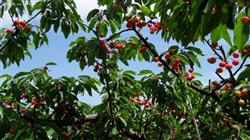
What are the main summer management practices for sweet cherry trees? Please give an introduction.
The main summer management practices for sweet cherry trees include the following aspects:
1. Soil, fertilizer and water management. Sweet cherry has a short fruit development period and requires concentrated nutrients. Pay attention to topdressing before flowering, during fruit development, after harvest and in autumn. The first application is mainly nitrogen fertilizer combined with phosphorus and potassium fertilizer; the second is mainly phosphorus and potassium fertilizer; after harvest, compound fertilizer is mainly used, and decomposed human manure and urine, decomposed soybean cake water, etc. can also be applied (farmyard manure is best applied in autumn). This fertilization is beneficial to flower bud differentiation and increases the yield of the coming year. Irrigate after fertilizing. From after petal fall to before fruit ripening, if the weather is dry, pay attention to irrigation to ensure a sufficient water supply. During the rainy season, pay special attention to drainage.
2. Summer pruning. The main technical measures for summer pruning of sweet cherry include pinching, twisting shoots, bending branches, and thinning branches, etc. Summer pruning is used to weaken the growth vigor of branches, promote the formation of short branches, and bear fruit earlier. ① Thinning branches is mainly carried out after harvest, removing large branches that affect ventilation and light penetration and have no value for retention, as well as excessively dense small branches, to improve ventilation and light conditions. ② Pinching should begin in mid-May. For upright branches, pinch once every 20-25 cm of growth, leaving 5-7 leaves; for the extended leader of the main branch and lateral branches, top them every 50-60 cm of growth, leaving 40 cm; for vigorous growing branches on the trunk, bend the branches to open the angle and top them every 80-90 cm of growth, leaving 60-70 cm.
3. Pest and disease control. The main diseases of sweet cherry include gummosis, canker, crown gall, early defoliation disease, root rot, etc. For leaf and fruit diseases, fungicides such as thiophanate-methyl and mancozeb can be used for control. Once the rainy season begins, Bordeaux mixture gives good control results. For root diseases, promptly scrape off diseased spots and tumors, and apply 10-20 times diluted fungicide such as Shajunyou for disinfection. The main insect pests of cherry include caterpillars, stinging moths, leafhoppers and pear lace bugs. According to the occurrence of pests, insecticides such as diflubenzuron, imidacloprid and Juanyiqing can be sprayed for control.
Click to get more cherry tree planting techniques
Click to get more fruit planting techniques