Key Technical Points for Summer Management of Sweet Cherry After Harvest
How to manage sweet cherries after harvest in summer? Please provide detailed guidance on management methods. Sweet cherries are mostly harvested from late May to late June. This period coincides with the important stage of cherry flower bud differentiation and pest and disease control. How to quickly restore tree vigor, promote flower bud differentiation, increase stored nutrients in the tree, and effectively prevent and control pests and diseases...
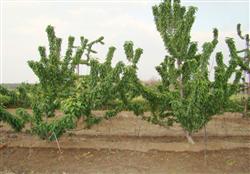
How to manage sweet cherries after harvest in summer? Please provide detailed guidance on management methods
Sweet cherries are mostly harvested from late May to late June. This period coincides with the important stage of cherry flower bud differentiation and pest and disease control. How to quickly restore tree vigor, promote flower bud differentiation, increase stored nutrients in the tree, and effectively prevent and control pests and diseases is a problem that must be solved to achieve consecutive years of high and stable cherry yields.
1. Timely topdressing after harvest: Immediately after cherry harvest, topdressing should be applied. This can promptly replenish the large amount of nutrients consumed by tree growth and fruiting, and meet the nutrient demands for flower bud formation and various later growth stages. The commonly used method is a combination of trench application of human manure and urine, broadcast application of compound fertilizer, and foliar spraying. For large trees in full fruiting stage, open radial trenches in the tree plate and apply about 30-50 kg of human manure and urine per tree, cover with soil, then evenly broadcast 0.5-1 kg each of urea and superphosphate in the tree plate, shallow hoe the tree plate, and water immediately. Foliar spraying can make nutrients reach the required parts more quickly. Throughout the growing season, spraying should be done multiple times to meet the tree's growth needs. After cherry harvest, in combination with pest and disease control, first spray 0.3% urea once, and about 20 days later spray again depending on tree vigor. In the later period, foliar spraying should mainly be P and K fertilizers. Spray 0.3% monopotassium phosphate once each in July, August, and September to extend leaf lifespan and increase tree nutrients.
One issue to note during fertilization is that fertilization cannot be unlimited, especially large amounts of N fertilizer and large amounts of watering, as this easily causes excessive vigor in cherry trees, prevents spring shoots from stopping growth in time, is unfavorable for flower bud differentiation, prevents autumn shoots from topping in time, and is unfavorable for safe overwintering. Therefore, attention should be paid to scientific fertilization and watering.
2. Reasonable summer pruning: According to research, the physiological differentiation stage of cherry flower buds is mostly concentrated in the period when spring shoots stop growing, about 10 days after fruit harvest, and the morphological differentiation stage is completed within 1-2 months afterward. Therefore, using various summer pruning methods to balance tree vigor and promote the transformation from vegetative growth to reproductive growth is an important measure to promote flower bud differentiation. In addition, reasonable summer pruning can also greatly reduce the amount of winter pruning and save a large amount of labor.
1. Thinning branches: After fruit harvest, promptly remove overly tall and overly dense upward-facing branches and some overly dense fruiting branch groups to open the inner canopy (note to cultivate small branches in the inner canopy and prevent the inner canopy from becoming bare). Remove temporary fruiting branches, drooping branches, thin and weak branches, and overly dense peripheral branches. On whorled branches, keep 2-3 branches and remove the rest, open the periphery, so that branches are sparse outside and dense inside, evenly distributed, with good ventilation and light penetration.
2. Heading back: Fruiting branches that have become bare should all be headed back to leaf buds to control the outward movement of fruiting positions.
3. Pinching: Continue pinching the inner canopy branches retained in the earlier period. For new shoots sprouting after heading back, if there is space, leave 5-15 cm and pinch repeatedly to cultivate small fruiting branch groups. When peripheral new shoots grow to about 40 cm, leave 25 cm and cut back.
4. Bud removal: Promptly remove new buds that sprout after branch thinning, heading back, and pinching and have no space.
Click to get more cherry tree planting techniques
Click to get more fruit planting techniques