A Detailed Guide to Walnut Harvesting Methods and Post-Harvest Handling Techniques
How are walnuts harvested and handled? Please explain the methods. The suitable harvest period for walnuts is when the inner membrane changes from white to brown, marking the maturity of the walnut kernel. In production, they are often harvested when the outer husk changes from green to pale yellow, partially splits open, and a few fruits drop. The main method people use to harvest walnuts is knocking them down with a pole, and some also...
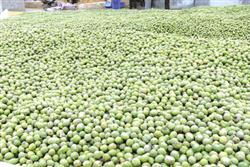
How are walnuts harvested and handled? Please explain the methods
The suitable harvest period for walnuts is when the inner membrane changes from white to brown, marking the maturity of the walnut kernel. In production, they are often harvested when the outer husk changes from green to pale yellow, partially splits open, and a few fruits drop. The main method people use to harvest walnuts is knocking them down with a pole; some also spray 500-1000 microliters per liter of ethephon on the trees 1-2 weeks before natural maturity to make the fruits drop naturally. The traditional method for removing the green husk of walnuts is the heap-retting method: the harvested walnuts are piled indoors in a cool, ventilated place to a height of 50 cm, covered with 10 cm of straw matting or straw, and after 4-6 days the green husks swell or split open; then a wooden stick is used to strike them so the green husks crack open and the nuts come out. Nowadays the ethephon dehulling method is mostly used, that is, dipping the harvested green-husked fruits in 3000-5000 milliliters per kilogram of ethephon for half a minute, or evenly spraying ethephon with a sprayer so that every fruit is coated; after piling and covering for two days, the green husks loosen from the nut, swell, and begin to come off. After dehulling, the walnuts should be promptly washed to remove residual rotten green husk, soil or other dirt from the nut surface. After washing, a bleaching treatment is carried out, that is, soaking in a sodium hypochlorite solution diluted 4-6 times for 4-5 minutes; once the nuts turn white, take them out, rinse the nuts clean with clear water, and spread them on reed mats to dry. Generally, they are first air-dried in a cool, ventilated place for half a day, and after the nut surface is dry, they are moved outside and spread in the sun for 5-7 days, during which they must be turned frequently. Drying can also be done in a drying room; at the end of drying, the moisture content of the nuts should be lower than 8%.
Click to get more hickory planting techniques
Click to get more fruit planting techniques