How to Harvest and Process Walnuts? A Detailed Practical Guide
How do you harvest and process walnuts? Please give guidance. For walnut harvesting and processing, you can refer to the following methods: Harvesting. To ensure the yield and quality of walnut nuts, they should be harvested when the nuts are fully mature, but not too late, otherwise the green husks will split open and hang on the tree for too long, increasing the chance of mold infection, causing...
How do you harvest and process walnuts? Please give guidance.
For walnut harvesting and processing, you can refer to the following methods:
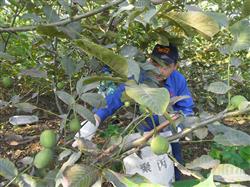
Harvesting. To ensure the yield and quality of walnut nuts, they should be harvested when the nuts are fully mature, but not too late, otherwise the green husks will split open and hang on the tree for too long, increasing the chance of mold infection, causing the nuts to turn black and moldy. When harvesting, many people use sticks to knock them down directly, but at this time you should note that you should use flexible softwood poles to knock them down from the inside outward along the branches, and must not strike randomly, otherwise it will damage the branches and buds and affect the next year's yield.
Hulling. The traditional method in China is pile hulling, but this method causes serious contamination of the nut surface due to pile rot and bruising from knocking, reducing commercial quality. At present, a relatively good method is dipping in ethephon solution. After dipping, pile them to a thickness of about 50 cm and place them in a location with a temperature of 30°C and a relative humidity of 80%, and they can be hulled relatively quickly. If a layer of dry grass about 10 cm thick is also added on top, they can be hulled in about two days.
Rinsing. First wash the soil and black stains off the shell surface with clean water, then carry out bleaching. The method is: first dissolve a small amount of bleaching powder in a small amount of warm water, then add 60-80 times the amount of water (a porcelain container is best), put the walnuts into the bleaching solution and stir for 5-8 minutes, and when the shell surface turns white, remove them and wash them clean.
Drying. After the walnut nuts are rinsed, they must not be exposed to direct sunlight, so as to avoid the shell cracking and the kernel deteriorating. The washed nuts can be dried in the shade on bamboo mats or dried by heat (heat drying cannot be used for seed). When drying in the shade, the spreading thickness should not exceed two layers; too thick makes them prone to heating, causing the kernel to deteriorate, and also makes them hard to dry. When autumn rains continue, it is best to use heat drying. When heat drying, the spreading thickness should not exceed 15 cm; too thick makes it inconvenient to turn and the drying uneven, and it is prone to being scorched on top and damp below. The drying temperature is crucial. When the nuts are first put on the heated bed, their moisture content is high, so a temperature of 25°C-30°C is appropriate; when they are 40%-50% dry, raise the temperature to 35°C-40°C; when they are 70%-80% dry, lower the temperature to 30°C; finally dry them with a slow fire until fully dry. The closer they are to being dry, the more frequently they must be turned.
Click to get more hickory planting techniques
Click to get more fruit planting techniques