What are the soil requirements for growing blueberries?
What are the soil requirements for blueberries? Please explain that orchard soil management refers to the various technical measures for orchard cultivation and soil enrichment. During the long-term growth and development of blueberries, natural factors and human disturbance cause the physical and chemical properties of the orchard soil to deteriorate and fertility to decline. In order to prevent soil deterioration and further improve and enrich the soil,...
What are the soil requirements for blueberries? Please explain
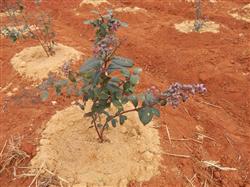
Orchard soil management refers to the various technical measures for orchard cultivation and soil enrichment. During the long-term growth and development of blueberries, natural factors and human disturbance cause the physical and chemical properties of the orchard soil to deteriorate and fertility to decline. Preventing soil deterioration and thereby improving and enriching the soil to create a good environment for fruit tree roots is the basic task of orchard soil management. Blueberry roots are fine, have no root hairs, are distributed relatively shallowly, and require loose, well-aerated, acidic soil conditions. Therefore, field management must be even more meticulous.
The basic principles of blueberry orchard management: In young orchards, the plants are relatively small and there is more open space in the orchard, so the soil in the tree discs and between the rows should be managed separately. The soil in and around the tree disc is usually managed by clean cultivation, mulching, and no-till with herbicide spraying. Soil management between orchard rows mainly involves intercropping and planting green manure. In addition, the between-row sod culture method can also be used. In mature orchards, the plants have fully grown and the root system no longer fills the entire orchard. At this point, soil management should be considered uniformly for the whole orchard. Clean cultivation or sod culture can be adopted. In the United States, mulching the blueberry tree disc is a very commonly applied technical measure.
(1) Clean cultivation Clean cultivation is a commonly used method. Because blueberry roots are shallowly distributed, the depth of clean cultivation should be 5-10 cm. The period of clean cultivation runs from early spring to summer and autumn; depending on local rainfall and weed infestation, it can be carried out several times a year. Summer intertillage can be somewhat deeper, and slightly shallower near the plants. In spring and autumn, shallow hoeing and shallow cultivation are needed. This achieves the effects of weed control, moisture conservation, and waterlogging prevention. Because clean cultivation easily exposes the soil to erosion, mountain orchards must properly handle the relationship between clean cultivation and soil and water conservation. When planting blueberries on newly reclaimed mountain forest land in forest areas, perennial weeds are not easy to remove, and during intertillage and weeding it is easy to pull out the planted blueberry seedlings along with them. Therefore, weeding must be done carefully, and it is best to prepare the land one to two years in advance to reduce the number of perennial weeds.
(2) Sod culture method Sod is grown between the rows, while clean cultivation or herbicides are used to control weeds within the rows. Compared with clean cultivation, the sod culture method is conducive to increasing yield and has obvious advantages such as maintaining soil moisture and facilitating mechanized operations. The disadvantage is that it is not conducive to controlling blueberry mummy berry disease. The grasses used in orchard sod culture include gramineous species such as orchardgrass, red fescue, roegneria, ryegrass, and wild oat; and leguminous species such as clover, crown vetch, and vetch. Gramineous and leguminous grasses can be mixed and sown.
(3) Mulching The technical measure of mulching with organic matter under blueberry plants has been widely applied in the United States. Li Yadong and others from Jilin Agricultural University have carried out many years of mulching technology research in some parts of China and have also achieved very obvious results. Mulching has the advantages of increasing root vitality and root number, increasing plant growth, yield, and fruit quality, and reducing soil moisture evaporation and the number of irrigations. The specific method is: after blueberry planting, on the soil surface along the planting row, with the plant as the center, spread a 5 cm thick, 90 cm wide layer of rotted sawdust. After 2-3 years, increase the thickness to 12-15 cm. After the plants reach maturity, increase the thickness by 5-7 cm every 2-3 years, and increase the mulching width to 90-120 cm. The mulching period is during tree dormancy. Mulching can also control the germination of annual weed seeds, but it has no effect on deep-rooted perennial weeds. This technique is suitable for the cultivation of highbush blueberry and rabbiteye blueberry, which do not require mounding soil over the base for winter cold protection.
(4) Orchard intercropping Within the first 3 years after planting, because the blueberry plants are relatively small, short-stalked crops can be selected as intercrops according to local agricultural planting characteristics. However, note the following: First, intercrops must not affect the normal growth of blueberries; the growing range of intercrops must be 60-90 cm away from the blueberry plants, and their height must not shade the blueberries; second, intercrops should not become hosts or transmitters of pests and diseases to which blueberries are prone; third, do not plant green leafy vegetables (such as Chinese cabbage, etc.) in autumn, to avoid damage to blueberry branches caused by the green leafhopper.
(5) Orchard chemical weed control Weed control in blueberry orchards is an important part of orchard management; weeded orchards can increase yield by more than 1 times compared with unweeded orchards. Manual weeding is costly, and soil cultivation easily damages the root system and the tree. Therefore, chemical weed control is widely used in blueberry cultivation. Especially for lowbush blueberry, once the orchard is formed, because the rhizomes spread and run, the entire orchard becomes one continuous patch and manual weeding cannot be carried out, so herbicides must be used. There are many problems with applying chemical herbicides in blueberry orchards: first, excessively high organic matter content in the soil can deactivate herbicides; second, on excessively moist soil, the timing of herbicide use is uncertain; third, in raised-bed cultivation, it is very difficult to apply herbicides evenly in the furrows and on the bed surfaces. Even so, successful experience has been obtained in applying herbicides in blueberry orchards. The efficacy of herbicides is related to factors such as environmental conditions and the time of use; therefore, before any type of herbicide is used on a large scale, a small-scale trial must first be conducted locally.
Herbicides should be applied as uniformly as possible, and can be applied by manual spraying or mechanical spraying. When spraying, lower the nozzle, spray onto the ground, and try to avoid spraying onto the tree. To date, there is no effective herbicide that is harmless to blueberries; therefore, the effective use of herbicides should strictly follow the pesticide manufacturer's instructions, and new herbicides must be tested before large-scale application. In blueberry orchards, the grass herbicides fluazifop-P-butyl and quizalofop-P-ethyl, which control monocotyledonous plants, are relatively safe.
Click to get more strawberry cultivation techniques
Click to get more fruit cultivation techniques