How to manage citrus in July? A full breakdown of the key points
How should citrus be managed in July? Please give an introduction. For citrus in July, you can refer to the following methods for management: (1) Fertilizer and water management. July is prone to both high-temperature summer drought and a markedly increased chance of heavy rain. Therefore, all regions should pay special attention to the weather forecasts from local meteorological stations. During drought, use straw to cover the tree basin...
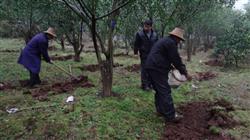
How should citrus be managed in July? Please give an introduction.
For citrus in July, you can refer to the following methods for management:
(1) Fertilizer and water management
July is prone to both high-temperature summer drought and a markedly increased chance of heavy rain. Therefore, all regions should pay special attention to the weather forecasts from local meteorological stations. During drought, cover the tree basin with straw to a thickness of 15-20 cm, keeping the mulch 10 cm away from the root crown, and be careful to prevent fruit cracking in early-maturing Wenzhou mandarin and Bendizao mandarin caused by unbalanced water supply. At the same time, pay close attention to the occurrence of heavy rain. For citrus orchards that suffer from typhoon rainstorms or have a high groundwater table, ditches should be repaired and drainage cleared. The appropriate time to apply the fruit-strengthening fertilizer is within 1-2 weeks before the autumn shoot flush. For young trees, apply 5-10 kg of decomposed human and animal manure or 0.2-0.4 kg of urea, 0.5 kg of superphosphate, and 0.1 kg of potassium sulfate or potassium nitrate per tree to promote summer shoot growth, autumn shoot sprouting, and canopy expansion. If the tree vigor is relatively weak, appropriately increase the fruit-strengthening fertilizer, or in early to mid-July focus on potassium and nitrogen, with phosphate fertilizer applied in combination, with the application amount accounting for 20%-40% of the annual total, to promote uniform autumn shoot flushing. Non-bearing vigorous trees and citrus trees with a small fruit load may receive less or no application.
(2) Shoot control and fruit thinning
Summer pruning is carried out 15-20 days before releasing the autumn shoots. For young trees, remove adventitious buds or scattered new shoots below the trunk and main branches, cut back water sprouts, and pinch summer shoots to promote a second summer shoot flush or autumn shoots, cultivating the tree structure and promoting canopy expansion. For newly bearing trees, pinch or cut back summer shoots over 25-30 cm. For aging trees, appropriately cut back to promote new shoots and renew and rejuvenate the tree. Summer shoots generally occur more on vigorous trees or citrus trees with few fruits. Continue removing late summer shoots until mid-July; for aging trees and trees with many fruits, release shoots in late July. After physiological fruit drop ends, for plants with many flowers, early rough fruit thinning can be carried out, removing overly dense small fruits, deformed fruits, and fruits damaged by pests and diseases, retaining young fruits that develop normally and are evenly distributed within the canopy, ensuring that the retained fruits grow and develop normally and have good appearance and internal quality.
(3) Pest and disease control
Because temperature and humidity are suitable during the plum rain period, diseases are prone to breeding, spreading, and developing. Strengthen monitoring, actively prevent and control them, and control them promptly if they occur, so as to keep diseases in check at the right time. Whitewash tree trunks, especially top-grafted trees, to prevent resin disease induced by sunscald; if individual copper-peel fruits appear or 5% of leaves or fruits have rust mites, you can choose 10% liuyangmycin emulsifiable concentrate at 1000-2000 times dilution, 20% clofentezine at 1500-2000 times dilution, or narrow-range high-precision mineral oil emulsion (such as Luying) at 150-200 times dilution. Mineral oil emulsion can also control scale insects and whitefly pests. Improving canopy ventilation and light penetration and pruning dead branches are important measures to reduce black spot disease. You can choose 80% Bibei wettable powder at 400-600 times dilution, 80% Dason M-45 wettable powder at 600 times dilution, or 70% thiophanate-methyl wettable powder at 500-800 times dilution for control, and note to apply once more after 250 mm of rainfall. Dason M-45 can also control rust mites. Continue trapping and poisoning longhorn beetles and use insect-killing lamps to attract moths. For cicadas, focus on trapping and manual capture, and prune egg-laying branches and burn them in a centralized manner.
Click to get more citrus planting techniques
Click to get more fruit planting techniques