How can citrus cultivation be protected against drought and made drought-resistant?
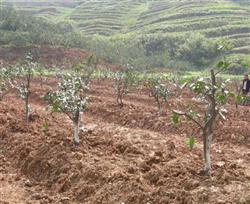
How can citrus be planted to prevent and resist drought? Please give guidance. Citrus cultivation is prone to damage from spring drought and summer drought. Spring drought mainly occurs from February to May, and the damage shows as affected flower bud differentiation, water loss in late-maturing citrus, and abnormal flower drop during the flowering period; leaf curling, an increase in deformed flowers, granulation and water loss of the fruit segments, and declining quality. In high temperature and drought during the flowering period, the flowering period shortens, affecting pollination and fertilization...
How can citrus be planted to prevent and resist drought? Please give guidance
Citrus cultivation is prone to damage from spring drought and summer drought. Spring drought mainly occurs from February to May, and the damage shows as affected flower bud differentiation, water loss in late-maturing citrus, and abnormal flower drop during the flowering period; leaf curling, an increase in deformed flowers, granulation and water loss of the fruit segments, and declining quality. In high temperature and drought during the flowering period, the flowering period shortens, affecting pollination and fertilization. Summer drought mainly occurs from July to September, and the region on both banks of the Yangtze River is an area with a high frequency of summer drought. The damage shows as wilting leaves, which curl in severe cases; sunburn on the fruit, and in severe cases the peel clings tightly to the flesh, or sinks and dries to form scar spots, the juice sacs shrivel, the flesh granulates, and the taste is bland.
For this, the following simple and practical drought prevention and drought resistance techniques can be used in citrus cultivation:
1. Growing grass: From March to June, leave grass growing between the rows in the orchard or plant green manure crops such as beans and clover. Before the dry season arrives, cut the grass and use it as mulch, which can both reduce soil evaporation loss and reduce soil erosion.
2. Tree disc mulching: Use weeds, rice straw or cut green manure from interplanting to mulch the tree disc. This not only lowers temperature and preserves moisture, but also increases soil organic matter, improves soil fertility, and benefits normal growth of the fruit trees. The mulching thickness is 10-20 cm, leaving a 10-15 cm gap between the mulch and the trunk. Covering the mulch with a thin layer of soil gives an even better effect.
3. Hole irrigation for drought resistance: When drought occurs and water sources and irrigation conditions are limited, dig one 30 cubic cm hole on each side of the tree crown at the drip line, irrigate 50 kg per tree each time, and cover the irrigation holes with grass, in a 7-day cycle.
Click to get more citrus cultivation techniques
Click to get more fruit cultivation techniques