Identification of Citrus Magnesium Deficiency Symptoms and Remedies
What is citrus magnesium deficiency? How to remedy it? Please advise. Citrus magnesium deficiency can occur year-round, but it occurs most often in late summer or autumn when the fruit is nearly ripe, and the old leaves and leaves near the fruit show obvious magnesium deficiency symptoms first. This is because when citrus is deficient in magnesium, the magnesium present in the older organ tissues is often transferred...
What is citrus magnesium deficiency? How to remedy it? Please advise.
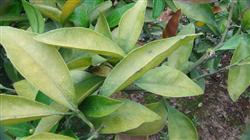
Citrus magnesium deficiency can occur year-round, but it occurs most often in late summer or autumn when the fruit is nearly ripe, and the old leaves and leaves near the fruit show obvious magnesium deficiency symptoms first. This is because when citrus is deficient in magnesium, the magnesium present in the older organ tissues is often transferred to the young organs that are growing, so that magnesium deficiency in the old organs is often more severe. In magnesium-deficient leaves, irregular yellow spots appear along both sides of the midrib, then the yellow spots spread toward the leaf margin, causing most of the leaf to become yellow, with only the veins and the leaf tissue at their base remaining green in a triangular shape. When magnesium deficiency is severe, the leaves all turn yellow and drop off very easily. The branches that have lost their leaves grow weakly and often die in the following spring. Generally, varieties with many seeds in the fruit are more prone to magnesium deficiency than varieties with few or no seeds. The key to citrus magnesium deficiency is as follows:
1. Leaf mesophyll yellowing, leaf veins green
2. Old leaves gradually yellow along both sides of the main and lateral veins, expanding until the whole leaf is yellow, with only the main vein and the tissue at its base still remaining green... magnesium deficiency
Occurrence pattern: The demand of citrus for magnesium is far greater than its demand for other trace elements. In acidic soil (pH 5.0) and sandy soil, because magnesium is very easily leached, citrus in these soils tends to show magnesium deficiency. When potassium fertilizer and phosphorus fertilizer are applied excessively, magnesium deficiency is also easily caused. Excessive use of sulfur and lime sulfur mixture agents in orchards also easily makes the soil acidic, leading to magnesium deficiency.
Control method: In orchards with magnesium deficiency, on the basis of improving the soil and applying more organic fertilizer, appropriately applying magnesium salts can effectively control magnesium deficiency.
(1) Soil application. In acidic soil (below pH 6.0), in order to neutralize soil acidity, magnesium lime should be applied (0.75-1 kg per fruit tree); in areas with slightly acidic to alkaline soil, magnesium sulfate should be applied; these magnesium salts can be mixed into compost and applied. Very high available concentrations of potassium and calcium in the soil will inhibit the plant's ability to absorb magnesium, and the application rate of magnesium fertilizer must be increased. In addition, more organic matter and salt should be applied, and in acidic soil more lime should also be applied appropriately.
(2) Foliar spraying. Generally, spraying 2%-3% magnesium sulfate 2-3 times in June-July can restore tree vigor. For mild magnesium deficiency, foliar spraying takes effect quickly.
Click to get more citrus cultivation techniques
Click to get more fruit cultivation techniques