How should loquat be fertilized for more rational cultivation?
How should loquat be fertilized for rational cultivation? Please provide guidance. For growing loquat, you can refer to the following fertilization methods: (1) Fertilizer amount and number of applications. Commonly used fertilizers for cultivating loquat include human excreta, livestock and poultry manure, cake fertilizer, compost, garbage fertilizer, burnt soil and chemical fertilizers. According to the mineral nutrient requirements of loquat growth and development...
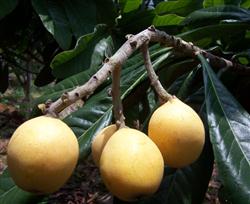
How should loquat be fertilized for rational cultivation? Please provide guidance.
For growing loquat, you can refer to the following fertilization methods:
(1) Fertilizer amount and number of applications. Commonly used fertilizers for cultivating loquat include human excreta, livestock and poultry manure, cake fertilizer, compost, garbage fertilizer, burnt soil and chemical fertilizers. According to the mineral nutrient requirements of loquat growth and development, loquat is a plant with high potassium demand, and the potassium content of loquat fruit is almost 3 times that of nitrogen. With too much nitrogen fertilizer, the fruit is large, but both color and flavor are strong, and the appearance and quality are poor; if there is too much potassium fertilizer, the sugar content of the fruit increases, but the flesh is coarse and hard. Therefore, the various fertilizer elements should be properly combined.
For young loquat trees, fertilizer should be applied 5 to 6 times throughout the year, using the method of light fertilizer applied frequently, about once every two months. Apply 15 to 25 kg of decomposed dilute human (pig) excreta (at a concentration of 20% to 30%) per tree, or 150 to 250 g of imported compound fertilizer.
For adult bearing loquat trees, fertilizer is generally applied three times a year, mainly arranged according to the fertilizer requirements and phenological periods of loquat. The fertilizer amounts summarized in different regions vary slightly. In a 15- to 20-year-old vigorous loquat orchard on mountain land in Putian, Fujian, the annual application per 667 sq m is 10 to 13 kg of nitrogen, 8 to 10 kg of phosphorus and 13 to 15 kg of potassium. It can roughly be divided into the following applications:
① Post-harvest fertilizer
Applied in May to June. It mainly supplements the nutrients consumed by fruiting, restores tree vigor, promotes the vigorous sprouting of summer shoots, and promotes good root growth and flower bud differentiation. It is mainly quick-acting fertilizer, combined with deep plowing, and a large amount of decomposed organic fertilizer is applied. The ratio of nitrogen, phosphorus and potassium fertilizer applied is generally 3:2:2. The fertilizer amount accounts for about 40% to 50% of the annual fertilizer amount. For late-maturing varieties, it can be applied earlier, before harvest. Taking a tree producing 35 kg of loquat fruit as an example, each loquat tree should be applied 0.75 to 1.0 kg of imported compound fertilizer and 10 to 12 kg of chicken manure.
② Pre-flowering fertilizer
In September to October, when autumn flower bud differentiation has basically ended and flower spikes begin to appear, it is applied to provide the nutrients needed for flowering and fruiting and for the sprouting of vegetative autumn shoots, promote good flowering, and improve the cold resistance of the plant. It is mainly organic fertilizer. The ratio of nitrogen, phosphorus and potassium fertilizer is generally 5:4:5. The fertilizer amount accounts for about 30% to 40% of the annual fertilizer amount. Apply 10 to 13 kg of chicken manure per tree.
③ Spring shoot and fruit-strengthening fertilizer
Applied in February to March after fruit thinning. The role of this fertilization is to promote the growth of spring shoots and roots, supply the nutrients needed for young fruit growth, promote the enlargement of young fruit, reduce fruit drop, and promote and plump the spring shoots. Quick-acting fertilizer is used in combination with compound fertilizer, and the ratio of nitrogen, phosphorus and potassium fertilizer is generally 3:4:3. If the soil is relatively rich in phosphorus fertilizer, or the amount of fruit borne at that time is relatively small, the proportion of phosphorus fertilizer can be reduced. If the tree vigor is not strong, the proportion of nitrogen fertilizer should be increased. The fertilizer amount accounts for about 20% of the annual fertilizer amount. Apply 30 to 50 kg of decomposed dilute human excreta per tree, plus 0.3 to 0.6 kg of imported compound fertilizer and 0.25 to 0.5 kg of potassium fertilizer. February is the period with the largest root growth of the year, so the fertilization depth should be shallow to avoid damaging the roots.
In Putian, Fujian, loquat fruit growers apply 30 to 35 kg of chicken manure per tree after harvest in combination with plowing and earthing up. When a loquat tree bears many fruits, during the rapid fruit expansion period, plowing and earthing up are carried out, and 30 to 35 kg of chicken manure is applied per tree. When a loquat tree bears many fruits, before the rapid fruit expansion period, spray foliar fertilizer solution 2 to 3 times (0.2% to 0.4% potassium dihydrogen phosphate, 0.2 to 0.4% urea and 0.2 to 0.3% potassium sulfate), once every 10 days.
(2) Fertilization methods
The fertilization effect on loquat is closely related to the fertilization method. The absorbing roots of loquat trees are mainly concentrated in the soil layer outside the outer edge of the tree canopy projection, and in production the fertilization site is the canopy drip line. You can also take advantage of the fertilizer-seeking nature of loquat roots by applying fertilizer slightly separated from where the roots are concentrated, guiding the roots to grow deeper or expand outward, thereby expanding the root range. In addition, the characteristics of the fertilizer should also be considered; for example, phosphorus fertilizer has poor mobility and is easily fixed by red soil. Therefore, phosphorus fertilizer should be applied deeply and in holes, applied in the root zone, to improve the absorption and utilization rate of phosphorus fertilizer. When applying superphosphate or bone meal, it should be mixed and composted with barnyard manure, stable manure or human excreta, and applied after decomposition for better effect. The commonly used soil fertilization methods in loquat orchards are:
① Ring-shaped fertilization
Also called wheel-shaped fertilization. Dig a ring-shaped ditch slightly outside the outer edge of the tree canopy, apply fertilizer into it, and then cover with soil. The ditch for base fertilizer should be deeper, 40 to 50 cm; the ditch for topdressing should be shallow, 15 to 30 cm. The fertilization ditch should be moved outward year by year. This fertilization method has the advantages of simple operation and economical fertilizer use. However, it easily cuts some faster-growing horizontal roots, and the fertilization range is relatively small, which should be noted when choosing it.
② Plate-shaped fertilization
With the trunk as the center, rake the soil into a plate shape. The area near the trunk is shallow, and the farther from the trunk, the deeper it is. There is also the practice of making only a flat-bottomed fertilization plate. The raked soil is piled around the outside of the plate to form a soil ridge edge. After fertilization, cover with soil again. Because this method applies fertilizer relatively shallowly and water can easily damage roots, it is suitable for topdressing. However, long-term use of this fertilization method will cause the loquat tree roots to move upward.
③ Radial ditch fertilization
With the trunk as the center, at 60 to 80 cm from the trunk, dig 6 to 8 radial strip ditches outward, 20 to 30 cm deep, and apply fertilizer into the ditches. Change the ditch positions every other year or every other application to increase the absorbing surface of the loquat tree roots. This method damages fewer roots, and if combined with ring-shaped fertilization, the fertilization effect is better. But when digging ditches, avoid large roots so as not to damage them.
④ Strip ditch fertilization
Dig strip ditches on both sides of the canopy drip line, or dig strip ditches between rows or between plants in the loquat orchard. The ditch for base fertilizer should be deeper, 50 to 60 cm; the ditch for topdressing should be shallower, 15 to 30 cm. Then apply fertilizer into the strip ditches and cover with soil. At the next fertilization, the other two sides can be used, moving outward year by year, combined with deep plowing, to mature the soil. This is a relatively good fertilization method.
⑤ Whole-orchard fertilization
For adult loquat orchards, the loquat tree roots have already spread throughout the whole orchard, so fertilizer can be evenly scattered over the whole orchard and then turned into the soil. If whole-orchard fertilization is combined with strip ditch fertilization or radial ditch fertilization, the fertilizer effect can be better brought into play. This method applies fertilizer relatively shallowly and easily causes loquat roots to move upward.
⑥ Foliar topdressing
Also called leaf surface spraying. Foliar topdressing is a method of dissolving fertilizer in water and spraying it directly onto loquat leaves so that the leaves directly absorb and utilize nutrient elements. The foliar topdressing method is simple and easy to carry out, uses a small amount of fertilizer, and is absorbed and utilized quickly. Foliar topdressing plays an important role in preserving flowers and fruits, promoting fruit development, improving quality, correcting nutrient deficiency symptoms, improving fertilizer efficiency (preventing soil chemical or biological fixation) and regulating loquat tree vigor. However, foliar topdressing has a short duration of action and can only play an auxiliary role; it cannot completely replace soil fertilization.
Leaves are the center of the physiological and biochemical activities of loquat trees. The stomata and cuticle on the leaves have the ability to absorb nutrients. During the growing period, the undersides of young leaves have a stronger ability to absorb nutrients. Generally, the absorption of nutrients by leaves, like that by roots, is such that under acidic conditions anions are easily absorbed, while under alkaline conditions cations are easily absorbed. The trace elements used in foliar topdressing are mostly fertilizers with a simple composition. The suitable spraying concentrations of various fertilizers are shown in Tables 4 to 5. When foliar topdressing is carried out in spring, the concentration can be slightly higher; when carried out in the high-temperature and dry seasons of summer and autumn, the concentration should be appropriately lower to avoid fertilizer damage. When multiple fertilizers are mixed for use, the suitable concentration should be reduced proportionally. In addition, foliar topdressing can also be carried out in combination with spraying pesticides for disease and pest control, but be sure to pay attention to the acidity and alkalinity of the fertilizer types and pesticide types; acidic and alkaline ones cannot be mixed.
⑦ Special fertilization
In some hilly and mountainous areas, soil erosion is severe, nutrient elements are leached, and nutrient deficiency symptoms are easily caused. In addition, acidic soil is often deficient in phosphorus and calcium, while alkaline soil is often deficient in iron, and supplementing by soil fertilization is not effective. For this reason, adopting some special fertilization methods can achieve better fertilization results.
First, root-sleeving fertilization. The period for root-sleeving fertilization should be during the root growth and absorption period, and the effect is better 5 to 7 days after flowers fade. The concentration used is generally slightly lower than that used for foliar topdressing. The method is: use a 10 cm x 15 cm plastic bag, fill it with 100 to 200 ml of fertilizer solution, and at about 30 to 50 cm inside the drip line on the east, south, west and north sides of the loquat canopy, take out a bundle of fibrous roots with many new roots; insert it into the plastic bag filled with fertilizer, and tie the bag opening tightly to prevent water evaporation. This method has a relatively good effect on correcting nutrient deficiency symptoms.
Second, infusion fertilization. Infusion fertilization is generally carried out in early spring when sap flows, at the flower bud sprouting stage and one month before the fruit ripening stage. It can preserve flowers and fruits, and promote fruit development and flower bud differentiation. The fertilizer solution is 0.5 L of water, 6 g of urea, 4 g of potassium dihydrogen phosphate, 4 g of boric acid added in early spring, and a trace amount of triacontanol; when iron is deficient, 3 g of ferrous sulfate can be added. The device resembles a hospital IV bottle. The production method is: use a plastic bottle to hold the fertilizer solution so that it does not leak after sealing. Insert two needles into the cap and connect rubber tubes; one 40 cm long rubber tube is used for air intake, and the other 60 cm long rubber tube is then connected to a needle inserted into the tree body. Use a nail to make a hole in the main trunk of the loquat tree 20 cm above the ground, reaching the xylem. Then, hang the bottle up, insert the needle into the hole, and after seeing the liquid seep out, seal the small hole tightly with white wax.
Third, drip irrigation fertilization. Drip irrigation fertilization is also an advanced fertilization and irrigation technique. It has the advantages of timely fertilizer supply, uniform fertilizer distribution, no root damage, protection of soil structure, less labor and less fertilizer use. However, at present, problems such as water quality failing to meet requirements and easy clogging of emitters generally exist in production. Further technical improvement is needed before it can be widely applied in production.
Click to get moreLoquat cultivation techniques
Click to get more fruit cultivation techniques