What are the key technical points for apple management in summer and autumn?
How should apples be managed in summer and autumn? Please advise. Summer and autumn apple trees can be managed by referring to the following methods: (1) Fertilizing under the tree, generally based on quick-acting compound fertilizer, topdressing according to tree age and fruit load; for full-bearing trees, apply 2-3 kg of Heiyouliang: (2) Foliar spraying of fertilizer. In general, supplemental fertilization outside the roots is 5 times more efficient than fertilization within the roots, costs little, is simple in method, what are the causes of apple valsa canker, and does not cause pollution to the ecological environment. Every 10-15 days, before 9 a.m. and after 4 p.m., spray Hongxin amino acids at 400-500 times dilution + Aiduoshuo + Shuofeng 481 continuously for several times, to promote thick green leaves, strong tree vigor, and enlarged fruit size.
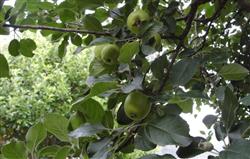
How should apples be managed in summer and autumn? Please advise
Summer and autumn apple trees can be managed by referring to the following methods:
(1) Fertilizing under the tree, generally based on quick-acting compound fertilizer, topdressing according to tree age and fruit load; for full-bearing trees, apply 2-3 kg of Heiyouliang:
(2) Foliar spraying of fertilizer. In general, supplemental fertilization outside the roots is 5 times more efficient than fertilization within the roots, costs little, is simple in method, what are the causes of apple valsa canker, and does not cause pollution to the ecological environment. Every 10-15 days, before 9 a.m. and after 4 p.m., spray Hongxin amino acids at 400-500 times dilution + Aiduoshuo + Shuofeng 481 continuously for several times, to promote thick green leaves, strong tree vigor, and enlarged fruit size.
Second, improve photosynthesis and promote flower bud differentiation
Apple trees have a strong demand for light. Only when photosynthesis is good can the synthesis of organic matter be promoted and the accumulation of nutrients be increased. However, when the tree canopy is dense, especially in fruit trees where branches extend outward and the top is strong while the bottom is weak, the leaf canopy layer is too thick, which reduces the effective coefficient of the canopy and lowers the leaf index. If the relative light intensity at the top of the canopy is 90%, then 1 m into the canopy the light intensity decreases to 60%; deeper still, at 1.5 m, it reaches the critical line for leaf photosynthesis, which is 30%; at 2.5 m deeper, the light intensity is 20%, which is the ineffective zone. Flower bud formation generally requires a light intensity above 40%. At the same time, in addition to high nutrient concentration, a certain amount of short-wavelength light with a wavelength of 300 millimeters is also needed to promote ethylene synthesis and sugar movement. Therefore, for dense fruit trees, thin out weak branches between layers, competitive branches at the front end, shaded water sprouts on the back, and fruitless multi-branched whorled branches, so as to open the light path, concentrate nutrients, and reduce consumption. At the same time, spray foliar fertilizer to promote flower bud differentiation and fruit enlargement.
Third, strengthen the prevention and control of pests and diseases to promote high quality and high yield
After apples are bagged in summer, people relax their efforts on pest and disease control in fruit trees. In fact, high temperatures in summer, techniques for preserving flowers and fruits in apple trees, and high humidity can very easily induce early defoliation disease, red spider mites, leaf rollers, and so on. In recent years, early defoliation disease has occurred rather severely in some places, causing serious economic losses to fruit growers. The tree body is greatly weakened, the current year's yield decreases, flower bud development the next year is poor, and one year of defoliation causes two years of yield loss. The pathogens of early defoliation are mainly Marssonina leaf spot fungus and brown spot fungus, with brown spot disease causing the most severe defoliation. The occurrence of early defoliation disease is related to factors such as poor ventilation and light penetration due to a dense tree canopy, high temperature, high humidity, and weak tree vigor. Brown spot disease must be prevented and controlled before onset, that is, before late June, by spraying protective fungicides such as Ke'aike, 50% propiconazole Zhengxin/emulsion, or tebuconazole, to effectively control the occurrence and spread of the disease, protect leaves so they remain high quality and robust, increase photosynthetic products, and achieve excellent fruit and high yield.
Click to get more apple tree planting techniques
Click to get more fruit planting techniques