How to prevent and control hollow fruit in cherry tomato cultivation?
How to prevent and control hollow fruit in cherry tomatoes? Please introduce the methods. The appearance and quality of cherry tomato products are particularly important, requiring the product appearance, flavor, etc. to meet consumer needs. In production, hollow fruit often affects the quality and weight of the fruit, reduces its commodity value, and causes relatively large economic...
How to prevent and control hollow fruit in cherry tomatoes? Please introduce the methods
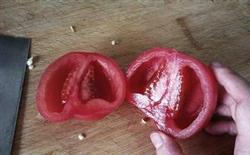
The appearance and quality of cherry tomato products are particularly important, requiring the product appearance, flavor, etc. to meet consumer needs. In production, hollow fruit often affects the quality and weight of the fruit, reduces its commodity value, and causes relatively large economic losses. The formation of hollow fruit is due to the fact that during fruit development, the enlargement of the fruit core, placenta, and gelatinous material inside the fruit is disproportionate to the enlargement of the pericarp; the placental tissue of the fruit separates, forming cavities inside the locules, causing the fruit surface to have ridges, an appearance that is not plump, sunken areas at the locules, little flesh, and a bland, watery taste.
The causes of hollow fruit include not only high night temperatures, insufficient light, and dense planting, but also reduced assimilation in cherry tomatoes and increased consumption of assimilated substances, resulting in insufficient carbohydrates in the plant body, which inhibits flower bud differentiation and development; it is also caused by insufficient application of nitrogen, phosphorus, and potassium in the soil and inadequate fertility. In addition, improper application of plant auxins, high temperatures during the flowering and young fruit stages, excessive nitrogen fertilizer application, and excessive soil moisture are also causes of hollow fruit.
The occurrence of hollow fruit is closely related to seed maturity. During fruit development, the role played by seeds is to make the fruit enlarge and become filled. If the cultivation method, environment, and other factors are suitable for seed formation, hollow fruit will naturally decrease. The key to solving the hollow fruit problem is to create a suitable cultivation environment and cultivation method so that seeds develop completely.
(1) Variety selection. According to the cultivation season and cultivation method, select suitable excellent varieties with strong stress resistance, excellent quality, and good marketability.
(2) Cultivate strong seedlings. Strengthen the control of environmental conditions such as temperature, light, water, and fertilizer, and create external conditions conducive to flower bud differentiation in the plant. The focus of temperature management is a suitable day-night temperature difference. Note that the night temperature must not exceed 24-25°C, otherwise the quality of the flowers will be poor. Keep it at 25°C during the day and 15-18°C at night. There must be strong light and increased duration of long light. Fertilizer and water must be sufficient, with a nitrogen content of 400 mg per kg, phosphorus of 60 mg per kg, and potassium of 500 mg per kg. Water should be applied sufficiently, to the extent that it does not cause excessive seedling growth.
(3) Reasonable dense planting. Cultivation density affects seedling development and nutritional status, thereby affecting flower bud differentiation and development. According to the variety's characteristics and pruning method, choose a suitable cultivation density. Reduce the number of transplants, and during transplanting, injure the roots as little as possible or not at all.
(4) Reasonable fertilization. Base fertilizer should dominate, with little or no topdressing. Use nitrogen, phosphorus, and potassium in a reasonable combination to coordinate the plant's vegetative growth and reproductive growth. The base fertilizer should be mainly organic fertilizer, applying 4000 kg of decomposed compost and stable manure, 40 kg of compound fertilizer, and 30 kg of superphosphate per mu.
(5) Strengthen management. Water management: on the premise of ensuring normal growth, mainly control water. Before flowering, maintain a medium moisture level, with a soil moisture content of 65-75%; during the fruiting period, the soil should remain moist, with a soil moisture content between 75-85%. Temperature management: ensure a sufficient day-night temperature difference, and keep the night temperature relatively low, so as to promote sugar conversion and reduce consumption caused by respiration. Especially in the about 10 days before flowering, the night temperature should be maintained at 17°C; the suitable temperature during the flowering and fruiting period is 23-26°C. Light: increase light intensity and extend light duration, with a suitable light intensity of 40,000-50,000 lux. In the middle and late growth stages, appropriately remove leaves to enhance light and promote ventilation. If light is insufficient, supplemental lighting can be used. In the middle and late growth stages, fruit thinning and foliar topdressing can be carried out.
(6) Application of hormones. During flowering and fruiting, pollination and fertilization capacity should be improved as much as possible so that seeds can form; if conditions permit, artificial pollination can be carried out. The application time and concentration of hormones are generally on the day of flowering or 1-2 days before or after flowering, selecting an appropriate concentration according to temperature conditions, and using them in combination with cytokinins to promote the development of placental tissue.
Click to get more cherry tomato cultivation techniques
Click to get more fruit cultivation techniques