Sugar mandarin cultivation techniques: What are the methods for fruit retention?
How to retain fruit on sugar mandarins? What causes sugar mandarins to drop flowers and fruit? Please provide guidance. The factors that cause flower and fruit drop in sugar mandarins are as follows: 1. Insufficient tree nutrition, which is the main cause of fruit drop. 2. Low-temperature freezing damage in early spring causes poor development of floral organs, many deformed flowers, and reduced pollination...
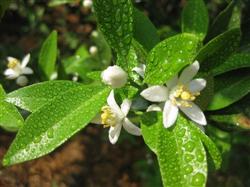 How to retain fruit on sugar mandarins? What causes sugar mandarins to drop flowers and fruit? Please provide guidance
The factors that cause flower and fruit drop in sugar mandarins are as follows:
1. Insufficient tree nutrition, which is the main cause of fruit drop.
2. Low-temperature freezing damage in early spring causes poor development of floral organs, many deformed flowers, and reduced pollination and fertilization capacity. If the flowering period encounters prolonged low temperatures and rain, insect activity is weak, male pollen vitality is insufficient, the viscous fluid on the female stigma is washed away by rain, or if the flowering period encounters high temperatures above 36°C with dry air, the stigma dries up rapidly, the flowering period is too short, and the opportunity for pollination and fertilization is affected; if the young fruit stage encounters high temperature and drought, branches and leaves compete with fruit for water, accelerating fruit abscission, or if it encounters prolonged rainy days, soil moisture content is too high, root growth is impeded, vitality declines, cytokinin synthesis is affected, the balance of endogenous hormones is affected, causing massive fruit drop;
3. Insufficient auxin content in young fruit or hormonal imbalance is also an important cause of fruit drop;
4. Severe pest and disease damage, such as flower bud weevil damage causing deformed flower buds; red spider mite damage causing massive leaf drop; scab and anthracnose damage causing leaf and fruit drop; tortricid moths and fruit-sucking noctuid moths causing fruit drop;
5. Unreasonable pruning and shaping, fruiting mother branches too long or too weak, tree canopy too shaded, insufficient ventilation and light, poor photosynthetic efficiency, tree nutrition too dispersed;
Measures for flower and fruit retention in sugar mandarins:
1. Release autumn shoots at the right time. For example: in areas south of the Tropic of Cancer, for 2-3 year old plants with strong growth vigor, few fruits or just beginning to bear fruit, the autumn shoot release period should be around End of Heat (Chushu). For 4-6 year old trees, release autumn shoots during Major Heat to Beginning of Autumn (Dashu to Liqiu). For old trees over 7 years old, shoots should be released around Major Heat (Dashu).
2. Strengthen fertilizer and water management, emphasize the input of organic fertilizer and timely supplementation of foliar fertilizer. We recommend the fertilization timing and frequency for sugar mandarins that have already set fruit.
Generally, it is mainly divided into four periods, such as: base fertilizer (winter fertilizer), accounting for about 35% of the annual total, often applied before or after fruit harvest. It is generally mainly organic fertilizer, supplemented with quick-acting phosphorus and potassium and an appropriate amount of nitrogen, to help the plant recover tree vigor, promote flower bud differentiation and safe overwintering; bud-promoting fertilizer. Accounting for about 20% of the annual total fertilizer amount, generally applied two weeks before spring buds sprout, to ensure strong shoots and promote flowering, extend the lifespan of old leaves, and improve fruit set rate. It is often mainly quick-acting nitrogen fertilizer, combined with an appropriate amount of phosphorus and potassium fertilizer. If spring drought occurs, it should be combined with irrigation to better exert fertilizer efficiency; fruit-stabilizing fertilizer. Accounting for 15% of the annual total fertilization amount, generally applied from the end of the first physiological fruit drop to before the second physiological fruit drop. Mainly quick-acting nitrogen and phosphorus, combined with an appropriate amount of potassium.
During this period, the young fruit of sugar mandarins is in a period of vigorous cell division, and it is also the first peak growth period of the root system. If nutrition cannot keep up, abnormal physiological fruit drop will occur; fruit-strengthening fertilizer, accounting for about 30% of the annual total fertilization amount. At this time, it is the rapid fruit expansion period, and also the period for summer shoot filling and autumn shoot emergence. It is generally applied within 1-2 weeks before autumn shoots emerge, mainly nitrogen, appropriately combined with phosphorus and potassium fertilizer.
Fertilization amount: Generally, the ratio of demand for the three elements nitrogen, phosphorus, and potassium in sugar mandarins is: 1:0.3-0.5:1.2. We recommend that the fertilization amount be calculated based on economic yield as an important basis (50 kg of economic yield requires about 0.5 kg of pure nitrogen, 0.15-0.2 kg of pure phosphorus (P2O5), and 0.6 kg of pure potassium (K2O)). Based on the above analysis and calculation, the fertilization amounts for each period are as follows:
Base fertilizer: 10 kg of chicken manure or pigeon manure, or 2.5 kg of peanut bran, or 25 kg of pig manure, add 0.35 kg of superphosphate, add 0.25 kg of potassium chloride or 0.30 kg of potassium sulfate.
Pre-bud fertilizer: 0.25 kg of urea, add 0.25 kg of superphosphate, add 0.20 kg of potassium chloride or 0.25 kg of potassium sulfate.
Fruit-stabilizing fertilizer: 0.16 kg of urea, add 0.20 kg of superphosphate, add 0.15 kg of potassium chloride or 0.18 kg of potassium sulfate. Fruit-strengthening fertilizer: 0.35 kg of urea, add 0.15 kg of superphosphate, add 0.3 kg of potassium chloride or 0.35 kg of potassium sulfate.
It should be noted that citrus fruit trees have a moderate tolerance to chlorine, so potassium chloride and potassium sulfate should be applied alternately to avoid excessive chloride ions causing certain effects on the plant.
In addition, there are many types of fertilizers. If some friends prefer to apply compound fertilizer, it should be calculated based on the actual pure nutrient content of the commercial fertilizer; for medium elements such as calcium, magnesium, sulfur, and zinc, these are also essential elements indispensable to plants. Since we are not clear about the soil conditions in various places, it is not possible to conduct detailed analysis one by one. We suggest that you clear the orchard in winter, spread lime powder (containing calcium), and appropriately supplement amino acid liquid fertilizer containing zinc, boron, and magnesium during the shoot, flower, and fruit stages of the plant, such as foliar fertilizers like Jinzhuang Lüxing and Lüfenwei.
3. Control branch and shoot growth. Controlling branch and shoot growth is the main method to ease the contradiction between shoots and fruit. Because citrus fruit trees carry out reproductive growth simultaneously with vegetative growth.
For plants with excessive growth vigor, too many spring shoots, and moderate or few flowers, the principle of removing the strong and retaining the weak, and controlling the top and outer parts should be followed to thin out some spring shoot vegetative branches. For example, trees with moderate flowers should have 1/3 thinned out, trees with few flowers should have 3/5 thinned out, and the retained spring shoots should be pinched at 6-8 leaves, and foliar fertilizer should be sprayed to make them mature as soon as possible.
For weak trees with many flowers, some flower branches should also be thinned out. In principle, summer shoots that emerge should all be removed or pinched at 2 leaves from the base, or when the shoots are about 2 cm long, spray 500-1000 ppm of paclobutrazol to inhibit the emergence or growth of summer shoots. For plants with excessive growth vigor, ring-cut the main branches when 2/3 of the flowers have fallen.
4. Reasonably apply plant growth regulators for fruit retention. Generally, after fertilization, fruit development begins from the formation of the ovary primordium from the pistil, and goes through stages such as fruit cell division, cell enlargement, and fruit maturation.
Generally, from the formation of the ovary in mid-to-late March to the basic end of physiological fruit drop in mid-to-late June, this stage belongs to the cell division period. During this period, the primitive cells of the juice sacs in the fruit divide, and after forming small fruits, division becomes more vigorous, until before the segments are filled, the juice sac cell division stops.
This is also the stage of embryo development, seed coat development, and rapid cotyledon growth. During this period, a relatively large content of cytokinin is needed, and plant cytokinin is mainly synthesized by root tips. During this period, because soil temperature is still relatively low, root vitality is poor, and cytokinin product content is often insufficient to meet the needs of the plant's reproductive growth, so it is advisable to spray cytokinin during this period for fruit retention.
For example, 20 ppm of σ-benzylaminopurine. Some fruit growers also spray 2-3 times of 30-50 ppm "920" (gibberellin) during this period. The effect of spraying gibberellin is mainly to inhibit the increase of abscisic acid and reduce fruit drop caused by abscission layer formation.
As well as increasing peel thickness and reducing fruit cracking. We believe that cytokinin, auxin, and gibberellin all have antagonistic effects on abscisic acid. Therefore, they can be applied alternately.
In addition, brassin (brassinolide) is generally sprayed at a concentration of 0.04 ppm and can be used in combination with the above plant growth regulators. The effect is enhanced. Because brassinolide has the function of regulating the balance of endogenous hormones in various periods of plant growth.
5. Reasonable flower and fruit thinning. Reasonable flower and fruit thinning is also one of the measures to resolve the contradiction between vegetative growth and reproductive growth consuming tree nutrition. Therefore, reasonable flower and fruit thinning is also for better flower and fruit retention. (In the measures for controlling branch and shoot growth, we have already introduced the situation of thinning flower branches). After the physiological fruit drop ends, which is the fruit-setting stage, fruit should be thinned for plants bearing many fruits. The principle of fruit thinning is generally based on the leaf-to-fruit ratio. The leaf-to-fruit ratio of sugar mandarins is generally preferably maintained at 70-80:1.
6. Reasonable pruning and shaping. Some fruit grower friends may think that the key to fruit retention is fertilization and chemical regulation, and that pruning and shaping have little to do with fruit retention. It can be said that reasonable pruning and shaping is the main foundation for stable and high yields of citrus fruit trees. It is one of the quite important measures to resolve the contradiction between vegetative growth and reproductive growth, and is also the key to resolving the reasonable distribution of tree nutrition
. To truly understand and master reasonable and advanced pruning and shaping techniques is by no means easy! As for the pruning and shaping techniques for sugar mandarins and other citrus fruit trees, because the content and knowledge involved are too much, they will not be described in detail one by one here. You can request them from the Qian Shu Editorial Department, study carefully, research, and then master them through practice.
Click to get more sugar mandarin cultivation techniques
Click to get more fruit cultivation techniques