Shatang Mandarin Cultivation Techniques: How to Apply the Fruit-Swelling Fertilizer for Shatang Mandarin?
How to apply the fruit-swelling fertilizer for Shatang Mandarin? Please provide an introduction to the method. When applying the fruit-swelling fertilizer to Shatang Mandarin, the autumn shoot fertilizer is generally applied at the same time. The method is as follows: 1. During the stage from the emergence of autumn shoots on fruiting Shatang Mandarin trees until the autumn shoots are fully mature, the growth and development of the fruit requires a certain continuous supply of nutrients, and also requires...
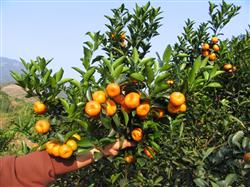 How to apply the fruit-swelling fertilizer for Shatang Mandarin? Please provide an introduction to the method
When applying the fruit-swelling fertilizer to Shatang Mandarin, the autumn shoot fertilizer is generally applied at the same time. The method is as follows:
1. During the stage from the emergence of autumn shoots on fruiting Shatang Mandarin trees until the autumn shoots are fully mature, the growth and development of the fruit requires a certain continuous supply of nutrients, and also requires a certain amount of quick-acting nutrients to promote the emergence of autumn shoots on schedule and meet their growth needs. Therefore, this fertilization has certain specific requirements in terms of timing and fertilizer combination.
In terms of fertilizer combination, organic fertilizer and quick-acting fertilizer combined with nitrogen, phosphorus and potassium should be used according to tree age, tree vigor and fruit load. An appropriate amount of organic fertilizer should be used to continuously support the fruit development and enlargement, while quick-acting fertilizer should be used to promote the emergence and growth of autumn shoots on schedule.
Taking a tree with a planned fruit load of 10 kg per tree and medium-to-upper tree vigor as an example, the fertilizer combination and reference application rates are: dry peanut meal 0.5 kg or dry chicken manure 2.0 kg (the above measured organic fertilizer must be fully decomposed before application), urea 0.1 kg, potassium sulfate 0.1 kg, superphosphate 0.3 kg or 17:17:17 compound fertilizer 0.25 kg.
However, it should be noted that the compound fertilizer used should contain as little chlorine as possible, because citrus fruit trees have weak chlorine tolerance at the young stage. The fertilization position should be a ring-shaped trench about 8 cm deep opened below the canopy drip line. After applying the decomposed organic fertilizer as a water-fertilizer drench, then scatter the chemical fertilizer and cover with soil.
The fertilization period should be about 15 days before shoot emergence. After the autumn shoots are mature and filled out, appropriately consider whether to additionally apply phosphorus and potassium fertilizer according to tree vigor and leaf color. This fertilization should not apply excessive nitrogen fertilizer, so as to avoid excessive nitrogen remaining in the soil, which when encountering a warm winter with more rain, can easily promote the emergence of winter shoots.
2. Regarding the question of whether 500-750 ppm paclobutrazol can be sprayed to inhibit winter shoot emergence when the autumn shoots are not fully mature, this depends on the weather at the time and the growth condition of the autumn shoots.
For example: when the autumn shoots grow to the late stage, due to more rain and warmer temperatures, and the autumn shoots show a tendency to grow excessively, then paclobutrazol can be sprayed before they are filled out, and foliar fertilizer with relatively high phosphorus and potassium content can be added, such as Shikeke high-phosphorus and high-potassium foliar fertilizer, to promote the autumn shoots to mature, fill out and thicken as soon as possible. Otherwise, it is better to spray paclobutrazol after the autumn shoots are fully mature. After the autumn shoots are mature, spraying paclobutrazol generally makes it temporarily unlikely for new buds to emerge.
This is because shoots and roots have a reciprocal growth relationship. That is, when the shoots mature, the shoots temporarily stop growing, while the root system at this time begins a process of growth. When the root system grows new roots and absorbs fertilizer and water, the shoots begin to grow again.
But at this time, cooler weather has already arrived, and autumn generally has less rain. Moreover, after the new shoots mature, paclobutrazol has been sprayed on the canopy. Under the effect of paclobutrazol, root growth is also inhibited to a certain extent. Under the combined effects of drought, coolness and chemical inhibition, the root system generally temporarily stops growing, and the plant thus enters the dormant stage. The plant moves from the vigorous vegetative growth stage to the reproductive growth stage, which means flower bud differentiation has begun.
However, if at this time the temperature is still relatively high, there is more rain, and excessive nitrogen fertilizer was applied in the earlier period in the soil, and the tree vigor is too vigorous, then it is possible that the root system is difficult to inhibit and continues to grow, which also promotes the sprouting of new shoots. This is the so-called emergence of late autumn shoots or winter shoots. Under the above circumstances, it is advisable to adopt measures with a higher degree of control over the plant, that is, to adopt the measure of ring-cutting large branches or the main trunk.
Generally, for the above situation, ring-cutting can be carried out from late November to mid-December. Because the degree of cold and drought in winter is difficult to predict accurately, for trees with average vigor, it is not advisable to carry out ring-cutting immediately after the autumn shoots have just matured and filled out. Instead, a milder control measure should be adopted by spraying paclobutrazol 1-2 times. Otherwise, once a winter with excessive drought and cold is encountered, the plant will suffer severe leaf drop due to excessive control, affecting the plant's accumulation of photosynthetic carbohydrates.
Of course, when fertilizer and water management are good, the tree vigor is particularly vigorous, and after the autumn shoots mature, paclobutrazol is sprayed for inhibition, and from mid-to-late November to early December the leaf color remains deep green without fading or becoming lighter, then ring-cutting inhibition may be considered. However, the timing of ring-cutting should not be too late, otherwise it will affect the emergence of spring shoots and flower buds on schedule.
Click to get more Shatang Mandarin cultivation techniques
Click to get more fruit cultivation techniques