Fertilization Precautions and Key Planting Techniques for Shatang Mandarin
What should be noted when fertilizing Shatang mandarin? Please give guidance. During routine visits to rural areas, I found that quite a few farmers fertilize Shatang mandarin unreasonably. The following are listed for reference: One-sided and excessive application of nitrogen fertilizer: urea is the most commonly used in production. According to surveys, in recent years, mandarin orchards that applied urea alone as the fruit-fattening fertilizer accounted for about 40%, and it was applied arbitrarily, often resulting in excessive amounts; for example, applying more than 500 grams of urea per tree is not uncommon. One-sided and excessive application of nitrogen fertilizer causes the peel to thicken and become coarse, forming inferior thick-skinned large fruit; coloring is delayed, and a large number of green fruit appear; the flavor deteriorates and the juice rate declines, especially making the taste sour and astringent, unpalatable. Phosphorus and potassium fertilizers have an obvious effect in promoting fruit acidity reduction and sugar increase, and can promote the expansion of citrus fruit.
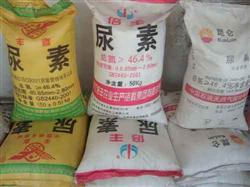 What should be noted when fertilizing Shatang mandarin? Please give guidance.
During routine visits to rural areas, I found that quite a few farmers fertilize Shatang mandarin unreasonably. The following are listed for reference:
One-sided and excessive application of nitrogen fertilizer:
Urea is the most commonly used in production. According to surveys, in recent years, mandarin orchards that applied urea alone as the fruit-fattening fertilizer accounted for about 40%, and it was applied arbitrarily, often resulting in excessive amounts; for example, applying more than 500 grams of urea per tree is not uncommon. One-sided and excessive application of nitrogen fertilizer causes the peel to thicken and become coarse, forming inferior thick-skinned large fruit; coloring is delayed, and a large number of green fruit appear; the flavor deteriorates and the juice rate declines, especially making the taste sour and astringent, unpalatable. Phosphorus and potassium fertilizers have an obvious effect in promoting fruit acidity reduction and sugar increase, and can promote the expansion of citrus fruit.
Therefore, it is necessary to appropriately increase the application of phosphorus and potassium fertilizers, control nitrogen fertilizer application, and supplement medium or trace elements when needed, so as to achieve balanced fertilization. For 6-10-year-old fruiting trees, apply 200-300 grams of nitrogen-phosphorus-potassium compound fertilizer per tree in July, and apply 2 kg of cake fertilizer and 100 grams of urea per tree in September; for bearing trees over 10 years old, apply 300-400 grams of nitrogen-phosphorus-potassium compound fertilizer per tree in July, and apply 3-4 kg of cake fertilizer and 200 grams of urea per tree in September. Mandarin orchards on red soil should also pay attention to applying calcium fertilizer, about 150 kg per mu, which can increase yield by more than 10%.
Farmyard manure applied without being fully decomposed
These undecomposed farmyard manures such as pig and cattle manure, cake fertilizer, and chicken manure, after being applied, will release a large amount of heat during fermentation and injure the roots, causing root rot, root death, and even tree death. At the same time, undecomposed pig and cattle manure contains a large number of parasite eggs, causing environmental pollution. In addition, excessive application of undecomposed farmyard manure can also cause microorganisms to compete for nitrogen. Therefore, manure fertilizers such as pig and cattle manure and chicken manure must be piled and fermented until completely decomposed before being applied to the mandarin orchard; cake fertilizer can be soaked in clean water for 7-10 days or mixed with human and animal urine, and used only after being fully decomposed.
Improper fertilization location
Some mandarin growers apply fertilizer under the "tree base," which actually means applying it at the tree disk position. The roots under the tree disk are mainly skeletal roots, whose main function is not to absorb nutrients but to fix and support the plant. Fine roots are the main organs for absorbing nutrients, and they are most distributed in the area of the canopy drip line.
Therefore, fertilizer applied at the tree disk cannot be well absorbed and utilized, and digging holes can easily injure roots; in particular, applied chemical fertilizer can easily burn roots, causing lateral roots to burn and rot, and even die. Therefore, the fertilization location should be determined according to the size of the canopy. Generally, fertilizer should be applied at the outer edge of the canopy drip line, or slightly farther out and slightly deeper, using the method of digging a ring-shaped trench or digging holes. This not only helps fertilizer absorption and utilization and will not cause fertilizer damage, but can also induce roots to develop deeper.
Fertilization not combined with drought resistance measures
Drought often occurs from July to September. If fertilizer is applied only without combining it with drought resistance measures, the nutrients cannot be well absorbed and utilized, and it is also easy to cause fertilizer damage and volatilization of nitrogen in chemical fertilizers. Since fertilizers can only decompose, flow, move, and be absorbed under moist soil conditions, fertilization under drought conditions should be combined with drought resistance measures: for flatland mandarin orchards, after fertilization, adopt the method of opening trenches and irrigating to resist drought; for mountainous mandarin orchards, dig 8-12 holes at the outer edge of the canopy drip line, with holes 30 cm wide and a depth that does not injure roots, and apply quick-acting fertilizer solution, combining drought resistance and fertilization together.
Improper timing and location of foliar fertilization
Many mandarin growers do not choose an appropriate fertilization time, and often spray foliar fertilizer after 10 a.m. and before 4 p.m. on sunny days, and only spray the upper surface of leaves, not the underside. Because July-August has high temperatures and dry conditions, the water in the fertilizer solution evaporates quickly, which easily causes fertilizer damage, and after the fertilizer solution dries, mineral elements cannot be absorbed by the leaves. In view of this, spraying should be done on cloudy days or before 10 a.m. and after 4 p.m. on sunny days. Because there are many stomata on the underside of leaves, their fertilizer absorption capacity is stronger than that of the upper surface, so both the upper and underside of leaves should be sprayed, to the extent of not dripping.
Click to get more Shatang mandarin planting techniques
Click to get more fruit planting techniques