What management techniques are there to prevent and control grape berry cracking?
Grapes are ready for market now, but berry cracking is severe. How can grape berry cracking be prevented and controlled? We asked friends for help and have gathered a few points from Zhongdi Network on preventing and controlling grape berry cracking. The following is a detailed introduction for your reference. 1. Due to the heavy rainfall this year, during the fruit coloring stage the berries absorb water through the berry surface and roots, creating great turgor pressure inside the fruit, which has caused varying degrees of berry cracking in many grapes. Timely cultivating and loosening the soil after rain reduces fluctuations in soil moisture and can effectively prevent cracking at the top of the grapes.
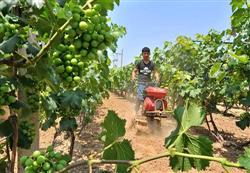 Grapes are ready for market now, but berry cracking is severe. How can grape berry cracking be prevented and controlled? We ask friends to help explain.
Zhongdi Network has summarized a few points on preventing and controlling grape berry cracking. The following is a detailed introduction for your reference.
1. Due to the heavy rainfall this year, during the fruit coloring stage the berries absorb water through the berry surface and roots, creating great turgor pressure inside the fruit, which has caused varying degrees of berry cracking in many grapes. Timely cultivating and loosening the soil after rain reduces fluctuations in soil moisture and can effectively prevent cracking at the top of the grapes.
2. Clayey soil tends to become compacted and is prone to both waterlogging and drought, causing berry cracking during the grape growing period. Covering with plastic film can prevent the roots from absorbing too much water when there is excessive rain and reduce changes in soil moisture. During drought, combining plastic film mulching with irrigation can effectively prevent grape berry cracking.
3. Improper pruning, leaving too many old leaves and too few new leaves, reduces the plant's ability to regulate water, making berry cracking likely when it rains. Change the traditional pinching method and leave more leaves, so that each fruiting cane has more than 25-26 normal leaves, enhancing the vine's ability to regulate water.
4. Weak vines with too many fruits left cause an unreasonable vine load and severe berry cracking. By thinning branches and clusters and adjusting the load, strong canes keep 2 fruit clusters, medium canes keep 1 fruit cluster, and weak canes keep no fruit clusters. Remove secondary clusters and pinch the cluster tips in time so that the cluster size is moderate.
5. Unreasonable fertilization with more inorganic fertilizer and less organic fertilizer makes berry cracking likely. Apply nitrogen fertilizer in appropriate amounts, increase the application of phosphorus fertilizer, potassium fertilizer and other trace-element fertilizers, and apply more organic fertilizer.
6. Pathological berry cracking: most fruit trees, to a greater or lesser extent, develop powdery mildew, white rot and various other diseases, causing pathological grape berry cracking. The main symptoms are split skins, shallow cracks, and flesh that does not flow out. To control powdery mildew, spray a 15% triadimefon 2000-fold solution. To control white rot, spray 50% carbendazim wettable powder at 800-fold, or thiophanate-methyl at 1000-fold.
Click to get more grape growing techniques
Click to get more fruit growing techniques