How to manage greenhouse grape cultivation well
How to manage grapes grown in a greenhouse well? Asking for advice. Greenhouse grapes come to market early, 1-2 months ahead of schedule, supplementing the off-season fruit supply, with high unit prices, allowing for high yields and high efficiency, with an average annual income of 20,000-30,000 yuan/mu, making it a good way to get rich in rural areas. The cultivation techniques are introduced as follows: 1. Variety selection. Through...
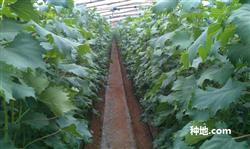
How to manage grapes grown in a greenhouse well? Asking for advice
Greenhouse grapes come to market early, 1-2 months ahead of schedule, supplementing the off-season fruit supply, with high unit prices, allowing for high yields and high efficiency, with an average annual income of 20,000-30,000 yuan/mu, making it a good way to get rich in rural areas. The cultivation techniques are introduced as follows:
1. Variety selection. Through trials across the country, the varieties suitable for greenhouse cultivation include Jingya, Jingxiu, Fenghuang 51, Jingyou, Zana, and Jufeng. The common characteristics of these varieties are a short dormancy period, strong productivity, tolerance to high temperatures, tolerance to storage and transport, a short fruit development period, early ripening, moderate growth, disease resistance, and ease of management.
2. Planting and orchard establishment. Use vigorous one-year-old cuttings, requiring more than 20 main and lateral roots, root length above 15 cm, stem diameter above 1 cm, and 4-6 plump buds. Planting density varies depending on many conditions such as variety, site conditions, training method, and seedling resources. Generally, with trellis training, the row spacing is 1.2-1.5 m x 0.5 m, with about 1,000 plants planted per mu. After the planting row and plant spacing are determined, trenches must be dug to improve the soil, sufficient base fertilizer must be applied, and high-standard orchard establishment must be carried out to achieve high efficiency.
Generally, planting trenches 50-80 cm deep and wide are dug, and 4,000-5,000 kg of farmyard manure is applied per mu. When digging the trenches, the topsoil and subsoil are placed separately, then the topsoil is backfilled first, followed by the subsoil, with organic fertilizer applied in layers. The planting time and method are the same as conventional tree planting.
3. Management in the same year. After the seedlings survive planting, promoting vigorous seedling growth is the foundation for achieving early fruiting, high quality, and high efficiency, so the following points should be done well:
① Training and pruning. Timely select and retain the main vine. Because greenhouse grapes are planted at high density, this differs greatly from traditional pruning methods. Generally, the single dragon-trunk pruning method is used, that is, after the planted seedling sprouts, only 1 main vine is retained. The principle for determining the vine is to keep the lower one and not the upper one, keep the strong one and not the weak one, and remove all excess buds. When the new shoot of the main vine grows to 80 cm, carry out the first pinching, and afterward pinch once every 30 cm of growth, and pinch the secondary shoots leaving 1-2 leaves. Also promptly set up poles and tie the vines, generally tying once every 30-40 cm, and remove tendrils.
② Strengthen fertilizer and water management. After the seedlings survive, promptly apply quick-acting nitrogen fertilizer to promote seedling growth. In autumn, it is suitable to apply more phosphorus and potassium fertilizer, and at the same time carry out foliar spraying, taking care to apply small amounts many times. Starting in September, apply base fertilizer early. During the growing season, irrigate promptly when drought occurs, and also pay attention to drainage during the rainy season. In addition, do a good job of pest and disease control.
4. Building and covering the shed. From September to October, build a greenhouse over a 1-year-old densely planted vineyard. In early summer of the second year, it can be harvested and marketed. In northern regions, it is a solar greenhouse, with an east-west slightly arched style and a back wall on the north side. The span is 7-9 m, and the length is 50-70 m. The back wall and the two gable walls use a brick-earth structure, 50-80 cm thick, the back wall is 2-2.5 m high, the ridge height is about 3 m, and it is 1.2-1.5 m from the back wall.
The support pillars are reinforced concrete columns, the frame materials are bamboo and wood, and the back is covered with 50 cm thick corn stalks, compacted with soil. In the Yangtze River basin, it is a plastic greenhouse, north-south arched, with a span of 5-7 m, a length of 30-50 m, and a height of 3 m. Bamboo and wood, cement prefabricated parts, or steel pipes can be used as the framework.
The greenhouse film all uses polyvinyl chloride non-drip film with good light transmission and heat preservation, with the edges pressed into the soil. In the solar greenhouse, a ventilation opening 0.8 x 0.5 m in length and width is left every 5 m, covered with greenhouse film or a hand-pulled straw curtain. At that time, cover the greenhouse with film, and replace it with new film every year.
Grapes begin dormancy from leaf fall, and generally complete natural dormancy in about 2 months. After completing natural dormancy, the greenhouse can still be covered to raise the temperature. From north to south, the time when grapes begin to drop leaves is from late October to late November, and the corresponding greenhouse covering time is from mid-to-late December to late January.
5. Temperature management inside the shed. Generally, before raising the temperature, irrigate thoroughly once along the rows, cover with plastic film to preserve moisture, and then raise the temperature. The temperature inside the shed should be raised gradually and can be divided into 5 stages.
① Before budding: daytime temperature 15-18°C, nighttime 5-6°C;
② From budding to before flowering: daytime 18-20°C, nighttime 6-7°C;
③ During the flowering period, the temperature is slightly higher, daytime 25-28°C, nighttime 8-10°C;
④ From flower drop to fruit enlargement stage: daytime 25-30°C, nighttime 15-18°C;
⑤ From fruit coloring to harvest stage: daytime not higher than 30°C, nighttime around 15°C, widening the day-night temperature difference to promote fruit coloring and sugar accumulation.
6. Humidity control inside the shed. For the air humidity inside the shed, from covering to budding, the relative humidity should be controlled at about 90%; from budding to before flowering, controlled at 60-70%; from flowering to the fruit enlargement stage, controlled at 50-60%; and afterward until the harvest stage, 50% is suitable.
For soil moisture, from covering the shed to harvest, the relative soil water-holding capacity should be maintained at 60-80%. During different phenological periods, water demand is greater at the budding and fruit enlargement stages, and it is suitable to control it in the 70-80% range. During fruit growth and development, try to avoid excessive changes in soil water content to prevent fruit cracking.
7. Fertilizer and water management. After fruit harvest each year, apply sufficient base fertilizer, 3,000-4,000 kg per mu, plus 50-100 kg of compound fertilizer, applied deeply in trenches. Each year at the budding stage, apply the first topdressing, using 30 kg of urea and 50 kg of ternary compound fertilizer; after flower drop, apply the second topdressing, using 40 kg of urea; at the early coloring stage, apply the third topdressing, using 50 kg of potassium sulfate.
During the fruit growing period, spray fertilizer on the leaves 3-5 times, using 0.3% potassium dihydrogen phosphate, potassium sulfate, or amino acid potassium, to promote coloring and improve quality. In case of drought, irrigate promptly. Especially in summer after removing the shed, pay attention to drought prevention, and after applying base fertilizer, irrigate thoroughly once.
8. Training and pruning. In the first year's winter pruning, head the plant at 80 cm. On it, 5-7 fruiting shoots sprout. Except for the lowest shoot, which is kept as a reserve shoot without retaining a fruit cluster, each of the remaining shoots retains one fruit cluster. Weak shoots retain no fruit cluster, and at the same time pinch off the secondary cluster and 1/3-1/5 of the cluster tip.
After fruit set, trim the fruit clusters, remove small berries and excess berries, keeping 50-60 berries per cluster. For the large-fruited Jufeng, 40 berries are enough, averaging 400 g per cluster, with about 2 kg of fruit per plant, and the yield per mu should preferably be controlled at 2,000-2,500 kg. If the yield is too high, quality will decline. In the second year's winter pruning, cut back to 1 cm above the reserve shoot, and prune the reserve shoot as a medium-long cane to serve as the fruiting mother cane for the next year. In the third year and so on by analogy, the fruiting shoots are renewed every year to keep the fruiting position stable.
The temperature inside the greenhouse is relatively high, humidity is also high, and light is poor, which easily causes excessive vegetative growth. Therefore, focus on doing summer pruning well, and promptly remove buds, remove tendrils, determine shoots, and tie them up. For fruiting shoots, leave 7-8 leaves above the flower cluster and pinch, and remove the lower secondary shoots. After pinching, pinch the extension shoot once every 6-7 leaves of growth, and pinch the secondary shoots leaving 1-2 leaves, in order to control growth and strengthen flowers, fruits, and vines.
In order to improve the fruit-setting rate, ventilation should be carried out before the flowering period without affecting temperature, and 0.3% borax solution should be sprayed at the early flowering stage.
9. Pest and disease control. Pests and diseases of grapes inside the greenhouse are relatively mild, but they cannot be ignored, and integrated control should be carried out. After leaf fall, in combination with winter pruning, cut off diseased and insect-infested branches and dead branches, and clear away fallen leaves and weeds in the orchard to reduce the overwintering base of pests and diseases.
The main diseases are ripe rot, powdery mildew, brown spot, gray mold, and so on. Control methods: before budding, spray once with 3-5 degrees Baumé lime sulfur mixture; before flowering, spray 2 times at 15-day intervals with 70% thiophanate-methyl 800-1,000 times solution. After flowering, at 15-day intervals, spray once each with 50% carbendazim 800 times solution and half-strength 200 times Bordeaux mixture. For insect pests, mainly control thrips, red spiders, and pest mites. Spray 20% fenvalerate 2,000 times solution and 40% omethoate 1,000 times solution. After fruit harvest, remove the film, and after removing the film, pest and disease control is the same as in the open field.
Click to see more grape cultivation techniques
Click to see more fruit cultivation techniques
Related Articles
- crowds gather at the Hami melon producing area, and even the farmers' association staff are scared by what they see
- What causes low fruit set in apple trees? How can it be solved?
- Passion Fruit Viral Disease: Symptom Identification and Control Measures
- Fruit Growing Mini-Class: How Can Apple Orchards Maintain High Yields?
- Can you build an orchard on hilly land? What are the pros and cons?
- Key Management Techniques for Crimson Seedless Grapes During the Coloring Period
- A Detailed Explanation of Two Processing Technologies for Fig Products
- How much can a retired rural teacher receive per month in 2020?