What are the pest and disease control methods for blueberry cultivation?
How do you control pests and diseases in blueberry cultivation? Please advise. The pathogens harming blueberries include fungi, bacteria and viruses, with dozens of diseases in total. The following are the more commonly occurring ones in production. (1) Blueberry fungal diseases. 1. Blueberry mummy berry disease. Mummy berry disease is the most common and most damaging...
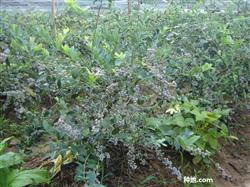
How do you control pests and diseases in blueberry cultivation? Please advise.
The pathogens harming blueberries include fungi, bacteria and viruses, with dozens of diseases in total. The following are the more commonly occurring ones in production.
(1) Blueberry fungal diseases
1. Blueberry mummy berry disease
Mummy berry disease is one of the most common and most serious diseases in blueberry production. It is caused by the fungus Monilinia vaccinii-corymbosi. In the early stage of infection, mature spores germinate on the surface of new leaves and flowers, and the hyphae develop inside and outside the cells of the leaf and flower surfaces, causing the cells to rupture and die. This causes new leaves, buds, stems, flower clusters and so on to suddenly wilt and turn brown. After 3-4 weeks, a powdery substance produced by the fungal spores covers the leaf veins, stem tips and styles, and spreads to open flowers, causing secondary infection; eventually the infected fruit wilts, loses water, dries out, drops off and takes on a mummified appearance. After overwintering, the spores on the fallen mummified fruit germinate and enter the cycle of infection again the following year.
According to surveys, in the worst years, 70%-85% of blueberries can be affected, and even in lighter years it can reach 8%-10%. The occurrence of mummy berry disease is related to climate and variety. Areas with abundant early-spring rain and high air humidity often suffer severe disease, and areas with a long period of low winter temperatures also suffer severe disease. Different varieties differ in susceptibility: rabbiteye blueberry is easily infected in the early stage of the disease, while among highbush blueberries Nelson, Bluecrop, Darrow and Collins are highly resistant, whereas Bluehaven, Berkeley, Bluejay, Earliblue, Jersey and Weymouth are susceptible.
In production, the harm from mummy berry disease can be reduced through variety selection and site selection. Before winter sets in, clearing fallen leaves and fallen fruit from the orchard and burning them or burying them underground can effectively reduce the occurrence of mummy berry disease. Shallow cultivation before flowering in spring and applying urea to the soil can also help reduce the occurrence of the disease.
Different chemicals can be used according to the different stages of occurrence. Spraying 50% urea in early spring can control the initial stage of mummy berry, and spraying 20% triforine before flowering can control the first and second infections, with an effect of over 90%. Triforine is currently the most effective fungicide for controlling blueberry mummy berry disease.
2. Blueberry stem canker and twig blight
Stem canker is a relatively serious disease in blueberry production in the northeastern United States. It is caused by the fungus Phomopsis vaccinii.
The most obvious symptom of stem canker is "drooping", or the stem wilting or even dying in summer. In severe cases, multiple stems on a single plant are affected. When the weather is hot, affected leaves turn brown. As the canes mature, the leaves curl around the canes in bunches. The infection sites of stem canker are often located at the base of the canes and are flattened. The small black dots at the infection sites contain spores. Spore dispersal is mainly through rain wash. Twig blight often occurs on current-year canes 5-15 cm long, with the main symptom being death of the shoot tip.
The control method is, when pruning during dormancy, to cut out and burn wilted and discolored canes, and in summer to cut affected canes back to normal tissue. In site selection, avoid as far as possible areas subject to late-spring frost damage, and use measures such as weeding, irrigation and fertilization to promote rapid maturation of the canes. Spraying the chemicals used to control mummy berry disease can reduce the harm from stem canker.
In addition to the two main fungal diseases above, other fungal diseases include leaf spot, root rot and fruit rot.
(2) Blueberry viral diseases
There are several viral diseases that cause relatively serious harm in blueberry production. Generally, viral diseases are spread mainly by insects, such as aphids, nematodes, leafhoppers and bees. Once a plant is infected, it is affected for life. The best control measure is to focus on prevention. Once the disease occurs, infected plants should be removed as soon as possible, and insecticides should be sprayed at the same time to control the virus-carrying pests and prevent them from spreading it outward.
1. Blueberry scorch virus (BBScV)
Blueberry scorch virus can cause the death of leaves and flowers. Among highbush blueberries, "Bluehaven", "Bluecrop", "Jersey", "Olympia" and "Washington" show resistance; although these varieties show symptoms when infected, they do not suffer yield loss, whereas "Berkeley" and "Dixi" show poor resistance and are severely affected.
The first symptoms in affected plants appear during the flowering period in early spring, mainly flower wilt with a small amount of death, a small amount of death of the leaves close to the flower clusters, and loss of green color at the leaf margins of leaves on old canes; these symptoms occur every year.
As the plant grows, the varieties "Dixi" and "Pemberton" often show death of the upper 5-10 cm of affected canes, while the less resistant "Berkeley" often shows death of most of the leaves and causes the death of 3-6 year old plants. Some slightly more resistant varieties show only leaf chlorosis symptoms. Affected wilted flowers often fail to develop into fruit, thus causing reduced yield.
Blueberry scorch disease spreads rapidly in the field. According to a US survey, in a blueberry orchard planted with 283 "Pemberton" plants, 50% of the plants could be affected within one year. The infection rate at planting was 6%, and after 5 years of planting the infection rate reached 95%. Research indicates that its spread is mainly brought about by aphids.
The best method for controlling this disease is to plant virus-free nursery stock; when selecting a planting site, make sure that the site and neighboring orchards are free of this type of virus. It is especially worth noting that if the neighboring blueberry orchard is planted with resistant varieties, although they show no symptoms they may still be infected and are a permanent source of the disease. Once affected plants are found, they should be removed and burned immediately, and aphids should be strictly controlled for 3 years to prevent future outbreaks.
2. Blueberry shoestring virus disease
Blueberry shoestring virus disease is the most common and most serious disease in blueberry production. In 1981, in the US state of Michigan, the occurrence of this disease caused 3 million USD in economic losses.
The most striking symptom of the disease is the presence of narrow, long, red band-like streaks at the tips of current-year and 1-year-old canes, especially on the side facing the light. During the flowering period, the petals of affected plants are purplish red or red, and most affected leaves are band-shaped (hence the name "shoestring"), while a few leaves show red bands along the veins or along the midrib. Some leaves turn red in a crescent shape or turn entirely red, and affected canes often bend in their upper half.
The spread of blueberry shoestring disease is from plant to plant, mainly by blueberry aphids. The incubation period of this virus is 4 years, meaning that infected plants show symptoms only after 4 years. Using virus-carrying plants to propagate nursery stock is the main way this virus spreads over long distances.
The most important control measure is to eliminate the propagation of nursery stock from diseased plants. When affected plants are found in the field, insecticides should be used to strictly control blueberry aphids; when mechanical harvesting is used, insecticides should be sprayed on the machinery and tools to prevent them from carrying virus-carrying aphids outward.
3. Blueberry leaf spot disease
Blueberry leaf spot disease has so far occurred in relatively few areas, but once it occurs the harm is severe. Within a few years of onset, the canes die and eventually the whole plant dies. Different varieties differ in resistance to this disease, and the symptoms also differ. "Rubel" has the poorest resistance; affected plants show death of perennial canes after 5-6 years, regrown shoots are stunted and deformed, and the leaves have spots, sometimes necrotic spots, appearing as rough ring-shaped "windows", and further development leads to leaf deformity and band-shaped scorching. The "Jersey" variety shows milder symptoms and less cane death, but the tree grows stunted, and because the internodes are shortened, the upper leaves on the canes become clustered and turn yellow-green, and the leaves are smaller than normal leaves.
Blueberry leaf spot disease is mainly spread through the pollination activities of honeybees and bumblebees, and its spread range can reach more than 1 sq km depending on the bees' range of activity. In a 10 ha orchard, if one plant is infected with the virus, within 10 years the infection rate can reach more than 50%. Propagating nursery stock from diseased plants is also an important means of spread.
The best way to control this disease is to remove diseased plants. Using insecticides would prevent bees from pollinating, thereby affecting yield and quality. The incubation period of blueberry leaf spot disease is 4 years, so early diagnosis is very important; ELISA enzyme-linked immunosorbent technology can make early diagnosis relatively easy. In addition, controlling bee release in production can also effectively control the spread of this disease, and new orchards should be at least 2 sq km away from affected orchards.
4. Blueberry mosaic disease
Mosaic disease is a relatively common disease in blueberry production, and its occurrence can reduce yield by 15%. The occurrence of mosaic disease is related to genotype; for example, the occurrence of mosaic disease in the "Concord" variety is considered to be a physiological disorder caused by genes.
The main symptoms of the disease are that leaves turn yellow-green or yellow and develop spots or ring-shaped scorching, sometimes with purple lesions. The distribution of symptoms on the bush is patchy, and the symptoms shown also differ from year to year; in one year symptoms may be severe, but the following year no symptoms appear.
Mosaic disease is spread mainly by blueberry aphids and virus-carrying nursery stock, so applying insecticides to control aphids and cultivating virus-free nursery stock can effectively control the occurrence of this virus.
5. Blueberry red ringspot disease
Red ringspot disease is one of the more common diseases in US blueberry-growing regions. According to surveys, the occurrence of this disease can cause at least 25% yield loss.
When a plant is affected, the leaves of 1-year-old canes often show ring-shaped red spots with green centers, with a spot diameter of 0.05-0.1 cm. By summer and autumn, the upper half of old leaves also shows this symptom.
This virus is spread mainly by mealybugs, and another means is virus-carrying nursery stock; the main control method is to use virus-free nursery stock.
In addition to the above 5 viral diseases, there are also dwarf virus, tomato ringspot virus and goat's tail virus, all of which cause harm to blueberry production.
Click to get more blueberry cultivation techniques
Click to get more fruit cultivation techniques