How to fertilize blueberries? A detailed guide to fertilization methods for growing blueberries
How do you fertilize blueberries when growing them? Here are methods you can refer to for fertilizing blueberries: 1. Characteristics of blueberry fertilizer requirements: Blueberries are typical calcifuge plants; when grown on calcareous soil, excess calcium often leads to iron deficiency chlorosis. Blueberries are oligotrophic plants, and compared with other fruit...
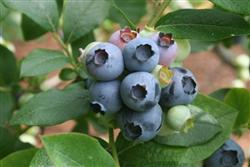 How do you fertilize blueberries when growing them? Here are the methods
You can refer to the following methods for fertilizing blueberries:
1. Characteristics of blueberry fertilizer requirements:
Blueberries are typical calcifuge plants; when grown on calcareous soil, excess calcium often leads to iron deficiency chlorosis. Blueberries are oligotrophic plants, and compared with other fruit trees, the levels of nitrogen, phosphorus, potassium, calcium and magnesium in the plant are very low.
Because of this characteristic, special care must be taken to avoid excessive fertilization of blueberries and prevent fertilizer damage. Another characteristic of blueberries is that they are ammonium-nitrogen-preferring fruit trees, with a stronger ability to absorb ammonium nitrogen than nitrate nitrogen from the soil.
When blueberries are planted, organic matter has usually already been mixed into the soil or the soil surface has already been covered with organic matter, so blueberry fertilization mainly refers to topdressing. Farmyard manure is rarely applied in blueberry cultivation. In commercial blueberry orchards, nitrogen, phosphorus and potassium fertilizers are mainly used.
1. The response of blueberries to nitrogen fertilizer varies greatly depending on soil type and fertility. A fertilization trial on 'Meiden' blueberries grown on dark brown forest soil in the Changbai Mountain area showed that as the amount of nitrogen fertilizer applied increased, yield declined, fruit size became smaller, fruit ripening was delayed, and winter shoot dieback was severe. Therefore, in dark brown forest soil types with high nitrogen content, applying nitrogen fertilizer is not only ineffective but harmful. According to foreign research, additional nitrogen fertilizer is effective for blueberries under the following conditions: sandy loam and mineral soils with low fertility and low organic matter content; and where blueberries have been grown for many years, soil fertility has declined, or soil pH is relatively high (greater than 5.5).
2. In phosphorus-deficient soil, additional phosphorus fertilizer has a significant yield-increasing effect. However, when soil phosphorus content is relatively high, additional phosphorus fertilizer not only fails to increase yield but delays fruit ripening. Generally, when the soil phosphorus level is below 6 mg/kg, additional phosphorus pentoxide at 15--45 kg/ha is needed.
3. Potassium fertilizer significantly increases blueberry yield, advances ripening, improves quality and enhances stress resistance. However, excessive amounts have no yield-increasing effect and instead make the fruit smaller, cause severe winter damage, and lead to magnesium deficiency. In most soil types, the suitable potassium application rate for blueberries is potassium sulfate at 180 kg/ha.
2. Fertilization methods for blueberries:
1. Types of chemical fertilizers to apply: Applying complete fertilizer can increase yield by 40% compared with a single fertilizer. Therefore, in blueberry fertilization, the combined use of nitrogen, phosphorus and potassium is recommended. Fertilizer ratios mostly tend toward 1:1:1. On soil with high organic matter content, the nitrogen application rate is reduced, and a nitrogen-phosphorus-potassium ratio of 1:2:3 is suitable; on mineral soil, where phosphorus and potassium content is high, a nitrogen-phosphorus-potassium ratio of 1:1:1 or 2:1:1 is suitable. Blueberries not only absorb nitrate nitrogen poorly, but nitrate nitrogen also causes harm such as poor growth. Therefore, it is best to apply ammonium-form nitrogen fertilizers such as ammonium sulfate to blueberries.
Ammonium sulfate also has the effect of lowering soil value, and is especially suitable on sandy and calcareous soils with relatively high pH. In addition, blueberries are very sensitive to chlorine and are highly prone to excess toxicity, so when choosing fertilizer types, do not use chlorine-containing fertilizers such as ammonium chloride and potassium chloride.
2. Fertilization methods and timing: For highbush blueberries, furrow application can be used, with a depth of 10--15 cm as suitable. Fertilization can also be done through a drip irrigation system. Once lowbush blueberries form a mature planting, they grow into a continuous patch, so broadcast application is mainly used. Soil fertilization is generally carried out before bud break in early spring, and can be applied in two split applications, with another application during the berry ripening stage.
3. Fertilization rate for blueberries:Excessive fertilization of blueberries can very easily cause damage to the plant or even death of the whole plant. Therefore, the determination of fertilization rate must be made carefully, depending on soil fertility and the nutritional status of the plant. In blueberry production areas in the United States, leaf analysis techniques and soil analysis techniques are widely used in production.
3. Symptoms of nutrient deficiency in blueberries:
1. Symptoms of iron deficiency in blueberries:Iron deficiency chlorosis is a common nutritional disorder in blueberries. The first symptom is chlorosis between the veins, but the veins remain green; when the symptoms are severe, the veins also become chlorotic, and the symptoms appear earlier and more severely on the leaves at the top of new shoots.
The main causes of iron deficiency chlorosis include insufficient soil organic matter content, high soil lime content, excessively high soil pH, and excessively high Ca2+ content in the soil. For correcting iron deficiency chlorosis, the most effective method is to apply acid fertilizer (NH4)2SO4; if combined with soil improvement and mixed with peat, the effect is even better. Spraying Fe2SO4 on the leaves can only temporarily restore the leaves to green, and Fe2SO4 is very difficult to diffuse within the leaves, so only patchy recovery appears after application. Foliar spraying with chelated iron has a better effect, with leaves turning green within 30 days, and it remains effective the following year.
2. Symptoms of magnesium deficiency in blueberries: The symptoms are chlorosis at the leaf margins and between the veins during the berry ripening stage, mainly appearing on rapidly growing new shoots and old leaves, after which the chlorotic areas turn yellow, then orange-yellow, and finally red. Iron deficiency chlorosis can be corrected with MgO, at an application rate of 22.4 kg/ha.
3. Symptoms of boron deficiency in blueberries: The symptoms are abnormal bud opening, with the terminal buds withering a few weeks after sprouting, turning dark brown, and finally dying at the top. The main cause of boron deficiency is insufficient soil moisture, and it can be corrected by foliar boron spraying.
Causes of nutrient deficiency in blueberry orchards:
1. Insufficient or unevenly distributed soil moisture content.
2. Poor soil drainage, pests, fertilizer damage, disease and soil compaction causing poor root development.
3. Insufficient ammonium nitrogen content in the soil.
4. Insufficient soil organic matter content.
Soil physical and chemical properties are the main cause of mineral nutrient deficiency; in the process of blueberry cultivation, creating good soil conditions is very important.
4. Green manure in blueberry orchards:
Orchard green manure refers to a kind of organic fertilizer made by directly applying fresh green plant material to fruit trees.
Method:A technical measure in which green manure crops are cut and then directly turned under and buried in the orchard.
Green manure can be wild weeds inside or outside the orchard, or artificially planted green manure crops such as legumes (vetch, arrowleaf pea, sweet clover, broad bean, cowpea, sand lucerne), grasses (Italian ryegrass, rye) or crucifers (fodder radish, rapeseed), which are pressed green on the spot at the flowering stage or early fruiting stage. The use of green manure crops not only directly increases the orchard's nutrient supply, raises soil organic matter, and improves soil physical and chemical properties and other soil-improvement effects, but also has the effects of windbreak and sand fixation, reducing soil and water loss, regulating orchard soil moisture, lowering low temperatures in hot summers, improving the orchard ecological environment, and promoting the lignification of blueberry branch tissues. The green manuring period is usually after blueberry harvest.
Click to get more strawberry growing techniques
Click to get more fruit growing techniques