What are the conditions and requirements for growing blueberries?
What are the requirements for growing blueberries? What should be noted? Please give an introduction. The following points should be noted when growing blueberries for reference: 1. Soil requirements for blueberries: Based on the ecological adaptability of blueberries, first determine the suitable planting area (that is, the area with suitable climatic conditions), and then select the planting plot. When selecting...
 What are the requirements for growing blueberries? What should be noted? Please give an introduction.
The following points should be noted when growing blueberries for reference:
1. Soil requirements for blueberries:
Based on the ecological adaptability of blueberries, first determine the suitable planting area (that is, the area with suitable climatic conditions), and then select the planting plot. When selecting a planting plot, first understand or measure the soil pH;
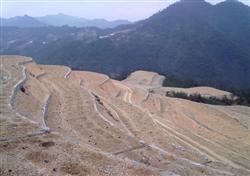
Second, choose as far as possible a place with loose soil, rich in organic matter and good drainage and irrigation conditions. If it is mountainous land, try to choose the middle and lower parts of sunny slopes; the slope should not exceed 15°, and when it is greater than 15°, terraces 2m wide should be built. The best site types are wasteland hills and low-yield pine forest conversion land; sloped farmland returned from cultivation can also be used.
However, the planting survival rate on returned farmland is not as high as that on converted pine forest land, and there are also more pests, diseases and weeds than on converted pine forest land, which increases production and management costs. In the hilly and mountainous areas of southern China, combining this with the construction of commercial forest bases and promoting blueberry planting can improve the ecological environment, adjust the forest species structure, and also increase the economic income of mountain residents.
2. Blueberry planting density and land leveling:
For highbush blueberries, 1.0-1.5m x 2.0-3.0m is suitable; for rabbiteye blueberries, 1.5m x 2-2.5m is often chosen; for half-high blueberries, 0.6-1.2 x 2m is chosen. In foreign countries, actual cultivation density is often determined according to the degree of mechanization. In southern and northern China, a suitable density can be chosen according to the actual management objectives.
Digging planting holes before planting is called land preparation. The specifications of land preparation (planting holes) are 1.0m (length) x 1.0m (width) x 0.5m (depth). For planting half-high blueberries and lowbush blueberries, the land preparation specifications can be appropriately reduced, and for rabbiteye blueberries they can be appropriately increased.
After the planting holes are dug, mix the removed soil with crushed pine bark and peat or humus soil from under pine forests, etc., mix evenly, and then backfill it into the holes. The backfilled soil should be 20-30cm above the ground. If the soil acidity is insufficient, an appropriate amount of sulfur powder can be mixed in.
3. Selection of blueberry varieties and planting time:
Cross-pollination is one of the important factors in increasing blueberry yield and fruit size. Highbush blueberries have a high self-fruit setting rate, while most varieties of lowbush blueberries and rabbiteye blueberries have a very low self-fruit setting rate or do not set fruit. Cross-pollination can increase the fruit setting rate of highbush blueberries from 67% to 82%, and that of rabbiteye blueberries from 18% to 47%.
Therefore, in a blueberry planting orchard, at least two or more varieties should be arranged to pollinate each other, so as to improve yield and quality. The ratio of pollinator trees is generally 2-3:1, that is, 2-3 rows of the main variety and 1 row of the pollinator variety.
In the south, where winters are not very dry, blueberries are best planted from autumn to before early spring bud break. The planting depth for one-year-old seedlings is 15-20cm, and the soil should be supported and pressed firmly, achieving "three supports, two presses and one lift of the seedling."
In places with dry autumn and winter, planting is best done when the rainy season arrives; where irrigation conditions are available, planting can be done in all four seasons. In Majiang, Guizhou, summer planting can also achieve a survival rate of more than 95%.
Click to get more strawberry growing techniques
Click to get more fruit growing techniques