How to control pineapple mealybug wilt? A must-read for growers
How to control pineapple mealybug wilt? What harm does pineapple mealybug wilt cause? Please explain the harm of pineapple mealybug wilt: Pineapple mealybug wilt can occur in Hainan, Guangdong, Guangxi, Fujian and Taiwan, China. In the early stage of the disease, the basal leaves turn yellow and red, shrivel, lose their luster, and the leaf margins curl inward, after which the leaves...
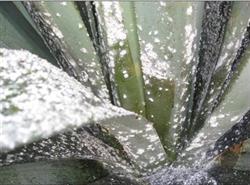 How to control pineapple mealybug wilt? What harm does pineapple mealybug wilt cause? Please explain
The harm of pineapple mealybug wilt:
Pineapple mealybug wilt can occur in Hainan, Guangdong, Guangxi, Fujian and Taiwan, China. In the early stage of the disease, the basal leaves turn yellow and red, shrivel, lose their luster, and the leaf margins curl inward; later the leaf tips dry up, the leaves wilt, and the plant stops growing.
As the disease progresses, rot spreads from the root tips until part or all of the root system rots, and the plant dies. Most people believe the disease is caused by infection with a virus transmitted by the pineapple mealybug.
Causes of pineapple mealybug wilt:
1. Climatic factors. The disease generally occurs easily in hot, dry autumn and winter, but is also commonly seen in cold, rainy spring. In Hainan Province it mostly occurs from November to January-February of the following year.
2. Plant growth factors. Plots with vigorous plant growth, higher fertilizer and water management levels, and excessive planting density are generally more prone to the disease and suffer more severe cases.
3. Environmental condition factors. In hillside depressions that easily accumulate water, on steep hillsides, in sandy soil with severe soil erosion, exposed roots and poor water-holding capacity, the root system is prone to dying and wilting.
4. Soil insect factors. Insects such as white grubs, termites and earthworms that feed on the underground roots can aggravate the occurrence of mealybug wilt.
Control methods for pineapple mealybug wilt:
1. Careful selection of planting material: Do not select and introduce planting material from diseased areas or diseased fields. If planting material must be introduced from a diseased area, the base of the roots and stems of the seedlings must be strictly soaked in the pesticide solution for 2 minutes, then placed upside down on their sides so the solution accumulates at the leaf bases, in order to kill the mealybugs remaining in the seedlings; wait until dry before planting. For soaking seedlings, use 50% malathion emulsifiable concentrate at 800 times dilution, 40% dimethoate at 800-1000 times dilution, or 80% dichlorvos emulsifiable concentrate at 1000 times dilution.
2. Pesticide control method: When diseased plants are found, promptly spray one of the above pesticides mixed with 50% thiophanate-methyl wettable powder at 400 times dilution and 1%-2% urea to promote the yellow leaves turning green. The soil surface at the base of the diseased plants and other healthy plants must be drenched with one of the above insecticides to control mealybugs and soil insects.
3. Environmental improvement method: Pay attention to choosing the planting site. Strengthen management. Use high-ridge planting to avoid water accumulation and soil erosion in the orchard; for kaolin soil and heavy clay soil, apply more organic fertilizer to improve soil aeration and promote root growth, and promptly dig out and burn diseased plants.
Click to get more pineapple growing techniques
Click to get more fruit growing techniques