How do you prevent and control pests and diseases when growing black-skinned sugarcane?
How do you prevent and control pests and diseases when growing black-skinned sugarcane? Please introduce the prevention and control methods for various pests and diseases. Black-skinned sugarcane is also called fruit sugarcane (chewing cane) or edible fleshy cane. It belongs to the grass family, genus Saccharum. It originated in the tropics and subtropics. It has high requirements for light, heat and water. It is not tolerant of cold, drought or shade, and is suitable for planting in areas below 800 m in altitude...
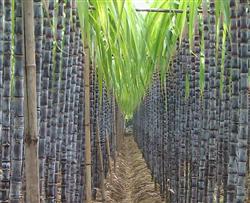 How do you prevent and control pests and diseases when growing black-skinned sugarcane? Please introduce the prevention and control methods for various pests and diseases
Black-skinned sugarcane is also called fruit sugarcane (chewing cane) or edible fleshy cane. It belongs to the grass family, genus Saccharum. It originated in the tropics and subtropics. It has high requirements for light, heat and water. It is not tolerant of cold, drought or shade, and is suitable for planting in areas below 800 m in altitude. It has thin skin, crisp stems, abundant juice and a sweet taste; it clears heat and relieves toxins, quenches thirst and satisfies hunger, and is rich in nutrients, with high yields and good economic returns. However, black-skinned sugarcane is very susceptible to pests and diseases during cultivation. When growing black-skinned sugarcane, pest and disease control should be based mainly on prevention, with integrated control; for details, you can refer to the following methods for prevention and control:
1. Disease control:The main diseases of fruit sugarcane at the seedling stage are pineapple disease, and at the mid stage top rot and leaf wilt.
1. Cane seed treatment: soak the seed in 3% quicklime water for about 6 hours, or soak it in 1000-fold carbendazim solution plus 1000-fold 98% cartap original powder for 10 minutes. This promotes robust growth of the cane plants, enhances resistance, and inhibits the onset of disease.
2. In the field, at the early stage of disease, spray with 800-fold chlorothalonil solution or 800-fold thiophanate-methyl solution 3-4 times. At 1-week intervals, spray the whole plant.
3. Strip off old leaves promptly and in good time, and gather the stripped cane leaves in a safe area and burn them.
2. Insect pest control:The main insect pest of fruit sugarcane is the sugarcane borer, followed by the red mealybug, the cotton aphid and the sugarcane beetle.
1. Agricultural control: mainly adopt healthy cultivation, rational close planting, scientific management and fertilization. Select cane tops with thick, uniform stems, no cracks and no insect holes as seed. Planting furrow spacing 120 cm, furrow depth more than 40 cm, furrow bottom width 20 cm, sow about 20 buds per meter. Ensure no fewer than 4500 effective stalks per mu. During the growing period, promptly pull out and remove dead-heart seedlings, gather and burn dead tops, and use injection or needle pricking to kill the larvae inside the stems.
2. Physical control: take advantage of the adults' phototaxis and install frequency-vibration insect-killing lamps to trap and kill the adults.
3. Chemical control: seize the peak occurrence periods (March-April, June-July, September-October) and the occurrence dynamics to carry out control.
(1) At sowing, apply 5 kg of soil insect killer per mu, or 5 kg of terbufos, or 5 kg of miral, as poisonous soil or poisonous fertilizer into the planting furrow, then cover with soil after sowing. Afterwards, when earthing up and fertilizing each time, apply the same amount deeply.
(2) During the growing period, pay attention to inspection, and choose 1000-fold 5% fipronil solution or 800-fold 98% cartap original powder or 2000-fold 40% drill-heart special spirit for spraying. Use them alternately, and mix with 1000-fold 40% pirimicarb-plus solution or 2000-fold 50% pirimicarb or 1500-fold 48% chlorpyrifos or 1000-fold 52% nongdile solution, using more than 45-90 kg of spray solution per mu.
3. Weed and rodent control:At the seedling stage, use 300-fold du'a mixture solution to control weeds, and use 150-fold glyphosate solution to control weeds on furrows and ridges, spraying on sunny and windless days. Use bait poisoned with 7 parts per ten thousand of sodium diphacinone to control rodents.
Click to get more sugarcane growing techniques
Click to get more fruit growing techniques