What exactly are the worms in bayberry?
What are the worms in bayberry? Are they harmful to humans? How can the worms in bayberry be removed? Please give an introduction. The small white worms inside bayberry are actually the larvae of fruit flies, because bayberry has no peel for protection and under natural conditions will attract fruit flies to lay eggs on the fruit. Before the bayberry ripens, the mother fly...
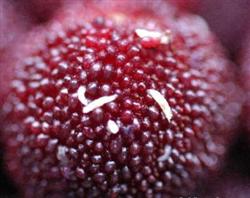 What are the worms in bayberry? Are they harmful to humans? How can the worms in bayberry be removed? Please give an introduction
The small white worms inside bayberry are actually the larvae of fruit flies, because bayberry has no peel for protection and under natural conditions will attract fruit flies to lay eggs on the fruit. Before the bayberry ripens, the mother fly lays the larvae on the fruit. The rich nutrients outside the bayberry pit become a hotbed for the larvae, until the larvae pupate into moths and leave.
The worms in bayberry are mostly fruit fly larvae, and because they are hidden relatively deep, they are not easy to identify with the naked eye.
Fruit flies usually feed on honey, fruit and so on, and are relatively clean themselves. During the breeding season, they are attracted by the smell of bayberry and lay eggs on the surface of the bayberry. After the fruit fly eggs hatch into larvae, they burrow into the flesh and feed on the flesh; from birth to growth, fruit fly larvae are almost always in an uncontaminated environment, so there are almost no bacteria harmful to humans, and therefore the worms in bayberry are not very harmful to humans.
To remove the worms in bayberry, the salt water soaking method can be used:
Fresh bayberry should be promptly soaked in a relatively high concentration of salt water for 5-10 minutes, and should not first be placed in the refrigerator, because low temperature will cause the worms to die, and dead worms cannot be soaked out even in salt water.
Control methods for fruit flies in bayberry orchards:
1. Strengthen orchard management:Apply fertilizer and irrigate reasonably to strengthen tree vigor and improve tree resistance; prune scientifically, cutting off diseased and disabled branches and dense branches, to ensure ventilation and light penetration in the orchard; maintain appropriate temperature and humidity in the orchard, and clean the orchard in combination with pruning, especially removing rotten debris and fermented matter; reduce sources of insects.
2. Promptly clean up fallen fruit:In the early stage before bayberry ripens, the occurrence of fruit flies is not large. As the fruit ripening period progresses, fallen fruit increases, and a large number of female flies lay eggs and reproduce on the fallen fruit. Therefore, promptly and thoroughly cleaning up fallen fruit is one of the more effective control methods.
3. Poison bait trapping:After the bayberry flowers fall, use trichlorfon, bananas, honey and vinegar in a ratio of 10:10:6:3 to prepare a mixed trapping syrup, and place 10 portions per mu to trap and kill adult flies, which can make the rate of good fruit reach more than 95%, and the control effect is relatively ideal.
4. Spraying fallen fruit with pesticide:Because bayberry is a berry, directly spraying the tree body or fruit with pesticide makes the pesticide residue on the fruit difficult to wash off. Therefore, chemical pesticides should not be used for control during the bayberry ripening period. However, before the ripening period (that is, in mid-May), 1.8% abamectin with low toxicity and low residue can be used to spray fallen fruit, and after spraying it should be cleaned up promptly. Generally the control effect is relatively good.
Click to get more bayberry tree planting techniques
Click to get more fruit planting techniques