What are the key technical points for autumn management of hickory trees?
How should hickory trees be managed in autumn? Please explain in detail. The main autumn management of hickory trees includes fertilization and pest and disease control. For detailed methods, please refer to the following: 1. Purpose of fertilizing hickory trees: After the hickory fruit grows, it consumes a large amount of nutrients. The short-branch bare buds that have differentiated to bear fruit next year need sufficient...
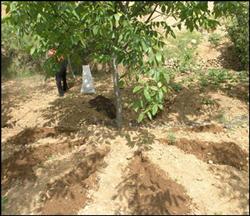 How should hickory trees be managed in autumn? Please explain in detail.
The main autumn management of hickory trees includes fertilization and pest and disease control. For detailed methods, please refer to the following:
1. Purpose of fertilizing hickory trees:After the hickory fruit grows, it consumes a large amount of nutrients. The short-branch bare buds that have differentiated to bear fruit next year need sufficient nutrients to be guaranteed, so fertilization must be done in time to supplement nutrients. According to these years, the fertilization varieties used by forest farmers in the producing areas are relatively miscellaneous, mostly nitrogen, phosphorus, and potassium compound chemical fertilizers, lacking various trace elements needed for hickory growth such as calcium, magnesium, zinc, and boron. This has caused changes in the physical and chemical properties of the forest soil, inhibited the healthy growth of hickory trees, led to a decrease in hickory fruiting branches, excessive growth of vegetative branches, and some leaves losing green color and changing color, showing symptoms of nutrient deficiency. The unscientific selection of fertilizer varieties has already affected hickory yield. For this reason, it is necessary to choose, according to local conditions, special biological fertilizers and organic fertilizers suitable for the growth needs of hickory.
2. Fertilization methods for hickory trees:1. Trench application: Dig a horizontal trench 10 to 15 cm deep and wide 1 to 1.5 m uphill from the tree, apply the fertilizer, and then cover it with topsoil. 2. Hole application: Dig small holes in a radial pattern around the trunk 10 to 15 cm deep, apply the fertilizer, and then cover it back with topsoil.
3. Fertilization amount for hickory trees:It should be determined according to the size of the tree and the yield level. Generally, a tree producing 25 kg of hickory husks should be fertilized with about 1.5 kg.
4. Fertilization time for hickory trees:In autumn, from late August to late September; in spring, from late March to early April.
5. Prevention of hickory diseases:In recent years, various pathogenic fungi in hickory forests have been multiplying and spreading rapidly. Branch blight, trunk rot, and root rot endanger the entire producing area. They not only seriously affect hickory yield but also threaten the life of the trees. For this reason, forest farmers in the producing areas are urged to do a good job in autumn disease prevention.
1. Control method for hickory branch blight: Prune off branches and twigs killed by disease on the tree, clean up the branches and twigs that have fallen to the ground, and burn them in a centralized manner. Then use 70% thiophanate-methyl 1:700 solution to spray the branches and twigs, but it must be sprayed 3 times consecutively, once every 10 days.
2. Control of hickory trunk rot (symptom of black water flowing from the trunk): First use a knife to scrape off the diseased spots and rotten flesh, then use allicin (402) antibacterial agent or copper sulfate 1:200 solution to brush the diseased spot areas, once every 7 days for 3 consecutive applications.
3. Control of hickory root rot: Use carbendazim or triadimefon 1:200 solution to water the roots. In winter, use copper sulfate 1:200 to water the roots, once every 10 to 15 days for 3 consecutive waterings. The medicinal solution must penetrate to the root area.
Click to get more hickory planting techniques
Click to get more fruit planting techniques