How do you prevent and treat canker disease in kiwifruit trees?
What harm does kiwifruit tree canker disease cause? How do you prevent and treat kiwifruit tree canker disease? Is there any knowledgeable netizen who can help explain? Kiwifruit tree canker disease is a bacterial disease with the characteristics of being hidden, explosive and devastating. Before external symptoms appear, it is impossible to tell whether the disease is present, and once symptoms appear, the losses caused...
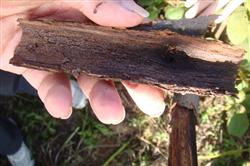 What harm does kiwifruit tree canker disease cause? How do you prevent and treat kiwifruit tree canker disease? Is there any knowledgeable netizen who can help explain?
Kiwifruit tree canker disease is a bacterial disease with the characteristics of being hidden, explosive and devastating. Before external symptoms appear, it is impossible to tell whether the disease is present, and once symptoms appear, the losses caused cannot be made up for. In mild cases, branches die back and cankers form on the trunk; in severe cases, the entire plant dies, posing a serious threat to the healthy development of the kiwifruit industry.
Zhongdi Network has compiled the symptoms and control methods of kiwifruit tree canker disease, listed in detail below for netizens' reference.
Symptoms of kiwifruit tree canker disease:
Canker disease mainly damages leaves, fruit and vines, seriously affecting fruit yield and fruit quality. The disease usually starts from young buds on the stems and vines, lenticels, leaf scars and branch forks, initially appearing water-soaked, after which the cankers enlarge, the color deepens, the cortex separates from the xylem, and it feels soft when pressed by hand.
In the later stage of kiwifruit tree canker disease, the affected cortex shows longitudinal linear cracking and exudes a clear white mucus. The mucus soon turns reddish-brown. The canker can rapidly expand around the stem. When the diseased stem is cut open with a knife, the cortex and pith turn brown, and the pith is filled with milky white bacterial ooze. The branches and leaves above the affected stem and vine wilt and die. If the base is affected, after the upper branches die, new shoots can sprout again from the near-ground part or the rootstock part. When leaves are affected, red small spots first form on the diseased part, with an inconspicuous yellow halo around them; later the small spots expand into irregular dark green cankers 2 to 3 mm in size, the leaf color becomes dark green, and the yellow halo becomes obvious, about 2 to 5 mm wide. Under humid conditions, it can rapidly expand into large water-soaked spots, which become angular due to the restriction of leaf veins.
Causes of kiwifruit tree canker disease:
Kiwifruit tree canker disease is mainly transmitted through planting materials such as seedlings and scions, as well as fruit. Kiwifruit seedlings are more susceptible to this disease than adult trees; the older the tree, the milder the disease.
Canker disease is favored by low temperature and high humidity. In spring, when the average ten-day temperature is 10 to 14°C, if there is heavy wind and rain or successive days of high humidity and rainy weather, the disease is prone to epidemic outbreak. The new shoot growth period is the peak period of the disease. In May, most days are rainy, providing favorable conditions for the occurrence and spread of canker disease. Therefore, during this canker-prone period, active prevention and control of canker disease should be carried out.
Control methods for kiwifruit tree canker disease:
Method one,Strengthen kiwifruit tree vigor and improve soil fertility. Apply more organic fertilizer, improve the soil, and make the soil loose and fertile, so as to facilitate the expansion and deep penetration of the kiwifruit root system. Vigorously promote formula fertilization. Kiwifruit should bear fruit in a timely manner, with a reasonable load and scientific management, maintaining robust tree vigor and improving resistance to canker disease.
Method two,Select disease-resistant kiwifruit tree varieties. Breed, cultivate and plant disease-resistant varieties, gradually eliminate susceptible varieties, and fundamentally improve the resistance of superior varieties to canker disease.
Method three,Disinfect the purchased seedlings. The method is: use an agricultural streptomycin solution containing 700 units per milliliter, add 1% alcohol as an auxiliary agent, and disinfect for 1.5 hours.
Method four,Carry out scientific pruning of kiwifruit trees:
Generally prune in December in winter. The pruning tools should be disinfected with 90% alcohol, disinfecting once after pruning each tree. The scissor cuts should be smooth and flat to reduce large wounds. After winter pruning is completed, promptly spray chemicals to "seal the three openings" (fruit stalk openings, leaf stalk openings and pruning cuts), and take the diseased dead branches and fallen leaves out of the orchard to burn them in a centralized manner. In combination with pruning, remove diseased insect branches, diseased leaves, leggy branches, drooping branches, etc. All branches through which bacterial ooze has flowed should be completely cut off to reduce sources of infection.
From the end of February to the early and middle part of March is the bleeding period of the plants, so pruning should not be carried out again. During the spring peak period of canker disease, conduct regular inspections. Once severely diseased plants are found, promptly remove and burn them to control the spread of the pathogen.
Method five,After fruit harvest or before the beginning of winter, in combination with orchard pruning, generally spray 1 to 2 times with 3 to 5 degrees Baumé lime sulfur mixture or 1:1:100 Bordeaux mixture; from the beginning of spring to before budbreak, spray 1:1:100 Bordeaux mixture or 50% copper succinate (DT) wettable powder 500 times liquid; from after budbreak to the end of flowering, spray 50% Kasumin wettable powder 500 to 800 times liquid and other agents, once every 10 days.
Method six,When disease is found, promptly scrape the trunk and apply medicine and spray:
First scrape off the cankers (take the diseased bark and sawdust out of the orchard and burn them). When approaching healthy bark, disinfect the scraper, then scrape a portion of the healthy bark. Then apply trunk coatings such as 95% bacterial spirit original powder 500 times, or 60% Baijuntong 30 times, or 5% JunDuQing water agent 50 times, etc., applying 4 to 5 times, once every 7 days. At the same time, combine with spraying 4 to 5 times using agents such as 95% bacterial spirit original powder 2000 times plus penetrant, or 5% JunDuQing water agent 300 times plus penetrant, once every 7 days.
Method seven,Longitudinal scoring, smearing and spraying control:
Use a disinfected small knife to make longitudinal cuts on the cankers on the stems and vines. The cuts should be larger than the cankers, then apply the agent by smearing, applying 4 to 5 times, once every 7 days. At the same time, combine with spraying 4 to 5 times, once every 7 days. The agents that can be used are 95% CT bacterial spirit original powder 2000 times plus penetrant, or 5% JunDuQing water agent 300 times plus penetrant, etc.
Click to get more kiwifruit cultivation techniques
Click to get more fruit cultivation techniques