What kind of insect is the citrus swallowtail butterfly? This article will introduce you to the citrus swallowtail butterfly
What is the citrus swallowtail butterfly? What does the citrus swallowtail butterfly look like, and what harm does it cause? What methods can control the citrus swallowtail butterfly? We also ask experienced netizens to help introduce it. Zhongdiwang has compiled the growth habits, harm, and control methods of the citrus swallowtail butterfly, listed below for netizens' reference. Growth habits of the citrus swallowtail butterfly: ...
 What is the citrus swallowtail butterfly? What does the citrus swallowtail butterfly look like, and what harm does it cause? What methods can control the citrus swallowtail butterfly? We also ask experienced netizens to help introduce it
Zhongdiwang has compiled the growth habits, harm, and control methods of the citrus swallowtail butterfly, listed below for netizens' reference.
Growth habits of the citrus swallowtail butterfly:
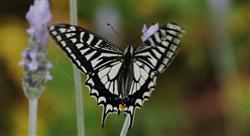
The citrus swallowtail butterfly, also known as the citrus yellow-black swallowtail, generally has spring and summer forms. Spring-form female adults have a body length of 21-28 mm and a wingspan of 75-96 mm; the summer form is larger, with a body length of 30 mm and a wingspan of 105 mm. The body and wing bases are yellow, with less black than the spring form. Both spring and summer form adults each have 8 and 6 crescent-shaped yellow spots along the outer margins of the forewings and hindwings. The larvae are initially brown, turning green when mature, with a body length of 38-42 mm. The head has a yellow osmeterium, which is extended when alarmed.
Adult citrus swallowtail butterflies are active during the day, fly well, and like to feed on nectar. Eggs are laid singly on tender buds and the undersides of leaves, with an egg period of about 7 days. Newly hatched larvae bite the leaves into holes or notches. Fifth-instar larvae have the largest appetite and can eat 5 or 6 leaves per day. When alarmed, they extend the osmeterium and release a foul odor to repel enemies. Mature larvae can spin silk around the thorax and abdomen to fix themselves to branches and pupate. The overwintering generation adults appear from March to April of the following year, and the 1st to 5th generation adults appear from late April to May, late May to June, late June to July, August to September, and October-November, respectively.
Harm caused by the citrus swallowtail butterfly:
Generally, the larvae gnaw on citrus buds and leaves. Young larvae feed leaves into notches and holes, and fifth-instar larvae can eat all the leaves of citrus seedlings, leaving only the petioles. Citrus, trifoliate orange, Amur cork tree, Evodia rutaecarpa, and Sichuan pepper are all severely harmed by citrus swallowtail butterfly larvae.
Control methods for the citrus swallowtail butterfly:
Method 1. Manual capture and killing:
Combine with winter and spring pruning and garden clearing to capture and kill overwintering pupae; net adults; capture larvae; remove egg grains.
Method 2. Use natural enemies for control:
Trichogramma wasps, Pteromalus puparum, and Brachymeria lasus are all natural enemies of the citrus swallowtail butterfly. Trichogramma eggs can be placed in the field for control, or pesticide application can be reduced to protect them.
Method 3. Use pesticides to spray and kill larvae:
During the peak larval period, spray 90% trichlorfon crystal at 800 times dilution, or 2.5% deltamethrin, 20% fenvalerate emulsifiable concentrate at 4 000-5 000 times dilution, or 2.5% baode emulsifiable concentrate at 2 000 times dilution, or 10.8% kaisa emulsifiable concentrate at 1 000-1 500 times dilution, or Bt emulsion at 2 000-3 000 times dilution, Qingchongjun wettable powder (100 billion/g) at 1 000 times dilution, Qingchongjun No. 6 liquid at 1 500 times dilution.
Click to get more citrus planting techniques
Click to get more fruit planting techniques