How to prevent and control anthracnose in citrus seedlings? A detailed guide to practical methods
What harm does anthracnose cause to citrus seedlings? How can citrus seedlings be protected against anthracnose? We hope experienced readers will share their advice. Zhongdiwang has compiled the harm caused by anthracnose in citrus seedlings and the control methods, listed below for readers' reference. Harm caused by anthracnose in citrus seedlings: anthracnose is a common disease in citrus cultivation...
 What harm does anthracnose cause to citrus seedlings? How can citrus seedlings be protected against anthracnose? We hope experienced readers will share their advice
Zhongdiwang has compiled the harm caused by anthracnose in citrus seedlings and the control methods, listed below for readers' reference.
Harm caused by anthracnose in citrus seedlings:
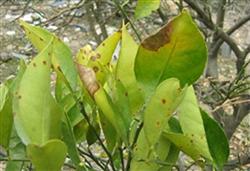
Anthracnose is a common disease in citrus cultivation. Citrus leaves, twigs, fruit and even seedlings can all be affected. Anthracnose causes leaf drop, fruit drop, blighted shoot tips on tender branches, and cracking of the bark on branches and trunks; if it occurs during storage, it causes fruit rot and leads to losses. Anthracnose in citrus seedlings mostly occurs at the root crown or graft union, with irregular brown lesions; in severe cases it causes dieback of the top of the trunk and extends to dieback of the branches.
Causes of anthracnose in citrus seedlings:
The causes of anthracnose in citrus seedlings are related to tree vigor and to different varieties. Generally, sweet orange and Wenzhou mandarin are not easily infected, while severe winter freezing damage in the citrus orchard, cloudy and rainy weather with low temperatures in early spring, and high temperatures with abundant rain in summer all favor the occurrence and development of the disease. If cultivation and management are extensive, with thin soil on sloping land, heavy clay soil, and poor drainage, all of these favor the disease.
Control methods for anthracnose in citrus seedlings:
Method 1. Management of the seedling nursery:
In nurseries with poor conditions for raising citrus seedlings, the soil should be deep-plowed and improved, more organic fertilizer should be applied, phosphorus and potassium fertilizer should be applied in appropriate proportions, drainage and irrigation should be timely, and freeze protection and pest control should be done well, so as to strengthen tree vigor and improve disease resistance.
Method 2. Preventive control in advance in winter:
In winter, do a good job of cleaning the nursery, prune out diseased twigs, remove fallen leaves from the ground, and burn them in a centralized manner or bury them deeply for compost. Spray the entire nursery thoroughly with 1-2 degrees Baumé lime sulfur mixture to kill the overwintering pathogens on the surface of diseased parts.
Method 3. Chemical control:
Spray once every 10-20 days with 0.5:0.5:100 Bordeaux mixture or 0.5:0.5:1-200 zinc-copper lime solution, for 2-3 consecutive sprays, which can basically control the occurrence of the disease. You can also use 0.3 degrees Baumé lime sulfur mixture plus 0.1% washing powder, or 50% thiophanate-methyl wettable powder at 800-1000 times dilution. You can also use 50% amobam aqueous solution at 800 times dilution or 65% zineb wettable powder at 500 times dilution, etc. The above agents need to be used alternately.
Click to get more citrus cultivation techniques
Click to get more fruit cultivation techniques