When is the best time to fertilize apple trees?
When is a good time to fertilize apple trees? Can any netizens help explain that apple tree fertilization is generally divided into two types, base fertilizer and top dressing, and the specific fertilization time must also be determined according to the apple variety, the fertilizer requirements of the fruit tree, and the growth and fruiting status of the tree. Zhongdi Web has compiled the fertilization periods and methods for apple trees, listed in detail below...
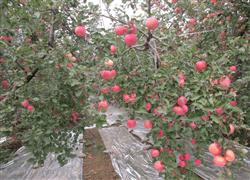
When is a good time to fertilize apple trees? Can any netizens help explain
Apple tree fertilization is generally divided into two types, base fertilizer and top dressing, and the specific fertilization time must also be determined according to the apple variety, the fertilizer requirements of the fruit tree, and the growth and fruiting status of the tree. Zhongdi Web has compiled the fertilization periods and methods for apple trees, listed in detail below for netizens' reference.
Early-stage fertilization time for apple trees:
Apply pre-bloom fertilizer or bud-break fertilizer to apple trees (carried out in early April); post-bloom fertilizer for apple trees (carried out in mid-May); these two early-stage fertilizations can effectively promote fruit tree bud break and flowering, promptly prevent fertilizer deficiency caused by the large amount of nutrients consumed by flowering, increase the fruit-setting rate, and promote new shoot growth.
Mid-to-late stage fertilization time for apple trees:
Apply fertilizer for flower bud differentiation and young fruit expansion to apple trees (carried out from late May to early June). This top dressing is to meet the needs of apple fruit expansion, branch and leaf growth, and flower bud differentiation. Apple tree top dressing is generally based mainly on potassium fertilizer.
The base fertilizer period for apple trees is generally best in autumn (carried out in early to mid-September). Apple tree base fertilizer is mainly farmyard manure, while phosphate fertilizer is applied entirely according to the total amount for the whole year. In order to give full play to the fertilizer effect, phosphate fertilizer should first be piled and composted together with organic fertilizer, then mixed evenly and applied.
The main role of applying base fertilizer to apple trees is to ensure the photosynthesis of the fruit trees from after harvest to before leaf fall, improve nutrient accumulation, and lay a good foundation for the growth and development of the fruit trees the following year. On the basis of these 4 fertilizations, consideration should also be given to combining foliar spraying fertilizer + Guaguo Zhuangdiling. Before July, spray 0.3%-0.5% urea solution + Guaguo Zhuangdiling; after July, spray 0.3%-0.5% monopotassium phosphate or fruit tree micro-fertilizer + Guaguo Zhuangdiling.
Fertilization methods for apple trees:
Fertilization method 1, root fertilization:The fibrous roots in the root system of fruit trees are the main organs for fruit trees to absorb nutrients. The absorption of fertilizer by fruit trees is mainly completed by the root hairs in the root system. Therefore, fertilizing in the area where the roots are concentrated is one of the keys to improving fertilizer efficiency.
Fertilization method 2, ground and underground fertilization:
Under normal circumstances, the horizontal root distribution range of apple trees is about 1-2 times the crown diameter, but the vast majority is concentrated at the outer edge of the crown projection or slightly farther away. Its vertical distribution varies with tree species, soil quality, and management level.
Generally, the root systems of apple, pear, walnut, chestnut, grape, etc. are distributed relatively deep, reaching 70-80 cm, but more than 80% of the root system is concentrated in the soil layer around 60 cm. The root systems of peach, apricot, plum, and cherry are distributed relatively shallow, with the vast majority in the soil layer around 40 cm.
Therefore, when fertilizing, fertilizer should be applied according to this characteristic. For deep root distribution, apply appropriately deep; otherwise apply shallow. Organic fertilizer decomposes relatively slowly and has a longer fertilizer supply period, so it is suitable for deep application. Chemical fertilizer has greater mobility, so it can be applied shallowly. For example, when applying organic fertilizer, for deep-rooted fruit trees such as apple, the application depth is 40-60 cm, while for shallow-rooted fruit trees such as peach, it is 30-40 cm. At the same time, when fertilizing, the main focus should be on the edge of the crown projection and slightly farther places, so as to maximize fertilizer efficiency.
Fertilization method 3, foliar spraying fertilizer:
The use of foliar spraying fertilizer needs to be based on the growth vigor of the fruit tree. If the tree is weak in growth, branch and leaf extension is slow, and leaves tend toward yellow or light yellow, this indicates that the fruit tree is deficient in nitrogen and iron. Nitrogen fertilizer should be the main spray, and an appropriate amount of ferric citrate and phosphate fertilizer and potassium fertilizer should also be sprayed. If the leaves are large and tender green and the internodes of the branches are too long, nitrogen fertilizer is sufficient, and phosphate fertilizer and potassium fertilizer should be the main spray, with an appropriate amount of trace elements also sprayed.
Precaution 1 for foliar spraying fertilizer on fruit trees:Carry out on cloudy days or sunny days after 5 p.m. during the pre-bloom stage, flowering stage, and fruit-swelling stage of fruit trees. The interval is 10-15 days.
Precaution 2 for foliar spraying fertilizer on fruit trees:Among fertilizers, ammonium bicarbonate in nitrogen fertilizer and phosphate rock powder in phosphate fertilizer, etc. are ineffective or harmful for foliar spraying and must be strictly prohibited from spraying. Suitable varieties include urea, superphosphate, monopotassium phosphate, potassium sulfate, plant ash, and among trace elements, borax, zinc sulfate, manganese sulfate, ferrous sulfate, ferric citrate, etc.
Precaution 3 for foliar spraying fertilizer on fruit trees:Foliar spraying fertilizer is not the main method of fertilization, but merely an auxiliary fertilization method used when soil fertilization is insufficient.
Precaution 4 for foliar spraying fertilizer on fruit trees:The best concentration for spraying urea is 0.3%-0.5%, the spraying concentration of superphosphate is 0.5%-1.2%, the spraying concentration of monopotassium phosphate is 0.2%-0.4%, and the spraying concentration of ternary compound fertilizer is 0.4%-0.5%; the spraying concentration of plant ash is 1.5%-2%; the concentration of borax, zinc sulfate, ferric citrate, magnesium sulfate, etc. among trace elements is 0.08%-0.15%.
Precaution 5 for foliar spraying fertilizer on fruit trees:The back of tree leaves has many and large stomata, and fertilizer is easily absorbed, so spraying should be mainly on the back of the leaves from top to bottom. In this way, the fertilizer solution will naturally flow down to the underside of the leaves.
Click to get more apple tree planting techniques
Click to get more fruit planting techniques