How should pomegranate trees be managed scientifically before harvest?
How should pomegranate trees be managed before harvest? What should be noted before harvesting pomegranates? Experienced readers are also asked to help explain. Generally, pomegranate growers often do not carry out management before harvesting pomegranate trees, so some pomegranate fruits end up with poor quality. Therefore, Zhongdiwang has compiled some key management points for pomegranate trees before harvest...
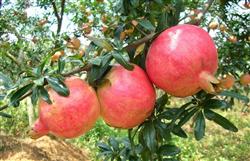 How should pomegranate trees be managed before harvest? What should be noted before harvesting pomegranates? Experienced readers are also asked to help explain.
Generally, pomegranate growers often do not carry out management before harvesting pomegranate trees, so some pomegranate fruits end up with poor quality. Therefore, Zhongdiwang has compiled some key management points for pomegranate trees before harvest, listed in detail below for readers' reference.
Key point one:Remove water sprouts, upright branches, densely growing branches and slender branches inside the canopy to keep the inner canopy well ventilated and well lit. For vigorous shoots that have not yet stopped growing but need to be retained for training the tree shape, perform light pinching to reduce nutrient consumption, make the branches grow fully and robustly, and ensure safe overwintering.
Key point two:From late August to early September, remove the bags from bagged fruit in a timely manner. The best time to remove the bags is 20 to 25 days before mature harvest; removing them at this time is most beneficial for fruit coloring and increasing sugar content. Bag removal should be done on a cloudy day or after 4 p.m. on a sunny day.
If double-layer bags were used, first remove the outer bag, then remove the inner bag after an interval of 3 to 5 days. Pay attention to the weather when removing bags, and be careful to prevent peel sunburn caused by high temperatures and strong sunlight, which would reduce fruit value.
After removing the bags, promptly spray fruit coloring agent to promote fruit coloring. Leaf removal and fruit turning are auxiliary measures to promote pomegranate coloring. When removing leaves, combine it with bag removal, take off the leaves that block direct sunlight from the fruit surface, and thin out small branches that shade the fruit. Turn the fruit so that the shaded side is exposed to light, ensuring even coloring of the whole fruit. For fruits in some positions, the fruit stalk is short and thick and cannot be turned. In such cases, the position of the bearing mother branch can be changed by pulling, propping, or hanging so that the shaded back side of the fruit is exposed to light and colors.
Laying reflective film is also an important measure to promote pomegranate coloring. From early September until before harvest, laying silver reflective film under the pomegranate trees or within the tree rows can significantly increase light intensity in the inner canopy and the middle and lower parts, and increase the colored area and quality of the fruit.
Key point three:From 10 to 15 days before harvesting pomegranate trees, strictly control watering. This is especially important for dry mountain and hilly orchards and for plain orchards with irregular irrigation. After a long drought followed by rain, harvest promptly. Spraying 25 mg/L gibberellin in late August and early September can reduce fruit cracking by more than 30%.
Key point four:Generally, pomegranates bear a large amount of fruit, or the soil supply of fertilizer is insufficient, or pest and disease damage is severe, which can easily cause premature tree decline. Mid-to-late September is the second peak of flower bud differentiation of pomegranate trees in the current year, and flower bud differentiation at this stage directly affects the next year's yield. Therefore, it is very important to take measures to promote robust tree growth. Apply quick-acting fertilizer in a timely manner. When topdressing, pay attention to combining nitrogen and phosphorus, and apply potassium appropriately. Apply 0.25 kg each of urea and superphosphate per tree, and spray 0.2% to 0.35% organic potassium fertilizer or multi-element microfertilizer on the leaves.
Key point five:In fertilizer and water management for pomegranate trees, the principle of "promote early, control later" should be followed. It is necessary both to ensure the needs of normal tree growth for various nutrients and to prevent excessive vigorous growth in the later stage. Therefore, in the early stage, mainly use nitrogen fertilizer, with phosphorus and potassium fertilizers added, and irrigate at the right time and in the right amount; in the later stage, mainly use phosphorus and potassium fertilizers, and appropriately reduce the number of irrigations. For excessively vigorous pomegranate trees, spray 40% ethephon 2000 to 3000 times dilution after harvest to regulate tree growth.
Key point six:For pomegranate trees duringthe main pests and diseases to be controlled during this period are pests such as peach fruit borer, peach fruit moth, stem window moth, slug moth, Chinese golden-banded moth and golden hairy caterpillar, and diseases such as dry rot, fruit rot and brown spot. Control methods are: cut off infested shoot tips, pick up and collect infested fruit, bury them deeply in a centralized place or burn them, and kill larvae pupating on the trunks; spray 40% mancozeb 500 times dilution or 40% thiophanate-methyl 800 times dilution or 40% carbendazim suspension concentrate 500 times dilution plus 50% trichlorfon crystal 1000 times dilution to prevent diseases and control pests. In the later stage, reduce the use of toxic pesticides as much as possible.
Pomegranate cutting propagation methods
Why pomegranate trees do not bear fruit
Click to get more pomegranate tree cultivation techniques
Click to get more fruit cultivation techniques