What are the management methods for persimmon trees after harvest?
What is the management of persimmon trees like after harvest? Experienced gardeners are also asked to help introduce management methods. In autumn, once the persimmons have been harvested, management of the persimmon trees begins. Therefore, Zhongdi Web has compiled the key points for managing persimmon trees after harvest, and they are listed in detail below for gardeners to reference. Want to...
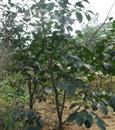 What is the management of persimmon trees like after harvest? Experienced gardeners are also asked to help introduce management methods.
In autumn, once the persimmons have been harvested, management of the persimmon trees begins. Therefore, Zhongdi Web has compiled the key points for managing persimmon trees after harvest, and they are listed in detail below for gardeners to reference.
Key point one, fertilizing persimmon trees:
The amount of fertilizer applied to persimmon trees should be determined by soil fertility, tree vigor, canopy size, and fruit load. Generally, for a persimmon tree producing 20 kg of fresh fruit, apply 0.5 kg of peanut bran (composted and decomposed before application) or 0.75 kg of potassium sulfate compound fertilizer (15:15:15). It can be applied by drenching or broadcasting.
Before persimmon trees lose their leaves and go dormant in winter, apply winter fertilizer, accounting for 60% of the annual fertilizer amount, mainly fast-acting organic fertilizer, to promote nutrient uptake and storage in the tree body, so as to meet the needs of new shoot growth, flowering, and young fruit development the following year. Apply 0.75-1.25 kg of peanut bran (composted and decomposed before application) or 5 kg of decomposed poultry and livestock manure per tree. Dig opposing trenches for application, and cover with soil after application.
Key point two, soil improvement in the persimmon orchard:
Persimmon trees are generally deep-rooted fruit trees. If the plow layer is thick, the roots grow deep, with many lateral roots and fibrous roots, wide distribution, and strong absorption capacity.
After the Start of Winter, deep plowing for soil improvement can be carried out together with orchard cleaning and fertilization. Rotate the direction year by year to open deep trenches and bury green manure and miscellaneous organic fertilizer, and at the same time cultivate 100 kg of pond mud or fertile soil per tree on the tree plate. When the soil pH is <6.0, lime should be applied to improve it. The annual lime application rate should not exceed 100 kg per mu.
Key point three, pruning persimmon trees:
Pruning of persimmon trees is mainly done during the winter dormant period, and is suitable from the Winter Solstice to Major Cold. Mainly prune off diseased and pest-damaged branches, weak branches, ineffective branches, drooping branches, and so on.
Key point four, orchard cleaning in the persimmon orchard:
Remove weeds from the persimmon orchard. From leaf fall to the following year's bud break, thoroughly prune off the remaining persimmon leaves, persimmon calyxes, dead branches, and diseased and pest-damaged branches on the trees, sweep up fallen leaves and burn them in a centralized manner to reduce overwintering sources of pests and diseases.
Click to get more persimmon tree cultivation techniques
Click to get more fruit cultivation techniques