What causes walnut fruit rot?
Why do walnuts rot? What causes it? What methods can prevent and control walnut fruit rot? We ask knowledgeable readers to help explain. Walnut fruit rot is mainly caused by anthracnose, and walnut anthracnose damages not only the fruit but also the buds and young shoots. Anthracnose can cause the damaged fruit rate of walnuts to reach 20%-30%, and in severe cases up to 80...
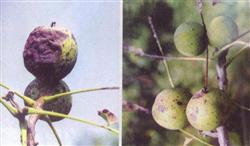 Why do walnuts rot? What causes it? What methods can prevent and control walnut fruit rot? We ask knowledgeable readers to help explain.
Walnut fruit rot is mainly caused by anthracnose, and walnut anthracnose damages not only the fruit but also the buds and young shoots. Anthracnose can cause the damaged fruit rate of walnuts to reach 20%-30%, and in severe cases up to more than 80%. Anthracnose causes the fruit to turn black, rot and drop early, and the kernels to shrivel, which not only reduces yield but also greatly reduces commercial value. Therefore, Zhongdiwang has compiled the damage and control methods of walnut anthracnose, listed in detail below for readers' reference.
Damage of anthracnose to walnuts:
Walnut anthracnose generally begins to show symptoms of damaging fruit after July 20 each year. After the walnut fruit is damaged, brown to dark brown, round or nearly round lesions appear on the husk, with a sunken center, and small black dots form on the diseased part, sometimes arranged in concentric rings. When humidity is high, the small lesions form pink raised spots, which are the fungus's acervuli and conidia. When the disease is severe, a single diseased fruit often has multiple lesions; after the lesions expand and merge, the whole fruit turns black, and rot reaches the inner husk, leaving the kernel with no edible value.
When anthracnose is mild, the shell or part of the outer skin of the kernel turns black, reducing oil yield and kernel yield, or when the fruit ripens the lesions are confined to the outer husk, with little effect on the walnut. After leaves are infected, the lesions are irregular; some turn yellow and dry along the edge within 1cm, and some form long strips of yellowing and drying on both sides of the main vein. In severe cases, the whole leaf yellows, dries and falls off. After the buds and young shoots of seedlings and young trees are infected, they often wither from the top downward, and the leaves fall off in a scorched state.
Main causes of anthracnose:
Walnut anthracnose is caused by the fungus Colletotrichum gloeosporioides. The conidia of the anthracnose pathogen are spread by wind, rain and insects, invade through wounds and natural openings, and can cause multiple secondary infections.
The timing and severity of walnut anthracnose are closely related to high temperature and high humidity; when rain comes early and plentifully and humidity is high, the disease occurs earlier and more severely. When plant spacing is small and ventilation and light penetration are poor, the disease is severe. The severity of anthracnose is also greatly related to variety; early-bearing thin-shelled walnuts are susceptible, while late-bearing walnuts are resistant.
Control methods for fruit rot caused by walnut anthracnose:
Method 1,Promptly remove diseased mummified fruits and diseased branches and leaves, and burn them in a centralized manner to reduce sources of infection.
Method 2,Strengthen management, apply fertilizer rationally, focus on increasing the application of organic fertilizer and microbial fertilizer, strengthen pruning work, and improve ventilation and light conditions in the orchard to help control the occurrence of the disease.
Method 3,When diseased fruits are found, remove them promptly and spray 2-3 times with 80% tebuconazole 4000-fold solution, 10% difenoconazole 3000-fold solution, and 80% mancozeb 800-fold solution.
Method 4,For walnut orchards with severe disease, spray 2% ningnanmycin 500-fold solution and alternate it with 10% difenoconazole 3000-fold solution. Generally, spray copper acetate 600-fold solution before budding, and spray the above agents after flowering and before the disease occurs; the control effect is relatively good.
How to water walnut trees
Methods for making walnut trees set more fruit