What pests and diseases affect loquat during the flowering period? A full breakdown of the common types
What pests and diseases affect loquat during the flowering period? How are these pests and diseases controlled? We would also welcome input from netizens who know about this. The main pests and diseases during the loquat flowering period generally include flower cluster rot, leaf spot disease, flat mites and other mites, the oriental fruit moth, the yellow tussock moth, and the peach fruit borer. If the above pests and diseases are not prevented and controlled in time, they will...
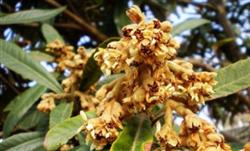 What pests and diseases affect loquat during the flowering period? How are these pests and diseases controlled? We would also welcome input from netizens who know about this
The main pests and diseases during the loquat flowering period generally include flower cluster rot, leaf spot disease, flat mites and other mites, the oriental fruit moth, the yellow tussock moth, and the peach fruit borer. If the above pests and diseases are not prevented and controlled in time, they will cause flower rot, flower drop, fruit drop, and leaf drop, affecting loquat yield and quality. Therefore, Zhongdiwang has compiled the control methods for loquat pests and diseases during the flowering period, listed in detail below for netizens' reference.
The damage caused by loquat flower cluster rot:The main cause of loquat flower rot is flower rot caused by anthracnose, gray mold, and the like. Especially in years with heavy rain and high humidity, flower rot is particularly severe. At the same time, bacterial diseases can also cause flower rot and flower drop.
Control methods for loquat flower cluster rot:Spray for control using 40% Bellkute at 2000-3000 times dilution (or 20% Lüdì at 500 times dilution or 50% Iprodione) plus 2% JIASHOUMI at 500-800 times dilution (or 72% agricultural streptomycin sulfate at 5000 times dilution or 88% hydrated mycin at 3000 times dilution).
The damage caused by loquat leaf spot disease:Leaf spot disease includes gray spot, speckle, anthracnose, brown spot, and the like. It mainly damages the leaves. Because these diseases mostly occur together, all are fungal diseases, and all occur to varying degrees throughout the entire growth period, a single fungicide can control several of them in disease control, achieving twice the result with half the effort.
Control methods for loquat leaf spot disease:The following agents can be used for spray control: (1) 25% Fuliku at 5000 times dilution; (2) 10% Shigao at 3000 times dilution; (3) 80% Dasheng at 500-800 times dilution; (4) 80% Penke at 600-800 times dilution; (5) 62.25% Xiansheng at 800-1000 times dilution.
The damage caused by loquat flat mites and other mites:All can damage leaves, new shoots, and flower clusters, causing leaf chlorosis, poor new shoot growth, and flower drop.
Control methods for loquat flat mites and other mites:The following can be used: (1) 9.50% Manjisi at 3000-4000 times dilution; (2) 1.8% Haitongsha at 3000 times dilution; (3) 10.20% Manyuanqing at 2000-3000 times dilution; (4) 15% Lümanning at 3000 times dilution, sprayed on loquat trees for control.
The damage caused by the oriental fruit moth, the yellow tussock moth, and the peach fruit borer:They mainly damage the inflorescence, causing flower drop and fruit drop.
The control agents for the oriental fruit moth, the yellow tussock moth, and the peach fruit borer can be:(1) 48% Lorsban at 1000-1500 times dilution; (2) 52.25% Nongdile at 1000-2000 times dilution; (3) 3% Nianfeng at 1000-1500 times dilution; (4) 1% matrine (Bilü) at 800-1000 times dilution; (5) 10% Anlübao at 1000-2000 times dilution, sprayed on loquat trees for control.
When applying the above pesticides for loquat tree pests and diseases, the spray must be thorough and even, with one application every 7-10 days, for 2-3 consecutive times.
Management methods for loquat trees after fruit harvest
Loquat flower thinning methods