Key Technical Points for Scientific Management of Kiwifruit Seedlings
How should kiwifruit seedlings be managed? Experienced growers are also asked to share their methods. Kiwifruit has tender, fresh quality, rich nutrition and delicious flavor. It is a fruit that people love to eat, has beautifying and skin-care effects, and helps delay skin aging, so it is deeply loved by people of all ages. Therefore, in recent years, kiwifruit has been widely planted, and for this reason...
 How should kiwifruit seedlings be managed? Experienced growers are also asked to share their methods.
Kiwifruit has tender, fresh quality, rich nutrition and delicious flavor. It is a fruit that people love to eat, has beautifying and skin-care effects, and helps delay skin aging, so it is deeply loved by people of all ages. Therefore, in recent years, kiwifruit has been widely planted. For this reason, Zhongdiwang has compiled management methods for kiwifruit seedlings, listed in detail below for netizens' reference.
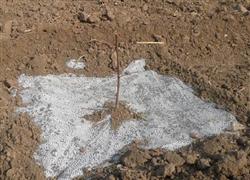
1. Winter preparation for kiwifruit:Kiwifruit seedlings planted in autumn need added weeds to keep warm through winter, with a 30 cm thick pile of loose grass covering two-thirds of the seedling trunk. For spring-planted seedlings, only the tree basin is covered, not the trunk.
2. Spring pruning of kiwifruit:Before kiwifruit sprouts in spring (late February), newly planted seedlings should be heavily pruned, leaving 3-5 buds. Push aside the covering material so that only the tree basin is covered; where coverage is insufficient, add more. At the same time, water heavily once to promote sprouting.
3. Vine-training methods for kiwifruit:Spring shoots of kiwifruit are generally not trained upward and are allowed to grow freely. After June, only vigorous shoots sprouting from the base are staked and tied up to the trellis. At a height of 1.6 m, pinch the tip and set the trunk, leaving three secondary shoots to grow onto the trellis.
4. Fertilizer and water management for kiwifruit:Generally, before May, kiwifruit is only watered, not fertilized. For well-covered seedlings, in the absence of rain, generally give light water once every 10 days and heavy water once every 20 days; if rainfall is sufficient, do not water.
After May, use human and livestock manure water at 1:4, adding one liang of urea per bucket, and topdress once every 20 days. When fertilizing, soak it in 20 cm away from the roots. Combine with disease and pest control by spraying foliar fertilizer. The method is one liang of urea per bucket (ordinary sprayer) + one liang of monopotassium phosphate + thiophanate-methyl (Daconil) + insecticide (neutral or acidic), mixed and sprayed or sprayed separately, once every 20 days, alternating with irrigated fertilizer water. At the same time, be careful to avoid fertilizing, watering and foliar spraying during high temperatures. The above management work is generally carried out before 10 a.m., after 4 p.m., or on cloudy days.
5. Pruning methods for kiwifruit:In spring, remove seedling shoots; in summer, the main task is training branches onto the trellis. Apart from selecting 1 of the strongest branches to train and tie, all other sprouting branches should be pinched at 20-30 cm and pressed flat. In autumn, all branches should be shortened at the thin and weak parts to promote vigor for overwintering.
During winter pruning, vigorous single-trunk young trees can be cut at 1.6 m; for single-trunk trees with vigorous branches, cut at the 3-5 bud point on the branch; weak trees should be heavily pruned again 10-20 cm from the graft union.
Kiwifruit seedling cultivation methods
Kiwifruit bagging methods