How do you grow cherry tomatoes in a greenhouse?
How do you grow cherry tomatoes in a greenhouse? We hope experienced readers can help explain. Cherry tomatoes have high ornamental value and are also rich in nutritional value; they can be served on the table as a vegetable and placed in a fruit bowl to be eaten as a fruit. Sweet and sour to the right degree, with a unique flavor, they are deeply loved by people. Therefore, Zhongdi Network has compiled...
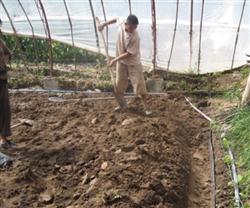 How do you grow cherry tomatoes in a greenhouse? We hope experienced readers can help explain.
Cherry tomatoes have high ornamental value and are also rich in nutritional value; they can be served on the table as a vegetable and placed in a fruit bowl to be eaten as a fruit. Sweet and sour to the right degree, with a unique flavor, they are deeply loved by people. Therefore, Zhongdi Network has compiled the cultivation techniques for cherry tomatoes, listed in detail below for readers to reference.
Step 1. Selection of soil and planting time for cherry tomatoes:
1. Soil selection: loam and clay loam with good water retention, a sunny solar greenhouse with sufficient sunlight and good ventilation is preferable.
2. Planting time: cherry tomatoes are generally cultivated in spring, with seedlings raised in February, transplanted in mid-to-late March, and harvesting beginning in mid-to-late May. For autumn cultivation, seedlings are raised in July, transplanted in September, and harvesting begins in November.
Step 2. Raising cherry tomato seedlings:
1. Method for disinfecting cherry tomato seeds and soaking them to promote germination: scald the seeds with 50-55°C water, stirring constantly, until the water temperature is 25°C, then soak for 6-8 hours, remove and wrap in a wet cloth, place at 27-30°C to promote germination, and rinse 1-2 times a day. Once the seeds show white sprouts, they can be sown.
2. Preparation of soil for seedling pots: use 40% decomposed livestock manure or peat soil, 40% garden soil, 10% night soil powder, and 10% furnace slag, evenly sifted, then mix in 1-2 kg of superphosphate per cubic meter. After thorough mixing, the nutrient soil can be put into nutrient pots.
Step 3. Sowing cherry tomatoes:
Generally, the sowing rate for cherry tomatoes is 30-45 g per mu, and 10-15 g can be sown per square meter of sowing bed. Spread an 8 cm thick layer of nutrient soil in the sowing bed, water thoroughly, then use 10 g of Wudai mixture (an equal mixture of 5 g of 40% quintozene and 70% zineb) plus 15 g of fine soil per square meter of seedling bed, mix thoroughly, and before sowing scatter 1/3 as base soil; after sowing use 2/3 of the medicated soil as cover soil. After sowing the seeds, cover with 1 cm of soil and cover with plastic film. When 60% of the seeds have emerged, remove the plastic film. When the seedlings grow two true leaves, they can be transplanted into nutrient pots.
Step 4. Seedling-stage management of cherry tomatoes:
1. Growing temperature for cherry tomatoes: before emergence, 30°C during the day and 24°C at night is favorable for emergence. After emergence, 25°C during the day and 17°C-18°C at night is suitable.
2. Light requirements of cherry tomatoes: in winter and spring, the seedling bed should be chosen in a place with strong light. In summer, seedling raising should increase ventilation to prevent excessive growth; at noon when the light is too strong, shade appropriately to prevent the seedlings from being scorched.
3. Water requirements of cherry tomatoes: water management during the seedling stage. After sowing, keep the soil moist, and water thoroughly when transplanting. After the seedlings recover, water when the surface soil looks dry, maintain soil moisture, and keep relative air humidity controlled between 60%-70%.
Step 5. Transplanting cherry tomatoes:
1. Transplanting time: generally in early-to-mid March in spring. In a solar greenhouse, transplanting can be done when the minimum soil temperature at 10 cm is above 15°C and stable for 5-7 days. In spring, choose a sunny morning for transplanting; in summer, choose a cloudy day or a sunny afternoon for transplanting.
2. Transplanting method: planting in muddy water is best. That is, first dig holes, water the bottom thoroughly, then place the seedlings with their soil balls into the holes; the transplanting depth should just bury the soil ball.
3. Transplanting density: generally 100 cm between wide rows and 60 cm between narrow rows. When pruning to two stems, plant spacing is about 50 cm; if pruning to a single stem, plant spacing is about 40 cm.
Step 6. Management of cherry tomatoes after transplanting:
1. Branch training of cherry tomatoes: cherry tomatoes mostly use two-stem pruning, that is, keep 1 side branch below the first flower cluster and remove the other side branches. When removing side branches, wait until they grow to 6-8 cm and remove them promptly. If pinching is done too early, it easily causes premature aging of the plant; if pinching is done too late, it easily causes nutrient consumption and excessive plant growth, affecting fruit set. For year-round cultivation in a solar greenhouse, after the plants grow tall, lower and coil the vines in time, and promptly remove the withered and old leaves below the fruiting branches.
2. Growing temperature for cherry tomatoes: for winter-spring cultivation, the key in the early stage is to prevent freezing and protect the seedlings, striving to help them recover as soon as possible. Do not ventilate for 3-4 days after transplanting; maintain 30°C indoors during the day and 18-20°C at night. After the seedlings recover, maintain 20-25°C during the day and 13-15°C at night. When the first flower cluster begins to bloom, appropriately lower the indoor temperature, control vegetative growth, promote reproductive growth, and coordinate the relationship between vines and fruit. For summer cultivation, pay attention to strengthening ventilation to prevent excessive growth from high temperatures.
3. Fertilizing and watering cherry tomatoes:
Before cherry tomatoes set fruit: before fruit set, the transplanting water must be watered thoroughly, and according to the soil and plant growth vigor, appropriately supplement water for seedling recovery and vine extension, and control water as appropriate to help strengthen the seedlings. Especially when they are blooming, never water heavily, as this causes flower drop. The timing of topdressing should be decided according to the plant growth condition and the application of base fertilizer. If the seedlings are not growing well enough, appropriately apply nitrogen fertilizer, and combine it with a small amount of phosphorus and potassium fertilizer.
After cherry tomatoes set fruit: after the first truss has set fruit, promptly end the seedling-restraining period, water and topdress in time to promote fruit development. After that, topdressing should mainly be phosphorus and potassium fertilizer, with as little nitrogen fertilizer as possible. Every 5-7 days, water according to soil moisture and plant growth condition and combine with topdressing; you may also appropriately supplement foliar fertilizers such as monopotassium phosphate and potassium treasure. Watering should be even, not alternately heavy and light, to avoid sudden changes between dry and wet soil, otherwise cracked fruit and hollow fruit will appear.
Note: for winter-spring cultivation of cherry tomatoes, flower-setting hormone must be used to dip the flowers.
Step 7. Pest and disease control for cherry tomatoes:
For aphids and whiteflies, spray with 10% imidacloprid, once every 7 days. For damping-off and seedling blight, spray 25% metalaxyl wettable powder at 800-900 times dilution or 75% chlorothalonil wettable powder at 600 times dilution. For early blight, use 45% chlorothalonil smoke agent or 10% procimidone smoke agent, 200-250 g each time.
How to grow cherry tomatoes for high yield
The growing environment of cherry tomatoes