What are the methods for preventing and controlling fruit cracking in Hami melons?
What causes fruit cracking in Hami melons? How can fruit cracking in Hami melons be prevented and controlled? We would also like fellow gardeners who know about this to help explain. Fruit cracking in Hami melons occurs from fruit set through the early milk-ripe stage, and is even more common during the swelling stage of Hami melons, where the damage is also more obvious. In the early stage, small longitudinal cracks mostly form, gradually becoming obvious fissures, and finally developing...
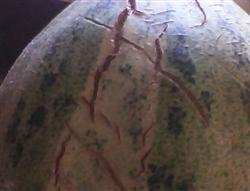 What causes fruit cracking in Hami melons? How can fruit cracking in Hami melons be prevented and controlled? We would also like fellow gardeners who know about this to help explain.
Fruit cracking in Hami melons occurs from fruit set through the early milk-ripe stage, and is even more common during the swelling stage of Hami melons, where the damage is also more obvious. In the early stage, small longitudinal cracks mostly form, gradually becoming obvious fissures, and finally developing into large wounds, some of which can reach deep into the flesh. In the middle and late stages, gummosis can form at the cracks, or the cracks can turn brown due to infection by miscellaneous bacteria, and some may rot. Therefore, Zhongdiwang has compiled the causes and prevention methods of fruit cracking in Hami melons, listed in detail below for fellow gardeners' reference.
Causes of fruit cracking in Hami melons:
First, when planting, the Hami melon seedlings grow inconsistently and are not planted out by category, resulting in inconsistent flowering and fruit-setting times, and different development times of young fruits among plants. With the same management and the same one-time watering, some of the earlier set fruits crack.
Second, after fruit set in Hami melons, water is withheld for a relatively long time, or after a relatively long period of water shortage due to weather, a large amount of water is suddenly applied, or heavy rainfall occurs; the flesh tissue grows and swells too quickly, and the growth rate of the flesh and the rind is not synchronized, causing fruit cracking.
Third, in the later stage, Hami melons grow for a relatively long time under conditions of relatively high humidity; due to management or climate reasons, the air humidity suddenly decreases, causing the rind surface to crack.
Fourth, because Hami melons are exposed to uneven light for a long time, a sudden change in the original direction of light exposure causes fruit cracking. This is especially likely to occur under open-field planting conditions with relatively strong sunlight.
Prevention and control methods for fruit cracking in Hami melons:
Method one: Water reasonably during the fruiting period of Hami melons. Avoid suddenly applying a large amount of water after the melons have had water withheld for a relatively long time, or when they are severely short of water. Water should be applied in several rounds, with the amount gradually increasing from small to large.
Method two: Carry out balanced fertilization for Hami melons, increase the application of phosphorus and potassium fertilizers, and apply fully decomposed organic fertilizer to improve the plants' disease resistance.
Method three: When 2-3 cracked fruits appear in the entire melon field, use pliers to pinch and break the base of the melon vine (the first to second nodes; when growth is vigorous, the pinched and broken part begins to swell after 3-4 days and returns to normal), remove the leaves below it, or dig up the root system, keep 1 root, and cut off the rest, thereby weakening plant vigor and preventing excessive water absorption from causing fruit cracking.
Method four: During winter production of Hami melons, take care to keep the daily average temperature above 15°C, and provide temporary nighttime heating when a cold wave suddenly occurs.
Method five: Ensure a complete ditch system with smooth drainage. Drainage ditches should be dug deep and the ditch system should be complete, and the ditch system should be cleaned frequently. Especially during the fruiting period, drainage in the melon field must be kept unobstructed to prevent sudden heavy watering after a long drought or rain, when the root system absorbs a large amount of water, causing the fruit to absorb too much water, enlarge in volume, and crack.
Method six: In Hami melon plantations, drainage ditches should be dug deep and the ditch system should be complete, and the ditch system should be cleaned frequently. Especially during the fruiting period, drainage in the melon field must be kept unobstructed to prevent sudden heavy watering after a long drought or rain, when the root system absorbs a large amount of water, causing the fruit to absorb too much water, enlarge in volume, and crack.
Method seven: Use artificial pollination for Hami melons. Because most fruit-setting hormones contain growth hormones such as swelling agents, fruits obtained through artificial pollination crack less severely than fruits treated with fruit-setting hormones. If fruit-setting conditions are poor and affect fruit set, and fruit-setting hormone must be used for fruit set, the following points should be noted during use: the concentration used should be strictly controlled and prepared according to the "instructions"; at different times and different temperatures, the concentration to be prepared is different. When spraying or smearing the fruit-setting hormone agent, the female flower ovary should be evenly treated with the agent, and the standard for selecting female flowers to treat is: those with well-developed, thick and strong ovaries, and flowering should be limited to those opening on that day or the next day. This is because thick and strong female flowers in the open state on these two days have a much lower incidence of fruit cracking compared with small female flowers in the open state a few days later.
Method eight: Prune Hami melons reasonably so that nutrients are distributed reasonably. The principles to master when pruning Hami melons are: prune at the right time, in the right amount, and with appropriate frequency. In the later fruiting stage, avoid heavy pruning as much as possible, because the plant's nutrient supply is reasonably distributed; after heavy pruning, the plant's nutrient supply becomes uneven, causing a large amount of nutrients to be transported to the fruit and resulting in fruit cracking.
Method nine: When doing farm work in the melon field, avoid cracking caused by collisions or squeezing from humans or other factors. Harvesting should be done in the morning when the melon temperature is relatively low, but when there is no dew on the melon surface.
Prevention and control methods for root-knot nematodes in Hami melons
Prevention and control methods for brown spot disease in Hami melons