What are the blueberry planting methods? Learn it all in one article
Where can I find blueberry planting methods? How do you manage blueberries after planting? We'd also like experienced blueberry growers to share their advice. Blueberry flesh is fine and delicate, moderately sweet and tart, and aromatic. It can be eaten fresh or processed into jam, juice, wine and more. As consumer demand for blueberries grows, the blueberry planting area is also expanding...
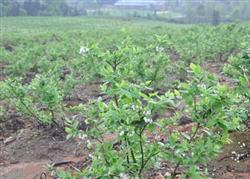 Where can I find blueberry planting methods? How do you manage blueberries after planting? We'd also like experienced blueberry growers to share their advice
Blueberry flesh is fine and delicate, moderately sweet and tart, and aromatic. It can be eaten fresh or processed into jam, juice, wine and more. As consumer demand for blueberries grows, the blueberry planting area is also expanding. Therefore, Zhongdiwang has compiled the planting and management methods for blueberries, listed in detail below for readers' reference.
I. Blueberry planting conditions:
Blueberries can be cultivated over a fairly wide range, and suitable varieties can be chosen according to the local climate, but northern regions with drought, little snow and susceptibility to frost are not suitable for growing them. The selected site should have a gentle slope, no more than 10 degrees; soil pH of 4.0-5.5, with the optimum range being 4.3-4.8; soil organic matter content of no less than 5%; and loose soil with good aeration, moist but not waterlogged.
II. Preparation before planting blueberries:
After the blueberry planting site is chosen, deep plowing combined with green manure incorporation should be carried out the year before planting, with a depth of 20-25 cm being appropriate, and the soil should be prepared after deep plowing and ripening. Before planting, soil that does not fully meet the requirements should also be improved to favor blueberry growth.
III. Planting blueberries:
Blueberries can be planted in both spring and autumn, with autumn planting giving a higher survival rate, while spring planting should be done as early as possible rather than late. As for spacing, rabbiteye blueberry is commonly planted at 2 m x 2 m or 1.5 m x 3 m, highbush blueberry at 1.2 m x 2 m, and lowbush blueberry at 0.5-1 m x 1 m. Rabbiteye blueberry is self-unfruitful, so it is best to plant highbush blueberry as a pollinizer variety. Highbush and lowbush blueberries have a relatively high fruit set with self-pollination, but planting pollinizer trees can improve fruit quality and yield. The ratio of main varieties to pollinizer varieties is 1:1 or 1:2.
IV. Daily management of blueberries:
1. Loosen the soil in the blueberry orchard at the right time:
Because blueberry roots are shallow and fine, and lack root hairs, the soil is required to be loose and well aerated.
Clean cultivation can be carried out from early spring to August, but after autumn begins, clean cultivation is unfavorable for overwintering. Highbush blueberry grown on sandy loam commonly uses clean cultivation. The depth of clean cultivation should be 5-10 cm; going deeper easily damages the roots.
Soil mulching can also be used, and it is widely applied in blueberry production. It has multiple effects, including increasing soil organic matter, improving soil structure, regulating and maintaining soil moisture, lowering soil pH, and controlling weeds. Mulching lowbush blueberry with 5-10 cm of sawdust can increase yield by 30% within 3 years and increase single-fruit weight by 50%. Leaves, rice straw and other crop straw can also be used, but the effect is not as good as sawdust.
2. Weeding in the blueberry orchard:
In blueberry orchard management, weeding is a very important part, and doing it well can increase yield by more than 1 times. In blueberry production, chemical herbicides are widely used. This is because manual weeding is costly and easily damages the roots; especially in lowbush blueberry cultivation, since the rhizomes run and spread, after a few years the entire orchard grows into one continuous patch, making manual weeding impossible. Commonly used herbicides in blueberry orchards include diuron, simazine, chlorbromuron, 2,6-dichlorobenzene, glyphosate, paraquat and others.
3. Fertilization methods for blueberries:
Applying nitrogen-phosphorus-potassium compound fertilizer to blueberries gives better results than applying single-nutrient fertilizers; the ratio of nitrogen, phosphorus and potassium fertilizers should preferably be 1:1:1; ammonium-form nitrogen fertilizers such as ammonium sulfate are preferable, and nitrate nitrogen fertilizers should not be applied; blueberries are sensitive to chlorine, so do not choose chlorine-containing fertilizers such as ammonium chloride and potassium chloride.
Highbush and rabbiteye blueberries can be fertilized by the furrow method, with a depth of 10-15 cm being appropriate; lowbush blueberry, once the orchard forms a continuous patch, is mainly broadcast fertilized. Fertilization is carried out in early spring before bud break, and can also be applied once more during the berry ripening period.
Excessive fertilization can very easily injure blueberry plants or even kill the entire plant, so the amount of fertilizer to apply must be determined very carefully, and must be based on soil fertility and the nutritional status of the plants.
4. Watering blueberries:
Blueberry roots are shallow and prefer moisture, so timely irrigation is very necessary. When irrigating blueberries, attention must be paid to the water source and water quality. Deep well water generally has a relatively high pH and high sodium and calcium content, and long-term use will affect blueberry growth and yield. When irrigating, sulfuric acid can be used to adjust the pH to about 554.5 before irrigating, but acid water should be applied only once after about 3 irrigations.
V. Pruning blueberries:
1. Pruning methods for highbush blueberry varieties:
Pruning in the young tree stage: young blueberry trees are generally pruned mainly by removing flower buds, with the aim of enlarging the canopy, increasing the number of branches, and promoting root development. In the second and third spring after planting, thin out weak and small branches; in the third and fourth years, the main focus is still enlarging the canopy, but a moderate amount of fruiting is allowed. Generally, in the third year, yield per plant should be kept below 1 kg, with fruiting mainly on strong branches.
Pruning of mature blueberry trees: pruning of mature blueberry trees is mainly to control tree height and improve light conditions, focusing on thinning branches, removing overly dense branches, thin and weak branches, diseased and pest-infested branches, and root suckers. For varieties with a more spreading growth habit, when thinning branches, remove the weak and keep the strong; for upright varieties, remove the central leader, open up the top, and keep medium branches. The best fruiting age for large branches is 5-6 years old, and beyond that they should be renewed by heading back in time. For weak and small branches, remove the flower buds to make them grow stronger. Mature trees have a large number of flowers, so some flower buds should be cut off; generally each strong branch keeps 2-3 flower buds.
2. Pruning lowbush blueberry varieties:
During the blueberry dormancy period, the aboveground part can be completely burned off, allowing new shoots to sprout again, form flower buds that year, and bloom and bear fruit the following year. After that, burn-prune once every 2 years to always maintain fruiting on strong branches.
Alternatively, before bud break in early spring, the aboveground part can be cut flat at the base of the plant, sawing it all off, and the sawn-off branches can be left in the orchard, where they can serve to mulch the soil and increase organic matter.
VI. Harvesting blueberries:
Lowbush blueberry fruit ripens relatively uniformly, and early-ripening fruit does not easily drop, so it can be harvested all at once after all the fruit has ripened. After harvesting, remove dead branches, fallen leaves, stones and other debris, and place the fruit into containers. Highbush blueberry fruit does not ripen uniformly, and harvesting generally needs to continue for 20-30 days, usually once a week. For fresh eating, the fruit must be picked by hand; for processing, mechanical harvesting can be used.
What are blueberry anthocyanins
How to plant blueberry seedlings