How to thin grape inflorescences? A full breakdown of the key techniques and methods
Why should grape inflorescences be thinned? How are grape inflorescences thinned? We ask experienced netizens to help explain, because when grapes bloom, a grape inflorescence may contain 300~1500 flowers, but most of the flowers and berries will drop during fruit set. If the inflorescences retained on the fruiting canes are thinned, the development of the remaining flowers can be strengthened...
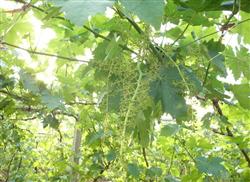 Why should grape inflorescences be thinned? How are grape inflorescences thinned? We ask experienced netizens to help explain
Because when grapes bloom, a grape inflorescence may contain 300~1500 flowers, but most of the flowers and berries will drop during fruit set. If the inflorescences retained on the fruiting canes are thinned, the development of the remaining flowers can be strengthened; therefore Zhongdiwang has compiled the methods for thinning grape inflorescences, and they are listed in detail below for netizens to refer to.
Method 1. Thinning grape inflorescences:
This method refers to removing the inflorescences on the fruiting canes entirely. When the vine's load is relatively large and there are too many inflorescences, the inflorescences need to be thinned. Remove poorly developed weak small flowers and inflorescences that are too densely distributed or improperly positioned, so that nutrients are concentrated to supply the good inflorescences that remain. Besides the overall vine load, the growth vigor of the fruiting canes must also be considered.
Generally, strong fruiting canes that bear two or even more clusters can all develop well, and can also serve as good fruiting mother canes for the next year. Weak, small fruiting canes, however, are not suitable as fruiting mother canes for the next year.
Based on past experience, for varieties such as Muscat Hamburg and Kyoho, the principle of "strong canes keep 2, medium canes keep 1, weak canes keep none" can be used as a reference when thinning inflorescences: that is, strong fruiting canes may retain 2 clusters, medium fruiting canes retain 1 cluster, and weak fruiting canes should retain no inflorescences if possible. Thinning inflorescences can be combined with bud rubbing and shoot removal, or, on the basis of shoot removal, carried out from before flowering to the flowering stage. From the standpoint of saving nutrients, it is best done as early as possible.
Method 2. Pinching the cluster tip and shaping the inflorescence:
This method is achieved by pinching the tip of the inflorescence and shaping the inflorescence. Usually it is not individual flowers that are removed, but the rachis branches (spikelets) at various levels within the inflorescence. Pinching the cluster tip and shaping the inflorescence are best done within one week before flowering. If too late, the effect of promoting fruit set is poor; if too early, the inflorescence is not extended enough and shaping is rather inconvenient.
As for the degree of pinching the cluster tip, for Muscat Hamburg and Kyoho, generally about 1/4~1/5 of the inflorescence length is pinched off. After pinching the cluster tip, not only is the purpose of thinning some flowers achieved, but the risk of soft tips or water jar disease at the tip of the cluster is also reduced.
How to make grapes fruit several times a year
Disinfection methods for grape seedlings